5 Bone-Chilling Writing Tips from Alfred Hitchcock
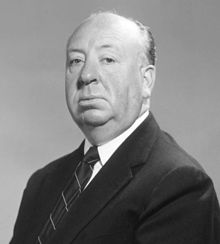
In 1960 Alfred Hitchcock was already one of the most celebrated filmmakers in history. With well over forty films to his credit, including The Man Who Knew Too Much, Secret Agent, and North by Northwest, Sir Hitchcock’s place in cinematic history was both deserved and secure. That is precisely when he set the movie world on fire. Nobody took horror seriously in 1960. It was gratuitous through and through, seen as irredeemable nonsense. So when Hitchcock pitched a film by the name of Psycho to Paramount Pictures, he couldn’t have been surprised at their reaction. They told him no. Adamantly. He made the picture anyway, and the world thanked him by making it his most profitable film by far. Some believe Psycho to be the best film ever made. Although its initial reception was mixed at best, most critics today would easily rank it in the top fifty films in history. I watched the recently released film Hitchcock, in which Anthony Hopkins plays the title character. It’s an enjoyable movie, not nearly as heavy as I expected. And it brought to mind these five tips for writers everywhere. 1. Do the unexpected. If you want your work to be ignored, do the same thing everyone else is doing. If you want to be exceptional, you’ll have to take some risks. 2. Don’t settle. Nobody would have blamed Hitchcock if after the success of North by Northwest he quietly faded into retirement. He did just the opposite. 3. Be in touch with your dark side. Hitchcock tapped into darker places within his own soul to make the films he did. Our shadows have something to teach us if we are not afraid to listen to them. 4. We all need a creative partner. Alma Reville, Hitchcock’s wife, was a brilliant editor. It is not an exaggeration to say Hitchcock would not have accomplished nearly as much as he did without Alma. When accepting the American Film Institute’s Lifetime Award, he remarked, “I share my award, as I have my life, with Alma.” 5. Don’t take no for an answer. Hitchcock was determined. He knew Psycho was the right film for him to make, and he invested his own money to make it. If you have a project in mind, and you know it’s right, stop at nothing to get it done. Tweetables: “If you want to be exceptional, you’ll have to take some risks.” #Hitchcock #writetip #askeditor via @chadrallen http://wp.me/p2FgGq-e4 [Tweet this!] Bone-chilling writing tips from the master himself, Alfred Hitchcock. #Hitchcock #writetip #askeditor via @chadrallen http://wp.me/p2FgGq-e4 [Tweet this!] “If you have a project in mind, and you know it’s right, stop at nothing to get it done.” via @chadrallen http://wp.me/p2FgGq-e4 [Tweet this!] Which of these tips is most helpful to you, and why?
Quick Poll: Want to Hear from Authors, Editors, or Agents?
One of the great things about having worked in publishing for fifteen years is that I have a lot of friends in the industry. I’d like to use my access to some of these folks for your benefit by providing some interviews with them. It occurred to me that I could interview successful authors, veteran editors, or savvy agents. As I fretted about which group to pursue, I thought, why not ask you?! So, which group would you be most interested in hearing from? Authors, editors, or agents? Do you have a preference? Want to hear from all of them? I’d love your feedback in the comments or via email: chad@chadrallen.com Thanks!
My Dirty Little Secret…and Why I’m OK with It

My mom and dad did something to me as an infant that stayed with me for the rest of my life. Now before you go thinking it was something truly awful, I’ll just tell you: they misspelled my middle name. My middle name is Randell. When my fiancée at the time, Alyssa, was creating our wedding invitations, she knew how to say my middle name, but she wanted to confirm how to spell it. “It’s R-A-N-D-A-L-L, right?” she asked. “No,” I said. “E-L-L on the end.” “Are you sure?” Alyssa is a writer, she has a masters in journalism, and this puzzled her. “I’ve never heard of that spelling.” She was so insistent that I began to have doubts myself, so we asked my mom. After confirming that the spelling of my middle name was indeed Randell, Mom went on to apologize, to say she was tired when the hospital staff asked her to write down my name, and well, she did the best she could at the time. If you look it up, Randell is a legitimate variant of Randall, and Mom has back pedaled since her original explanation, saying the spelling was intentional, that she was being unique. But the jury of my own mind has heard the case, and they came back with this: my name is misspelled! So that’s my dirty little secret: I’m an editor with a misspelled name. But I’m okay with it, and I’ll tell you why. It is a constant reminder of our ability to live beyond certain names. People name other people all the time, especially children. “You’re brave,” people say. Or “Dummy!” Or “Why’d you do that, goofball?” The positive names get mixed in with the negative ones, and it can be difficult to know which names to own. Sometimes for whatever reason we end up owning the negative names or even coming up with some of our own. We go from doing something bad to thinking we are bad. We go from failing to believing that we are failures. Negative names come to define us. Stupid. Whore. Selfish. Worthless. The tragic thing about negative names is they have real power. They can and often do hold us back. They keep us from accomplishing things we otherwise were made to accomplish. We all have negative names, but we can live beyond them. I like to remind myself that my mom did her best. The flaw in my middle name is also a symbol of my mother’s imperfect effort. Here is this woman who just gave birth. She’s exhausted. They come to her with a form, and she tries. I need to try too. It does take effort. It is difficult to do the essential work of sharing our shameful names with those around us. Continually living into our better names, the names that capture who we want and aspire to be, who we really are, is not a walk in the park. But this work is perhaps the only work worth doing. It is the work of our own freedom. What are you doing to live into your better names?
Over at Chip’s Place ~ How to Be a Christian Author without Embarrassing God
I’m very pleased to be guest posting at literary agent Chip MacGregor’s blog today. The title of the post is “How to Be a Christian Author without Embarrassing God.” Here’s how it starts: Tony Campolo wrote a book a while back titled Following Jesus without Embarrassing God. In it Campolo challenged Christians to let go of practices and attitudes that had very little to do with Jesus. Campolo’s goal was for more of Jesus to come through. As an editorial director for Baker Publishing Group I work almost exclusively with Christian authors, which is both my joy and my passion. Every day I get to help authors write about the most sublime and sacred truths the world has ever known. That’s why I want to write this post. . . . continue reading.
Goings-On, Write On, and So On
I wanted to bring you up to speed on a few things and then just for fun share some videos that have caught my attention lately. Goings-On In terms of goings-on, here and there I’ll be cutting back to one post a week so I have time to work on some ebook projects and guest posts. Write On My hope is to release a free ebook manifesto in the coming months. I’m really excited about how it’s coming together. Keep an eye out! I haven’t forgotten about all the input I received in response to my post “Which Book Should I Write?” I will keep working on this and hopefully publish it later this year. If you have any other ideas, drop me a line anytime. I’ll be sure to let you know about guest posts and where they appear. And So On! And now for some videos! Sir Ken Robinson is brilliant on the current state of education, and this is an entertaining way to hear some of what he has to say. Fascinating stuff. Dr. Brene Brown is a storyteller and researcher who does a lot of work on shame. It’s beautiful stuff. Here’s part of an interview she did with Oprah. And did you catch this? Billy Joel was playing some tunes and taking some questions at Vanderbilt University last month. One of the students had the guts to ask Joel if he could accompany him, and the results were awesome.
My Top Piece of Advice on How to Write Really Good Stuff

At writers conferences I often receive questions like these: Will publishers be interested in my book if it’s already been self-published? (Answer: Yes, as long as the self-published version sold well.) I need to be published to get an agent; I need an agent to get published. What gives? (Answer: Do something to get an agent’s attention. For example, start a blog and build a readership.) How do I write a book proposal? (Answer: read my series of posts on just this topic!) But here’s a question I wish I received more often: What’s your top piece of advice on writing excellent nonfiction? The reason that’s a good question is because writing really good nonfiction is not only a good way to get a contract, it’s also a great way to build an audience. Unfortunately I have seen authors who write well go relatively unnoticed, but writers whose books perform well book after book after book rarely do so without excellent writing. My Top Piece of Writing Advice So here it is, my top piece of advice for writing great content: be concrete. Imagine all writing exists on a pyramid. At the top of the pyramid is abstract writing, writing that may explain or teach but doesn’t show or engage the imagination. The bottom of the pyramid is concrete writing. It shows or illustrates. It does engage the imagination; it helps me see (or hear or smell or taste or touch) something. The best communicators (I think this is probably true of speakers and writers) push as much of their content to the bottom of the pyramid as possible. Now, are there exceptions? Yes. Sometimes a thought or an idea is so compelling that it can grab and hold a reader’s attention. But more often than not the way to engage readers and hold their interest is to invite them into a scene. Your job as a writer is to create an experience the reader doesn’t want to quit. Often the best way to do that is with concrete writing. Examples of Concrete Writing Following are some examples of concrete writing: Stories Metaphors Illustrations Dialogue Images Sensory writing (writing that engages the five senses) When it comes to concrete writing, a key question is this: Is it filmable? If a piece of writing is filmable, you can be sure it’s concrete. Or listen to how Natalie Goldberg in Writing Down the Bones puts it: Several years ago I wrote down a story that someone had told me. My friends said it was boring. I couldn’t understand their reaction; I loved the story. What I realize now is that I wrote “about” the story, secondhand. I didn’t enter it and make friends with it. I was outside it; therefore, I couldn’t take anyone else into it. This does not mean you can’t write about something you did not actually experience firsthand; only make sure that you breathe life into it. Otherwise it is two times removed and you are not present. In other words, get into the narrative. Write it from the inside so that others can experience it with you. Don’t just convey information. Get into it and invite readers to get into it with you. More Tips for Concrete Writing Stories work especially well at the beginnings of chapters. Grab them with a story, and they’re more likely to hang with you for the rest of the chapter. But feel free to use more stories throughout the chapter! Do a story/image audit of a given chapter. Note the places where you go on for a while without a story or image or sound, and try to find ways to add them in. Even better: replace the non-narrative material with narrative material. If you’re writing history, instead of recounting facts, try imagining a scene and bringing us into it. David Mccullough and Jeff Shaara have made a career of this. Ask yourself, “Is there a way to unpack this principle with a story or metaphor or illustration?” A metaphor or image can do a lot of work for you. As you shape your content to be more and more concrete, you’ll be creating an experience that readers relish. [reminder]How have you used stories in your own writing to good effect? What nonfiction books have you read that make good use of story?[/reminder] [callout]Bonus Content: The best way to start a nonfiction book project is by writing a book proposal. I’d love to give you a free copy of my Book Proposal Guidelines, used by countless authors to write their book proposals. [button href=”https://www.chadrallen.com/getbookproposalguidelines” primary=”true” centered=”true” newwindow=”false”]Download[/button][/callout]
Who Are They? Who Are You?

I’m reading Bob Goff’s book, Love Does. It’s a good book, I recommend it. I just finished a chapter in which Goff relates how awful he was as a Little League baseball player. He was so bad that everybody groaned when he went up to bat. Their only hope was that he would get hit by the ball, so he could walk to first. He was just really bad. Except for one shining moment. Whether by grace or dumb luck, one day against all odds young Goff hits the ball out of the park. The next day he receives a note from his coach: “Wow, what a hit! You’re a real ballplayer.” Those simple words had an enormous influence on Goff. He writes about how sometimes what we need is for people to call us out. We need people, he says, who see who we really are, and will call that person out of us. Goff’s coach called him a real ballplayer, and that’s how he began to think of himself. Who Are They? Who are the people around you? Your colleagues. Your family. Your friends. The person across the room from you right now. Who are they? Because if you can get a sense of who they really are, you can start calling them out. Sometimes a little love can make all the difference. A lot of us can look back to a person or two who really got us. Who believed in us. They saw the diamond in the rough. And they said things that made us feel, well, more diamond than rough. They helped us believe in ourselves, and we are who we are in no small part because of them. So who will you encounter today or tomorrow or this week? How can you call them out? How can you let them know that you believe in them? Who Are You? That’s a big question, isn’t it? Who are you? Or maybe, who are you when you’re at your best? Who are you in your dreams? Because if you can get a sense of who that is, you can begin to call that person out. You’re amazing, you know? No, really, I may not know you, but I know you’re amazing because every last one of us is, and that includes you. So when you look in the mirror today or tomorrow or this week, who will you encounter? How can you call your best self out? Sometimes a little love makes all the difference. What’s your dream? What would you love to accomplish this year or over the next five years?
The Tools You Need to Develop a Winning Book Concept
Recently I tried removing a screw using the wrong kind of screwdriver. The project I was working on was in the house, and the right kind of screwdriver was in the garage. I didn’t want to take the time to walk there, so I struggled until finally giving up. Once I had the right tool, removing the screw became much easier. Later I reflected on the experience: The task was impossible with the wrong tool. The task became much easier with the right tool. It seemed like trying to use the wrong tool would save time. Using the wrong tool was frustrating and actually wasted time. These principles apply equally well to the process of developing a book concept. You need the right tools. In my last post I wrote about the importance of identifying the need your book will address. But once you have identified the need, how do you get from the need to the concept? Answer: the right tools will get you there. Titles and Subtitles One of the best ways to work with book concepts is by using potential titles and subtitles. A working title gives you something more concrete to consider. “A book that helps pregnant women” is not very useful as a concept. What to Expect When You’re Expecting is. Developing titles and subtitles helps you to see the various angles a project might take. Individual Brainstorming Don’t believe people who say you can’t brainstorm on your own. You certainly can, and sometimes such brainstorming can be enormously productive. Try giving yourself a time goal. For example, you’re going to keep brainstorming for fifteen minutes straight. Then set a timer and go. The best idea is often the one that is just outside the circle of your current brainstorming, so keep the brainstorm up for a while. I’ve heard creatives refer to this as pursuing the “adjacent possible.” After brainstorming, set the list aside, and brainstorm again the next day. Do this a third time. You’ll be amazed at how much you can come up with on your own. Group Brainstorming While solo brainstorming can be productive, there is definitely a place for group brainstorming too. Sometimes more heads are better than one. I often encourage authors to invite their most creative friends over for a brainstorming party. The best brainstorming happens when people are relaxed, so have some fun and then dive in. Let everyone in the group know the problem your book solves. To prime the pump, you may want to show them other books in the space—books that are similar to yours but still different. Then ask them to brainstorm individually. Ask them to brainstorm both titles and possible subtitles. Let them do this for 15 to 20 minutes. At the end ask them to identify three title-subtitle combinations that they think represent the best of their brainstorming. Write these combinations on a white or chalk board in front of the group and ask everyone to share which is their favorite and why. Deciphering If you do the above, you’ll end up with quite a few possible concepts. Several will be easy to remove from consideration. Keeping the need you’re trying to meet in mind, narrow the list down to three to five title-subtitle combinations. As you decipher ask yourself, “Which of these will resonate best with the audience I’m trying to reach?” Go to members of that audience and ask them to pick a title from your list. Keep deciphering until you narrow it down to one. Now all you have to do is write the book! What tools have you used in developing book concepts? How have you used the above tools?
Which Book Should I Write?
Every time I have taken a risk to engage this blog’s community, I have been pleased with the results. It always feels like leaping from a high dive and hoping for the best, but I’m doing that again today. So here’s my question for you: Which book should I write? For a while now I’ve been thinking about self-publishing an ebook. I want to do this because: It’s been a long-time dream of mine to write a book. I want to help people, particularly people who read this blog. I want to prove to myself that I can (can you relate?). I want to know more about self-publishing, and there’s no better way to learn than to do it. I want to make enough extra money to fund a design update to this blog (amen?). Don’t worry. I’m not asking you to pick a book idea out of thin air. I’ve narrowed it down to a list of how-to concepts that are based on themes I have been exploring here: How to get published How to write a book proposal How to come up with a great book concept How to market your book How to write How to nurture creativity How to live well These aren’t final titles, of course; but they’re enough to give you an idea. So, which of these themes is most appealing to you? Drop a comment or email me at chad@chadrallen.com And thank you!
A Fable about Beauty, Craftsmanship, and Money

Once upon a time a man carved a block of wood into a butterfly for his sister. His sister loved the butterfly. “You should make one for Mother,” she said, “she’ll be so happy.” The man made another butterfly, and his mother held it close to her heart. “Everybody I know would love one of these!” she said. So the man began carving butterflies for whoever wanted one until he ran out of wood. One day an aristocrat saw one of the butterflies on his neighbor’s shelf. He was taken with it. “To whose skill,” the aristocrat asked, “does this butterfly owe its life?” Upon learning the answer the aristocrat paid the butterfly maker fifty cents so he could buy more wood and make another butterfly. The butterfly maker invested the leftover money into carving more butterflies, and things went well. He was very happy. One day as the butterfly maker carved a butterfly, a devil appeared on his windowsill. “Hello there!” the devil said. Startled, the butterfly maker stopped his carving and looked up at the devil. “Hello, sir,” said the butterfly maker. “How may I help you?” “How may you help me?” the devil said. “The question is, how can you help yourself?” “What?” the butterfly maker asked. “How can you help yourself? Why don’t you sell your butterflies for a higher price? That way you can buy a bed. You should not have to sleep on the hard floor, right?” The butterfly maker considered this question for a long time. “Well, it would be nice to have a bed. I shall sell my butterflies for a dollar each.” And the devil disappeared. Customers didn’t seem to mind the higher price, and things went well. Weeks later as the butterfly maker carved a butterfly, a devil appeared on his windowsill. “Hello there!” the devil said. The man stopped his carving and looked up at the devil. “Hello,” he said. “Thank you for the tip you gave me. I raised my price to a dollar and bought a bed. I sleep so much better now.” “Marvelous!” the devil exclaimed. “But you know, you could raise your price even more and hire carvers to make butterflies with you. That way you could make more money and buy other nice things.” The man thought about this for a long time. “Well,” he said, “I do like nice things.” And the devil disappeared. So the man set out to do as the devil suggested. He raised his price to $1.50 per butterfly and hired three people to carve butterflies with him. Business picked up considerably. In fact, the man was so busy selling butterflies he did not have time to make butterflies himself. He noticed that the butterflies on his shelves did not have quite the detail his original butterflies had, but customers kept buying them so, he reasoned, they must be fine. One day after the shop closed while the man was counting his money, a devil appeared on the windowsill. “Hello there!” the devil said. “Yes?” the man said, still counting his money. “Congratulations!” the devil exclaimed. “You must be very proud of all the money you are making.” “Yes, I am. Thank you. I have bought a lot of nice things.” “Good show!” the devil replied. “But I think you can make even more money if you raise your price and hire more carvers.” The man immediately saw the devil’s logic. “You’re right!” the man said, and set out to do exactly that. He hired seven more carvers and raised his price to $2. And so the man’s ten hired carvers went to work, and sales were okay. They didn’t sell as many butterflies as before, but they made more from each sale, so business was good. One day, while counting his money at the end of the day, a devil appeared. “Yes?” the man said, greeting the devil. “Wow!” the devil said. “You must be proud of all that money!” “I am!” the man replied. “I just moved into a nice house, and you should see all the nice things I have.” “Congratulations,” the devil replied. “But I think you can make more money by raising your price and hiring more carvers.” The devil disappeared when the man shook his head in agreement. He raised his price to $3 and hired ten more carvers. And the man’s twenty hired carvers began carving butterflies upon butterflies upon butterflies. The day before Christmas the aristocrat returned to the shop. He was excited to buy a butterfly for his mother. But upon looking at all the butterflies, he frowned. Not only were the butterflies much more expensive than the one he bought before, they did not look as good. Dismayed, he went to the owner. “Excuse me, sir. Are you the butterfly maker?” “Ha! No, silly lad. That was long ago. I am the money maker.” Shaking his head, the aristocrat left the shop empty-handed. Customer after customer, excited about Christmas, entered the store, but each left without buying anything, for the butterflies were too expensive, and they did not look very good. “Are these crows?” one boy asked his mother. As the sun dipped below the horizon that Christmas Eve, the man looked in his money box and saw only three dollars. He sold exactly one butterfly that day. He began to cry. Then a devil appeared on the windowsill. “Yes?” the man said through his tears. “What’s the problem!” the devil demanded. “The problem,” the man said, “is that no one wants these butterflies anymore. They don’t look like butterflies, and they are too expensive.” “Buck up!” the devil said. “You are the butterfly maker!” “No I’m not,” the man said. “I used to be the butterfly maker until greed turned me into a money maker. But now I am not even that. I am the saddest among men.”