How to Get Published: A 3-Part Conversation with Author Michelle DeRusha and Me
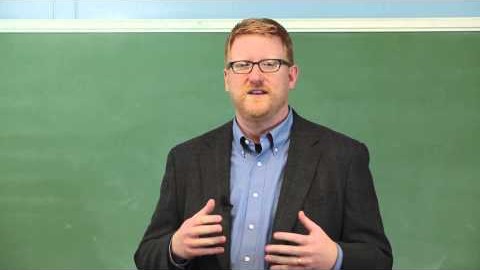
Imagine you could pick up the phone when you needed writing or publishing advice and talk to two professionals with over 35 years of combined experience. These two have racked up a host of publishing/writing credits and have helped hundreds of other people get published and make progress toward their writing and publishing dreams. Do you think that kind of expertise would be helpful to you? That’s exactly what author Michelle DeRusha and I are planning to offer. Watch the one-minute video below to find out more:
The Best Thing to Do When You Don’t Know What to Do
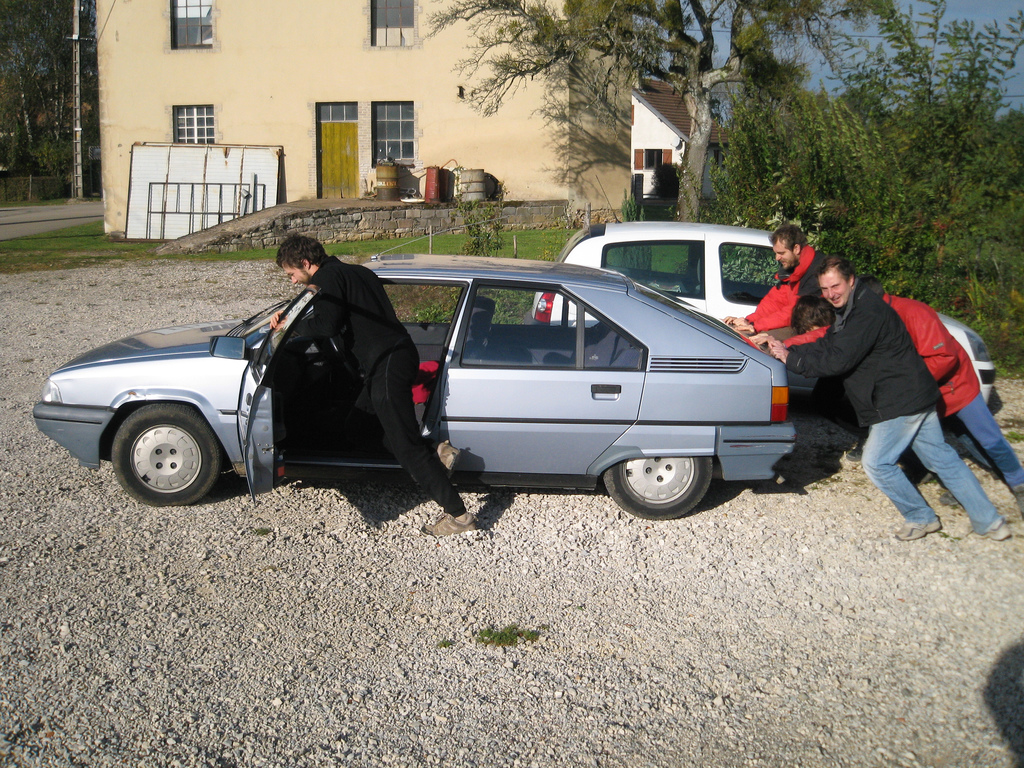
I would have slammed into her if I hadn’t been looking. Luckily, at that particular moment anyway, I was, and so stopped within a few feet of her flashing hazards. The silver 1990s Corolla was bunching up the morning commute, and clearly the car was going nowhere. On another morning, a more hectic morning, no doubt, I would have quietly moved over and sped past. But this morning I had time and could see the danger this vehicle was to others not to mention the driver within. “Drop it into neutral, I’ll give you a push,” I said to the relieved middle-aged woman at the wheel. A few steps to the rear and I was testing the tread on my dress shoes, pushing for all I was worth. Fortunately two other guys took pity and joined the effort. “Mornin’,” one of them said with a grunt. We pushed the car into a fire station’s parking lot, and the driver assured us help was on its way, we didn’t need to stay. She was so grateful she almost gave us—complete strangers—a hug. Are You Stuck? Sometimes we get stuck. That’s just the way it goes, especially in the creative life. Whether you’re a writer, artist, entrepreneur, or manager, you’ve been there. You get to the end of yourself and wonder, sometimes desperately, what to do next. Maybe you feel that way right now. Maybe you’re a writer and you don’t know which next step is the best one to take. Maybe you’re an entrepreneur or platform builder, and overwhelm has you firmly in its sights. Maybe you’re a manager and you’re trying to figure out how on earth to guide your team into a successful future. What if you were in a group of people to whom you could shoot a quick message this very moment? “Hey,” you might say, “I could really use some help…” And what if that group of people responded with supportive suggestions? What if shortly thereafter you all joined a videoconference call, and they listened to your story and gave you some really helpful advice? Success vs. Not So Much Or imagine you had a personal board of directors. Now imagine that the same group of people was a personal board of directors for everyone involved. That’s one way to think about what I and others call a mastermind group. Here’s the difference between people who succeed in a holistic, healthy way and those who don’t: successful, healthy people are connected with others. They interact regularly with a team of people who care and want to nurture each other’s vitality and productivity. You can do your art in a lot of different ways. My advice: don’t go it alone. [Tweet that!] You Have a Choice I’ve been in a mastermind group for about a year now, and it’s been a great place for me to interact with other writers and entrepreneurs. I’ve learned a ton, I’ve benefited financially from the network of my fellow masterminds, and more importantly I’ve made some new friends. Our mastermind group was started by professional blogger Jonathan Milligan. I can tell you from personal experience that Jon is someone who cares deeply about the success of others. I admire Jon. You couldn’t ask for a better teacher. How is this relevant to you? Jonathan and I are hosting a webinar on how to start a mastermind group. It takes place tonight (Tuesday, September 30, 2014) at 9pm Eastern. You’ll hear about how Jonathan started our mastermind group, and you’ll learn how to start your own. You’ll learn how to structure your group to set it up for a healthy, long life of creative interaction and mutual support. I hope you can make it. Everyone who registers will receive a recording of the webinar. To learn more, CLICK HERE. If you were in a supportive group that cared about you and your health and success, what question would you ask them right now?
Why You Must Not Ignore the Benefits of a Mastermind Group
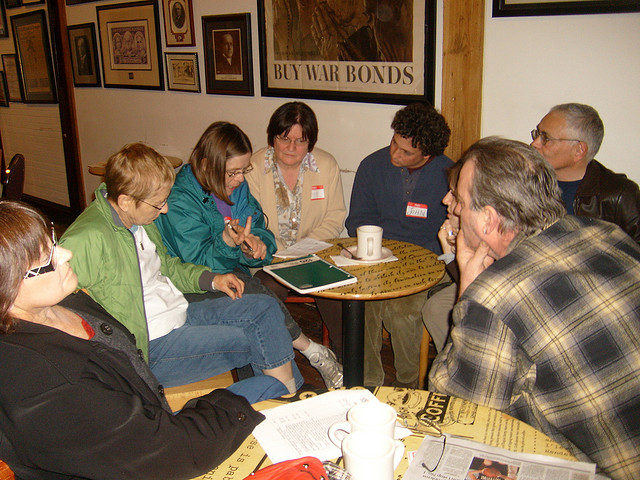
A group of friends got together to ask some questions. They ended up changing the world. In 1727 Benjamin Franklin started a group of about twelve souls whose purpose was individual and community improvement. The “Junto,” as Franklin called it, met on Friday nights and went through a list of questions including: What new story have you lately heard agreeable for telling in conversation? Have you lately heard of any citizen’s thriving well, and by what means? Do you think of any thing at present, in which the Junto may be serviceable to mankind? to their country, to their friends, or to themselves? Just a group of folks, meeting regularly, asking some questions. But what they accomplished was remarkable. Members of the Junto were directly responsible for: the first volunteer fire department the first public library in the United States the first public hospital in Pennsylvania the founding of the American Philosophical Society, which still exists over 250 years later Benjamin Franklin was an exceptional human being, yes, but the fact remains that when a group of people get together regularly and ask good questions, great things follow. This isn’t just for Franklin and his friends. It’s for you and your friends. The most successful people I know are in a mastermind group. [offer-box href=”http://webinarjam.net/webinar/go/10399/e3feb695bd” linktext=”Want to start a mastermind group? This free webinar will show you how. CLICK HERE.” securecheckout=”false”] Questions and Results To do our best work, participating in a group of creative people who have similar interests is indispensable. What might happen if you organized a group and ask questions like: What were your highs and lows this week? How can the group help you? What do you want to accomplish this week? I’ve been in a mastermind group led by pro blogger Jonathan Milligan for several months now. Using questions like the ones above, we’ve already seen some great things happen: Two podcasts have launched New books have been written and published Businesses (including Book Proposal Academy!) have been born It is easily one of the best things I’ve done for my blogging and for my side business. [Tweet that!] You Need This The main benefits of a mastermind group are (1) guidance, (2) accountability, and (3) service. Let me unpack these a bit. Guidance If you’re in a group of people who have similar interests and you don’t know the next step to take on your creative journey, someone in your group is likely to be able to help. Mastermind groups help each member take the next best step. [Tweet that!] Accountability When you tell your group “By this time next week, I want to have published two blog posts,” you are more likely to get those two blog posts published than if you hadn’t said so to your group. It’s just human nature. When we make a commitment before others, we’re more likely to get it done. Service Mastermind groups relate to service in at least two key ways. First, they provide an opportunity for everyone in the group to serve each other. Second, mastermind groups help their members serve nonmembers. Franklin’s Junto did that by establishing the first library, the first hospital, and so on. The group I’m in does it by creating podcasts and books and businesses. How to Start a Mastermind Group Jonathan Milligan and I will be hosting a free webinar this coming Tuesday, September 30, at 9pm Eastern. The webinar will teach you how to launch a mastermind group in thirty days. You’ll learn: The ONE single factor that determines success Mastermind group questionnaire and checklists How to structure your meetings so the whole group benefits The best places online to find future group members 3 simple keys to a group’s success Creative ways to keep your group fresh and alive And so much more! Join us! To sign up for the webinar, CLICK HERE Giveaway I have an extra copy of Chris Guillebeau’s New York Times bestselling book The Happiness of Pursuit. (By the way, if you missed my interview with Chris, click here.) If you share this post and comment below by September 30, I’ll enter you to win. Just share this post however you like and respond to the question below. What is something you need that a mastermind group could help provide?
5 Brilliant Things Writers Can Do to Overcome a Small Platform

As editorial director for a major trade publisher, I regularly receive questions like the following: How big a platform is big enough? Am I out of luck if I don’t have much of a platform? What should I do if my platform is still smallish? Do I really have to be a superstar to get published? (This last one is usually asked with just a hint, or more, of exasperation.) It is true that the number 1 reason we turn books down is lack of platform, and I suspect that’s true for most trade houses. But I have some good news: Platform is not the only thing publishers care about, and determination and hustle can take you a long way. In this vein I want to offer 5 things to do that will undoubtedly help you build your platform and increase your chances of landing a book contract. 1. Measure hustle, not traffic I can’t take credit for this little gem. It comes from my friend Jon Acuff. He should know. Jon went from stockpiling useless business cards and URLs to becoming gainfully self-employed and hitting the New York Times bestsellers list. (By the way, Jon just announced his next book. Super excited about it.) Especially in the beginning it’s important to measure your hustle, not your traffic stats or your Twitter followers. Are you posting a blog post every week or every day or whatever it is you want to do? Are you getting to bed early enough to get up early and write? Measure that stuff, forget the rest. 2. Focus on your email list I know this sounds like a contradiction of the first step above, but hang with me. The most important thing you can do is measure your hustle, but if you’re going to zero in on any one stat, make it your email list. Actually, I don’t recommend obsessing over the number. I recommend going to school on how to increase that number steadily over time. Number of email subscriptions is by far the most important platform metric. (Tweet that!) It easily trumps the importance of Facebook fans and Twitter followers because you own your email list. You can decide how or how not to use it. You have far less control over your interaction with your Facebook and Twitter tribes because you don’t own those services. 3. Emphasize growth When you’re interacting with a potential agent or publisher, in a book proposal or over coffee, don’t talk about the size of your platform now. Talk about how much it’s grown over a period of time and about the strategy you have in place to keep it moving up and to the right. 4. Don’t neglect concept and writing Platform is at most a third of the publishing success formula. The other two main components are your book concept and the quality of your writing. We regularly approve books for publication that are attached to relatively small platforms but deliver in spades when it comes to concept and writing. A compelling concept and amazing writing can take you a long ways. By the way, if you’d like a great infographic how to come up with a compelling book concept, click here. 5. Answer this: What can I do today? It’s easy to get overwhelmed. As a platform builder myself, sometimes I get so discouraged that things aren’t happening faster. But I need to keep coming back to this question: What can I do today? If I keep asking that question and then do whatever is within my power to do, I’m confident that one day I’ll look up and see significant results. Which of these ideas resonates the most with you right now?
If You Stop Writing Now, You’ll Hate Yourself Later [Guest Post Notification]
I’m delighted to be have a guest post up over at Jeff Goins’ blog today. Here’s how it begins . . . When I was younger I played the trombone, but I didn’t really get it. I had friends who got it. You could tell orchestral music did something for them. But as I get older I’m starting to understand it more. I hear moments in orchestral and chamber music now that make me tear up. It’s not just sound, it’s music, and I’m beginning to hear it. So many different elements – the different timbres of the instruments, the volume, the tempo, the underlying feel — they all come together to fill the air. When orchestral music is performed well, it can transport me to a different world. That’s how it is with books too. — Want to read the rest? Click here.
What an Odd Little Man Taught Me about Reverence and Mystery
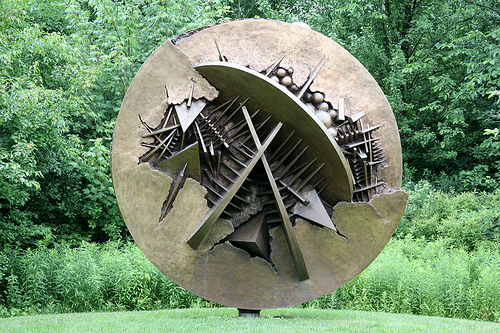
In Memory of Robin Williams As we entered his classroom, Professor Whipp grinned at us. Just as we finished settling in, placing our backpacks on the floor, our notebooks on our desks, he beckoned us to leave. “Come,” he said, “Follow me.” And out we went onto the University of Nebraska-Lincoln’s wide campus one pleasant fall morning. Our professor shuffled quickly, his shoulders hunched forward as usual. Professor Whipp’s physical appearance was somewhere between gangly and rubbery. It was as if he didn’t want to be noticed. He was like the embodiment of a whisper. “You’ll see,” he said, glancing backward. “You’ll see!” After about ten minutes of walking, he stopped. He stopped at the edge of a grassy hill whose rounded top served as a platform for a sculpture. I don’t know the name of the sculptor or the sculpture, which is just as well because of how utterly nondescript it was. I do remember that it was bronze and stood about seven feet high. It was vaguely, very vaguely, in the shape of a boot, broad enough that you couldn’t reach your arms around it. Its texture was rough, like someone had rubbed a rag on wet cement and it dried that way. Dr. Whipp took a few steps up the hill, stopped again. And that’s when Professor Whipp did a peculiar thing. H looked up toward the bronze and bowed. He did this with what appeared to be great feeling. He took a knee and kept bowing. Finally he stood up and turned to us. “I believe in showing reverence to that which I do not understand.” It was one of those moments when you didn’t know whether to laugh at the hilarity of this odd event or cry at the beauty of the moment. Most of us just stared at him. And then we looked at the sculpture too. ### We spend so much time trying to figure things out. If you do creative work, you know what I’m talking about. You try to figure out what you need to do to make good art, to make a good life, to make meaning from the chaos. We writers and publishers try to figure out what makes a book sell, what gets a book published, how to get a book on the New York Times bestseller list. We try to figure out why brilliant people kill themselves. Let me suggest that we make some space for deliberately not trying to figure things out. Let me ask that you find something to wonder about today. Notice something mysterious or awe-inspiring. And then bow. Show reverence to that which you do not understand.
The Essential Ingredient to Your Success That You’re Probably Overlooking

I saw the film Her weeks ago, and one element of the movie still haunts me. Set in futuristic LA, it’s about a man named Theodore Twombly (played by Joachin Phoenix) who ends up dating his artificially intelligent operating system. Far-fetched, perhaps, but I enjoyed this quirky cinematic excursion. The way Theodore communicates with his operating system is by placing a small bud in his ear. This enables him to hear the voice of “her” (played by Scarlett Johansson). Since the operating system is programmed to be positive toward Theodore, to serve and support him, his own self-talk is essentially replaced by this always affirming, gentle voice. The effect is transformative. Theodore’s life suddenly seems worth living. For the first time we see him smile and walk with a bounce in his step. The Power of Self-Talk How would our lives be different if we could replace our regular internal voice with one that is always affirming and reassuring and loyal to us? What could we accomplish if that nagging voice of doubt and derision was muted by a voice of love? How much more successful would we be? You might be surprised. Psychologist Suzanne Segerstrom, of the University of Kentucky, links positive self-talk to increased perseverance. A Forbes article says positive self-talk can be dramatically helpful and is a skill taught in leadership and management boot-camps for high-potential managers. In the article author Erika Andersen quotes her book Leading So People Will Follow, which explores six leadership characteristics that inspire followers to fully support their leaders, one of which is self-talk. And if that’s not enough, The Mayo Clinic lists the following as benefits of compassionate self-talk: Increased life span. Lower rates of depression. Lower levels of distress. Greater resistance to the common cold. Better psychological and physical well-being. Reduced risk of death from cardiovascular disease. Better coping skills during hardships. Clearly positive self-talk, though easy to overlook, is important to anyone who wants to experience success. (Want to tweet that?) Positive Self-Talk vs. Stuart Smalley It’s tempting to think of all this as psychobabble, but it’s not. In fact, the voice that’s telling you it’s psychobabble is sabotaging self-talk! This is not about Stuart Smalley from SNL either. Stuart Smalley is the embodiment of phoniness and vainglory born of insecurity. I’m also not talking about giving yourself a pass when you’ve really screwed up, though even then beating yourself up helps no one, least of all you. This is about acknowledging that we deserve our own loyalty. (Tweet that?) One of the ways we get in our own way is by belittling this issue. It’s important, and it deserves our attention. How It Looks in Real Life So often we inflict ourselves with negativity over the smallest things. We drop something and a voice inside yells “You idiot!” We forget something and “Jerk!” leaps to mind. Someone looks at us funny, and it stays with us for days if not years. I still remember being in Baltimore’s Inner Harbor, visiting one of those touristy shops that specializes in replicas from the Middle Ages—dragons’ teeth, suits of armor, that sort of thing. Admiring swords on the wall, I said casually to the shopkeeper, “Those are fun to look at.” He came back at me snarkily with “Yeah, they’re fun to buy, too!” Now obviously that wasn’t the kindest thing to say, but this happened over ten years ago, and I remember it like it was yesterday! This shopkeeper has long forgotten his comment, yet I invite it to take up residence between my ears like infected blisters. My point is that negativity and shame are the path of least resistance. If we let it, harmful self-talk can become the only voice we hear, which is a sad place to be. 3 Steps to Improve Your Self-Talk So how do we get better at this? In addition to the above references, check out these helpful posts if you have time: 12 Easy Steps to Create Positive Self-Talk Leading to Your Success Talk to Yourself with External Pronouns for Better Self-Criticism Self-Talk Your Way to Success But for the sake of brevity I’ve boiled it all down to 3 steps using the acronym B.E.T., which I’ve been trying to incorporate into my own life: Become aware of your self-talk, particularly your negative self-talk. We talk to ourselves all the time. It’s just part of the human condition. The trick is to become aware of it, to notice it. That’s the first step. End the negativity. Many therapists and life coaches recommend actually saying out loud “Stop” or “No” when you hear the destructive voices start to chatter. Whether you say something aloud or not, when you catch yourself, stop. Take out the bad stuff and replace it with compassionate stuff. If you were loyal to yourself, how would what you just said to yourself be different? Focus on that. Do you struggle with this? Have you had any success? What works for you?
How Coming Up with a Power Statement Can Help You Do Your Art
Many of us are pursuing our dreams in the margins of life. We have work commitments, family commitments, volunteer commitments, the list goes on. So if we’re going to get after our dreams, we need a way to spur ourselves to action. In this video I share about how coming up with a “power statement” has helped me to do this more than anything else. I hope you find it as helpful as I do. Did you like this video? If so be sure to subscribe to my blog for more great content. Also, if you think it would help others, I’d love you to tweet about it or otherwise share it with your social network. OK, here’s your chance. What’s your one sentence? What’s your power statement, if you will, the salvo that’s going to help you take charge and pursue your dream?
A Simple Way to Make Your Writing More Engaging
We all want our writing to capture people’s attention and keep them reading. How do we do that? Here’s a quick video that explains my top piece of advice on how to do this. If you can master this tip, you’ll never lack readers . . . [youtube id=”KFkZ-yiYOpo”] Can’t see the video? Click here. P.S. Hey, I’m working on a new product and would love your help. Would you be willing to take a quick survey for me? It’ll take you less than 90 seconds (it’s only 3 questions), and it’ll help me get a better idea of how to serve you. To take the survey, click here.
Which of These 2 Ways Do You View the Future?

Sometimes our anxieties about the future negatively impact the present. We anticipate 1-star Amazon reviews before we’ve written a chapter. We dread how little our new business venture will make before we’ve designed the product. But is all thinking about the future bad for productivity and creativity? Of course not. Natasha Crain commented, “I like to have the goal, work toward it, achieve it, move on. But some things are out of our direct control.” She’s on to something. Let’s unpack this. From Self-Defeating to Self-Empowering When we allow ourselves to become perplexed about things beyond our control, we’re hurting our work. It’s tempting to focus on metrics like reviews, sales, revenue, traffic, shares, comments, retweets, and so on. All of these metrics, while important and definitely worth tracking over time, are to a great extent beyond our control. I would argue that when you’re at the beginning or middle of a creative process, these are not the best places to focus your energy. Where do we have direct control? We have direct control over the work we do—the number of hours, the number of words, the number of blog posts we publish, the number of pieces we create, whether we launch or don’t launch, whether we wake up early or don’t wake up early, the number of hours our butts are in the writing chair, whether we create or don’t create. In short, we have a great deal of control over how much we hustle. Looking at the future in a way that paralyzes or discourages you is self-defeating. Looking at it in a way that motivates you to action is empowering. Hustle-Oriented Goals I’m a big fan of goals, and I like Michael Hyatt’s emphasis on S.M.A.R.T. goals. But if all your goals are based on metrics beyond your control, you’re headed for disappointment. (Want to tweet that?) I might establish a goal to have a contract with a publisher by July 1, but so much of this goal is beyond my control. My advice: Keep this goal in place, but be sure to support it with some hustle-oriented goals as well. In this case a hustle-oriented goal might be to attend three writers’ conferences this year and meet with as many agents as possible. How to Determine Your Hustle-Oriented Goals 1. Start with a B-HAG: Big Hairy Audacious Goal. Don’t worry about anything except the ultimate outcome you hope to accomplish. This could be “Become a New York Times bestselling Author” or “Sell a million books” or “Meet Oprah.” Whatever you like. 2. Now think about all the areas of hustle where you will need to invest time and energy to make the B-HAG happen. This might include platform building, writing, networking, and so on. 3. Establish at least one hustle-oriented goal per area of hustle. Examples would include “I want to send out at least five helpful tweets a day” or “I want to write 500 words per day.” 4. Go for it. See if you can hit your hustle-oriented goals. 5. Tweak as necessary. Don’t be afraid to adjust a goal, especially when you have lived with it for a while and you see a way to make it better–either by making it more realistic or more strategic. When you’re setting goals for yourself, don’t forget the hustle! What’s one hustle-oriented goal that will help you move closer to your desired outcome?