How to Stay Fresh and Create Your Best Content

Recently my family traveled to the Salt Lake City area to visit my dad. On the way to the airport following our visit, my eight-year-old son asked why the Salt Lake was full of salt water instead of fresh water. My dad explained the Salt Lake has no outlets. Water comes in, but it can’t get out. Some of the water evaporates, but the natural minerals do not, so the concentration of the minerals increases, producing a “salt lake” rather than a fresh lake. What makes a fresh water lake fresh is the water flowing freely in and out. Later it occurred to me this is an apt metaphor for creating great content. To stay fresh creatively, we need resources and experiences to flow freely into our lives… This is the beginning of a guest post for Rebecca Livermore’s Professional Content Creation. To keep reading, CLICK HERE.
To My Son about His Tears

My son’s at an age when he has some difficulty maintaining his emotions. You can sense it in the crack of his voice or the quiver of his lip. When these times come, my wife and I know that if we can’t stem the tide quickly, the dam will overflow. The cause can be as inane as not getting dessert. Or it can be as understandably devastating as being left out by his peers. Whatever it is, when the tears start to come, save some miracle of parental adroitness, the tears come. They come hard and deep, and they can last a while. At that point the only thing to do is either sit in the pain with him if the cause is legitimate or to more or less ignore him if the cause is something unwarranted (like wanting twelve M&M’s instead of ten). But here’s my observation. My son does not have a shut-off valve. When I start to cry, I can shut it off at will. My wife will tell you I’m a sap, that I’m giving myself too much credit here. But even she would admit I have more tear control than my little guy—quite a bit more, actually. Things We Lose While I don’t want him to cry over silly things, I cherish how easily his tears come. I want him to hold on to some of that. I don’t want him to be ashamed of crying. I’m reminded of my Classics courses in college in which I learned the ancient Greeks didn’t have the same hang-ups we have nowadays about crying men, especially in America. Tough dudes like Achilles and Odysseus didn’t mind showing emotion. Why should we? [Tweet “Tough dudes like Achilles and Odysseus didn’t mind showing emotion. Why should we?”] I’m also reminded of that brilliant song “When I Was a Boy” by Dar Williams in which she reminisces about how it was okay as a girl to do things like climb trees and ride her bike without a shirt on. At the end of the song she’s a woman telling a man he won the gender game. “Now you’re top gun, I have lost and you have won,” to which the man responds, “Oh no, no, can’t you see? When I was a girl . . . I picked flowers . . . I could always cry, now even when I’m alone I seldom do.” It’s true, isn’t it? Our gender role formation steals things from us as we get older—the normalcy of a tree-climbing girl or a crying boy. [Tweet “We lose things as we get older—the normalcy of a tree-climbing girl or a crying boy.”] To My Son So, son, here’s what I want you to know. I want you to know it’s okay to cry. I want you to treasure the sensitivity you now have and nurture it. I want you to reject every form of shame, and if ever I do something that causes you to feel shame, please tell me because I don’t want to do those things. I want you to hold on to this boyish ability to cry and cry hard. It’s okay. It means you’re human, you’re sentient (you’ll understand that word later), and you feel deeply. Feeling deeply is part of a rich life. Men who stuff their emotions are not cool or tough, they’re certainly not more manly. They’re in danger of losing a part of themselves, a part that is supposed to be there. I’m not telling you to use your tears to manipulate people, and I’m not telling you to be an infant. Babies cry more than adults because babies lack the diversity of expressive resources people accumulate as they mature. You too will continue to develop a range of ways to express yourself, but don’t spurn your tears. Let’s face it. There are things in this world that are worth crying about. I hope, for example, I will never come to a day when reflecting deeply on the poverty of a place like Haiti does not bring me to tears. It should. Crying over poverty and injustice is right and good and fitting. So is crying when we lose someone who is dear to us. So when you feel like crying, cry. Let the tears come and feel deeply. Do this forever. You’ll be a better man if you do. Love, Dad [Tweet “Men who stuff their emotions are in danger of losing a part of themselves . . .”] [callout] My book proposal guidelines have helped countless authors write contract-winning book proposals. I’d be happy to send you a copy. Just click the thumbnail image below: [/callout]
Confessions of a Flawed Editor

Editing is a tricky business. What I want more than anything is for your book to hum. I want it to be such an engrossing experience that a reader would sooner take a bus than drive, just for a few more moments in your book. Legendary editor Sol Stein says the writer’s job is to create “conditions that enable pleasure to edify”–to “provide an experience that is superior to the experiences that the reader encounters in everyday life.” All other intentions–expressing oneself, making money, even altruistically relaying information–take a backseat to creating a killer experience. I often see the potential for a powerful piece. It’s there, but it’s buried or it’s not continuous. Sometimes what’s required is digging work, judicious trimming, sometimes hacking, to bring out the good stuff. Sometimes it’s relocation work, seizing the part that’s going to capture attention, setting it up front, then massaging it all so no one’s the wiser. Sometimes it’s charming work, writing a query that if worded right will prompt the author to compose a story that pulls the whole thing together. Sometimes it’s murderous work, killing a darling that, forgive me, has no business living. I’m not always the author’s friend, or at least not the kind of friend you ring up when you only want to escape or party. Don’t call me for that. If I’m a friend at all, I’m the one, or by God I try to be, the one you call when you need some help–when you know you’ve made some poor decisions and you want to get back to center. That’s the guy I want to be. Maybe I’m not your friend so much as your coach, who only becomes a friend for a little while, and not until the championship is in the bag. Until then, I’m going to push you for all you’re worth. I’ll also sneak away during a family vacation to read your chapter and give you a hand. I’ll communicate via your agent. I’ll spend money for a second and third and fourth opinion when we don’t agree–to make absolutely sure we’ve got the full picture. I’ll come early, stay late, eat lunch at my desk. Am I perfect? No. Is my judgment flawed? Do I get it wrong sometimes? Yes. But I’ll tell you one thing. You’ll look long and hard before you find someone who cares as much as I do. Don’t for a second doubt that I care. I do. We’re going to get through this, you and I, and your book will be the better for it. It might even be a piece of art. That’s what I’m after. That is what you have in you.
5 Steps for Coming Up with an Awesome Working Title for Your Nonfiction Book
Titles are important. At Baker Books, where I work, every publishing season (spring, summer, and fall) we schedule multiple titling meetings. First titling team members brainstorm individually. Then we come together and refine our options. We’re trying to come with the best possible title and subtitle combination—the one that will give a book its best shot in the marketplace. Your Titling Team But as an individual writer you don’t have the luxury of a titling team, right? What do you have? Quite a bit actually. You have: Yourself. Glorious you! Your creative friends. People who love and support you, want to see you succeed, and also have a least a little bit of discernment about what makes for a good title and, er, what doesn’t. Your tribe. People who read your stuff and look to you for advice and insights. That’s enough! That’s all you need to develop a really strong working title and subtitle. Titling in 5 Steps When I work with writers, I encourage this five-step process: Do the work. Spend at least 30 minutes brainstorming possible titles and subtitles. Ideally you would do this multiple times and ask your creative friends to brainstorm with you. Once you’ve done number 1, whittle your list to your top 3 to 5 and number them. Take this numbered list of title possibilities to your tribe and ask for votes. This part is really fun! Pick one, being sure to capture your other leading contenders. Move on! If you’ve done the above, you can move forward in confidence that your title is good enough as a working title to keep working on your proposal or project. I stress 5 above because we can easily get obsessed with the right title and this can be self-sabotaging. The goal is to pick one that’s good enough for now and move. [reminder]Want to workshop your title in the comments? Go ahead. Throw one out there (with maybe a brief description about your book) and ask for some feedback. Then be sure to offer feedback to others.[/reminder] [Tweet “In 5 steps you can have an awesome working title for your nonfiction book (via @ChadRAllen)”] [callout] My book proposal guidelines have helped countless authors write contract-winning book proposals. I’d be happy to send you a copy. Just click the thumbnail image below:
6 Things for Writers to Remember When an Editor or Agent Says No

I’ve just returned home from the ReWrite writers conference in Austin. It was a great time of listening to and connecting with numerous talented and passionate writers. I thoroughly enjoyed it. But I can’t help thinking about the fact that a lot of the people who attended are going to experience some level of rejection in the days ahead. It goes with the territory. If you take the risk of putting yourself out there, you’re going to hear no a time or two . . . or hundreds. You could quit, of course, but who wants to do that? Better to remember these six things: 1. This is your calling, and what others say does not change that. Remember that if you’re called to write, your mission is to write, not get published or have thousands of fans or hit the bestseller lists. Hearing no hurts, without question. Take a minute to hurt, then get back to writing. 2. You’re not writing for everybody. Oftentimes we encounter closed doors because the people closing them are not our audience. It is a great moment of freedom when you realize you’re not doing this for everybody. So when you experience rejection, try saying this in your head to the person closing the door: “That’s okay. This isn’t for you. It’s for someone else.” 3. Learn what you can. Don’t settle for a simple no. Squeeze out of it everything you can learn. Sometimes when I say no as a publishing insider, I’m super busy, and I don’t have time to go into detail about all the reasons behind my no. But if the writer comes back to me and says something like “Thanks so much for taking the time to review my project. I’m trying to learn as much as I can about writing/publishing, and I would really value your advice,” I’ll respond! But if you don’t ask, I assume you don’t really care that much. 4. Congratulate yourself. That might sound odd, but when your project is declined, it’s proof you “shipped” something, as Seth Godin would say. That’s more than a lot of people do. You tried. You surely learned something in the process. Bravo! Celebrate! 5. Take care of yourself. You’ve been through a lot. This is tough. It can feel like your chest is being crushed, and all you want to do is kick the dog or drown the cat…or drown yourself. In Vodka. I get it. But if you were to fake loving yourself for a day or two, how would that look? Would you go to a spa? Would you watch a funny movie or read Calvin & Hobbes? Eat a sundae? Give that to yourself. You deserve it. 6. Take the long view. You’ve heard how J. K. Rowling was rejected a million times before a publisher reluctantly decided to publish the insanely successful Harry Potter series. You know that story and countless others like it, but the point is still true. This takes time. Chances are you won’t get signed right out the gate, and authors who do are often worse off because they’re not ready for the opportunity. They publish one book that tanks and then can’t get anyone to pay attention to them. Some rewards come, and come only, from persistence, patience, and time. Remember, if you’re not hearing no, you’re probably not trying very hard. It’s part of the process. Painful, but in most cases essential. [Tweet “”6 Things for Writers to Remember When an Editor or Agent Says No” (via @ChadRAllen)”] Which of these resonates the most with you? What has helped you when you have experienced closed doors? Bonus Content: The best way to start a nonfiction book project is by writing a book proposal. I’d love to give you a free copy of my Book Proposal Guidelines, used by countless authors to write their book proposals.
10 Things Every Public Speaker Should Know
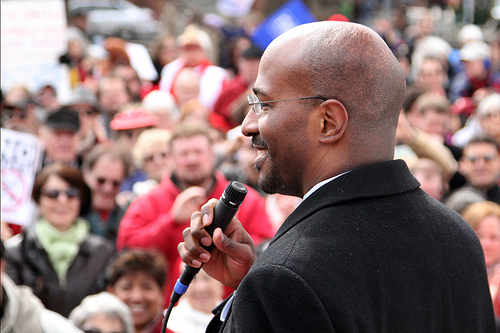
I recently returned from a wonderful in-person meet-up with my mastermind group, which is comprised of Jonathan Milligan, Dennis McIntee, Rebecca Livermore, Dale Callahan, Jackie Ulmer, Fokke Kooistra, and Michael Nichols. I am beyond grateful to be in a group with these people! We were together one full day and two nights. During the day we each put ourselves in the “hot seat,” meaning each of us had time to ask for feedback about some element of what we are doing creatively or entrepreneurially. I used my hot seat to deliver the presentation I plan to give at ReWrite (you should come!) because I knew this group would help me make it the best it can be. Their feedback was too good not to share! Following are 10 things I learned from my mastermind group about public speaking: Make an emotional connection with your audience. Oftentimes an audience will not remember exactly what you said, but they will remember how you made them feel. Do this by telling a great story or being vulnerable. Be vulnerable. Don’t act like you have it all together when you’re on stage. Talk with the audience like you would a friend. Application, application, application. Don’t just tell stories and teach points. Help your audience apply the content you’re delivering. Give them some practical tips. Help the audience go deeper with something they can take home. Whether it’s something you sell at the back of the room or something you give away or both, go the extra mile by creating a piece of content that audience members can take home with them. Repeat your main point. Keep coming back to the main point so that people see how all the different pieces fit under the main point. My main point for this talk is this: The path to our art is through, not around, our weakness. Drop the bridge statements. While I was delivering my presentation I kept saying things like “My second point is…” or “In closing…” They told me to drop all those statements because they’re distracting. Get right into it, they said. Just deliver your content. Tell a story, then make a point. Don’t get these reversed. Include some interaction after each point. After making a particular point, open things up with some interaction. Ask people to raise their hand if they [fill in the blank]. Invite them to ask a question or share something they’re doing that’s related to your content. The point is to get them out of “sit and listen” mode to engage with what you’re saying. Remember the impact you could have. The spouse of one of our mastermind members asked a question that reminded me of how important public presentations are. We all have heard presentations that helped us in vital ways. Some speeches have literally changed the world. When you stop and remember that your talk could help save a person’s physical or mental or creative life, that realization tends to keep you focused and helps you deliver your content with more energy and gusto. This isn’t about you as the public speaker. It’s about the people listening. It’s about serving them the best way you know how. [Tweet “10 Things Every Public Speaker Should Know! (via @chadrallen)”] Which of these points do you appreciate the most and why? Bonus Content: Want to take a next step toward freeing yourself to create? I’d love to give you my free Creativity Self-Assessment and Action Guide. A lot of people have found it really helpful! photo credit: Van Jones Speaking at the at the Save the American Dream Rally in Washington DC February 26 2011 via photopin (license)
Why the Strongest Thing You Can Do Is Embrace Your Weakness

We all know we have a lot to offer the world—if we could just get a break, if we could just get out of our own way, if we could just be who we are deep down. But then life happens and we happen, then more of life and more of us. Things get complicated. We end up disappointed and discouraged, maybe even desperate. You might be thinking, Yeah, that’s true for me, but the best of the best don’t struggle like this. People at the top of their game. The superstars! They don’t seem to struggle much. That. That thought is such a lie. The Myth of Superstardom Let me tell you about some superstars. Philip Seymour Hoffman was at the top of his game, considered by many the finest actor of his generation. He won an Oscar and a Golden Globe for his work in Capote. Then tragically, in early 2014, he died of a heroin addiction. Vincent Van Gogh has been widely heralded as the father of modern art. He struggled with mental illness much of his life and at age 37 died of what most believe was a self-inflicted gunshot wound. Robin Williams. Sylvia Plath. Kurt Cobain. Sometimes being at the top of your game just means you have further to fall. I have only sympathy and sadness and reverence for the Hoffmans and Van Goghs of the world. I’m deeply grateful for their work. I’m also sad about how life treated them and how they struggled so mightily with it—some to the point of death. It’s just tragic and sad and awful. They don’t deserve our judgment, they deserve our reverence. We need to hold their stories sacred. My Weakness This isn’t theoretical for me. One thing I have learned about myself, really since graduating from college, is that I have addictive tendencies. Whether it’s food or Facebook, I have a tendency to go overboard. I have trouble stopping. I remember joking with a friend: “Sometimes I think if I could just avoid making a complete wreck of my life, I’d be thrilled.” But it wasn’t really a joke. It’s the kind of line that leaks out from someone who knows his self-destructive tendencies. This weakness could destroy me if I let it. If I chose to ignore it, to not take it seriously, to push it aside and go my merry addictive way, it would just be a matter of time before it wreaked major havoc in my life. But what if I sat with it? What if I tried to learn something about where it comes from? And what if I tried to recover, to do what I need to do to experience healing? Stories of Redemption Let me tell you some other stories. Donald Miller grew up without a dad. Instead of letting this defeat him, he started a mentoring program that now serves many children who otherwise would have no mentor. He wrote a book about his struggle, and now he’s a New York Times bestselling author. Anne Lamott tells the story of her alcoholism in her book Traveling Mercies. She was strung out and probably just a few binges away from death when she stumbled into a church of people who loved on her. She got help and is now an inspiration to many. Writer O. Henry began his writing career in earnest when he was in prison for embezzlement and then wrote a story a week after being released from prison. Going back a ways, Charles Dickens wrote David Copperfield after his father was sentenced to debtor’s prison and eleven-year-old Charles was forced to work ten-hour days at a shoe-blacking factory. My point is that our weaknesses can help us produce our best work. They do not have to cripple or defeat us. <Tweet that!> In my own experience, my weakness has led me to embrace the redemptive power of creativity. Nothing has helped me more on this journey than to think about and build into my life rhythms of art. I wrote Do Your Art: A Manifesto on Rejecting Apathy to Bring Your Best to the World for myself as much as anybody. I have a long way to go, but my life and my service to others is so much better for having made the choice to walk this path. Walk Your Path Everyone has a weakness, a wound, some issue they’re dealing with. It could be a mental disorder (like Van Gogh) or an addiction (like Seymour Hoffman). It could be a disability of some kind. It could be trauma from your past. A phobia. It could be depression or bipolar disorder or any number of other conditions that, sadly, seem to be part of the human condition. It could be a deep regret you have. When we ignore these weaknesses, when we push them to the side and refuse to deal with them, they do damage to our lives. They sabotage. But if we learn to look at them, if we learn to talk about them with others, if we learn to sit with them long enough to understand their deeper messages, these weaknesses can be our allies. They can lead us to our unique genius. Our struggles, our weaknesses, our wounds—they occur in places of deep potential within and around us. They can destroy us, and maybe they will. But if we can face them, with help from others, they can lead us to our art. Our weaknesses can guide us to the things we are called to give the world. They can lead us to do our best work yet. <Tweet that!> What’s one thing you can do this week to walk your path?
4 Proven Steps That Turn Writers into Tribal Marketers
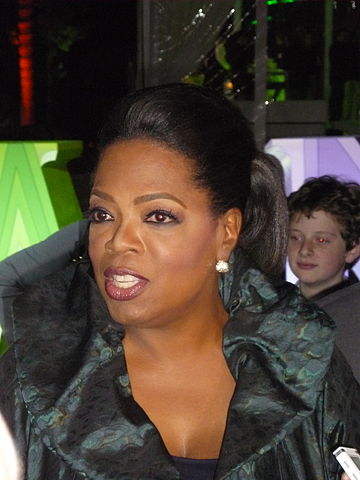
We were all excited. An author we had just published was going to be on Oprah, and the subject of our author’s book would be front and center during the interview. We shipped thousands of books to make sure our accounts had plenty of inventory. The day came, and Oprah set her up beautifully. The author did a great job, and I felt a surge of energy when the book flashed on screen multiple times. And we waited for the orders to come in. Sadly, we’re still waiting. For whatever reason, though exposure for the book was massive via Oprah and her influence, the book did not sell as well as we had hoped. Why Oprah Can’t Make Your Dreams Come True Don’t get me wrong. High-profile publicity has its place, and for some books it works magic. Many bestsellers become bestsellers at least in part because of strong media exposure. But just as if not more often publicity comes and goes, and a book’s sales remain relatively unaffected. It can be heartbreaking, believe me. Fact is, Oprah can’t make a writer’s dreams come true—but tribal marketing can! <Tweet that!> Why? Read on. The Power of Tribal Marketing Oprah, the Today Show, Glenn Beck, and Jon Stewart broadcast, which is to stay they distribute their program broadly—to lots of people who may or may not have an interest in you and your message. Tribal marketing is when you market to a group of people who have already expressed interest in what you have to say. A writer can build that tribe in many different ways, and it takes time, but in the long run it is well worth the effort. 4 Proven Steps That Turn Writers into Tribal Marketers [callout] Read Tribes by Seth Godin (it’ll take 2 to 4 hours). Then read Lynchpin for good measure (a longer read, but enjoyable). Decide how you’ll deliver content. Will you blog, speak, self-publish ebooks, create courses, do webinars, shoot videos? More important than the method you choose is the fact that you choose a method or two and stick to a consistent rhythm. Focus on building your email list. Offer to send an awesome piece of content via email. Offer a thank you gift when you speak somewhere. Start giving things away for which interested people will give you their email addresses. One of the first people to turn me on to the power of email was Jeff Goins. He has some great content on this, and a lot of people have found his Tribe Writers course to be very helpful! Incentivize purchases of your book. Once you have a list of email addresses from people who have already expressed interest in your content, you can market your book to those people. Try offering a package of valuable resources (a series of conference calls with you, for example, an audio course, or other incentive) if people buy your book by a certain date or during a certain window of time. Bonus step: add a value to the incentives that make buying your book a no-brianer. Let’s say you’re offering a series of three conference calls with you. How much is that worth? $150? $200? $300? Now imagine offering that much value in exchange for a $20 book purchase? That’s a deal, friends! If I was already thinking about buying your book, you’ve just made it a no-brainer for me. [/callout] Salesy Sleazy Yucky? When I’ve spoken on this topic in the past, sometimes someone will raise their hand and say “Yeah, but isn’t all this kind of salesy and . . . you know, yucky?” And I want to scream. Do you care about your message? Do you want to help people with your message? Do you believe in yourself?! If you do, you’re not being sleazy. You’re offering help to people who need it, and you care so much about them you’re trying to use the most effective means necessary. Drop the excuses, and get to it! What could you give away that would help you build your email list?
How to Find Success (It’s Simpler than You Think)
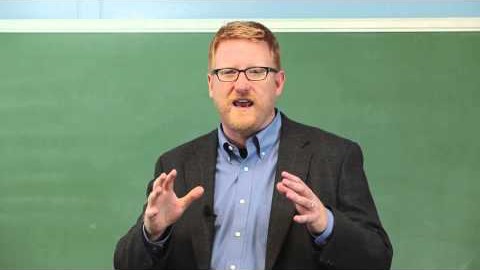
The more I work with successful people and observe how they become successful, I’m convinced: success is not the result of some magic key. It doesn’t happen to people who are smarter or prettier or more talented than everybody else, or at least that’s not how it happens most of the time. It’s much simpler than that. Watch the video below to find out what I mean: What’s your one thing? What’s the one thing you plan to do over and over again until it hits?
4 Things to Keep in Mind When Sending a Book Idea to an Editor or Agent

I recently received this question from an aspiring writer: “I have a contact in book acquisitions who is willing to look over a proposal. I have ideas and draft work for like 4 books. How do I decide what to send him?” Friend and author Michelle DeRusha and I are in the middle of a training program on how to get published. This question came from a friend of Michelle’s who registered. To respond, I recorded the screencast below: 4 Things to Keep in Mind If you have a contact, send brief-paragraph descriptions of multiple book ideas, not just one. Assure your contact that responding with a preference does not in any way signal a commitment to sign you. Make sure your email isn’t too lengthy. The idea is to make it easy to read and respond to. If you’re worried self-publishing will do more harm than good, maybe you’re not ready to publish anything yet? It’s worth pondering. What If You’re Declined? If the editor or agent ends up declining, that just means this one opportunity is closed for now. It’s not even closed forever necessarily. We at Baker regularly decline proposals we later accept when the author does more work. Author Mark Batterson taught me this: Sometimes God closes one door so that we’ll look for another one. <Tweet that!> Remember: your call to write is bigger than this one opportunity. <Tweet that!> Want More Publishing Advice? I mentioned that Michelle and I are in the middle of a training program on getting published. We did our first call last week, and two more are coming. Click here to sign up for any or all the calls, including recordings. Are you trying to decide which book idea to pursue? Are you disappointed by a recently closed door? Let’s talk about it!