How to Get a Book Published

This is perhaps the most obvious question for a writer to ask a publishing insider: How do I get my book published? Funny thing is, people normally don’t ask it that boldly. More often I get questions like: How do find an agent? Is there some way for me to submit my proposal to you? What are you looking for right now? Writers are scared, I think. They’re scared to come right out and ask, “How do I get my book published?” I get that. The creative process is nothing if not scary. To ask “How do I get my book published?” and receive a negative reply might well be more damaging than not knowing the answer. So for this blog post let’s make a deal. You can ask the question, and I’ll do my best to be careful and generous as I answer. Deal? So how do you get your book published? Behind that question is so much wistful yearning and ambition. It is for a lot of people one of the most important questions they’ll ever ask because their book contains so much of themselves. Sometimes the subtext for “How do I get my book published?” is “Will you validate me?” Maybe I’m wrong. Maybe you’re not that attached to your book. Maybe your manuscript is just a bundle of paper you pounded out, and the world can take it or leave it. Who cares? Sorry, I don’t buy it. That’s not how it is for most of you. When I read your emails or talk to you at writers conferences or read your comments on blog posts, I hear deep, deep longing. But longing is not the same as perseverance, and desire for the results of hard work is unfortunately a poor surrogate for the hard work itself. How to Get Your Book Published So here it is: The way to get your book published is hard work over a long period of time. I wish it were easier, I really do, but that’s just the way it is. Some mentor or other probably told you at some point that things in life worth having are worth working for, and this is no exception. Having said that, some kinds of work are smarter than other kinds of work. When it comes to publishing, “work smarter not harder” is definitely wisdom worth heeding. So below are in my opinion the wisest steps to take on the road to publication. Step 1: Commit to Healthy, Sustainable Living First and foremost, commit to rhythms and a lifestyle of healthy sustainability. Would you try to run a marathon without proper training? Of course not. As difficult as preparing for a marathon is, I would argue that pursuing publication for your book is even harder. So you’re going to need to take really good care of yourself—relationally, physically, emotionally, intellectually, and spiritually. I don’t know what that looks like for you, but it’s important to decide and be committed to it. After all, what good is your book if it kills you? Step 2: Build a Tribe Second, start building a tribe. A great way to do this today is starting a blog and capturing email addresses. Resources for doing these things abound. A good place to start is this video from Michael Hyatt, which will help get you set up with a WordPress blog. Next, the cheapest, most effective tools for building your email list are available for free at Sumome.com. Then take Jeff Goins’ Tribe Writers Course and read Platform by Hyatt. For ongoing tips and training, enroll in Jonathan Milligan’s Blogging Your Passion University. Another great option, though more expensive, is Bryan Harris’s “Get 10,000 Subscribers” course. To review: Start a blog, post regularly, and start capturing email addresses. Step 3: Hone Your Craft Third, hone your craft. Blogging will help with this, but you’ll need to go further. Read voraciously the things that make you come alive. Subscribe to other bloggers in your area and comment on their posts. Get engaged. And write. Write every day if you can. Try to establish some sort of pattern, a groove. The difference between pros and amateurs is that pros show up, and they keep showing up. [Tweet “The Six-Step “Work Smarter Not Harder” Method to Getting Published via @chadrallen”] Step 4: Develop Your Concept So let’s say you’ve started a blog and have thousands of email subscribers and the whole time you’ve been building a tribe you’ve been honing your craft. I’ll bet by now you have some ideas about what you’d like to write. If you haven’t already, start blogging about those things. Start sending up some test balloons and getting some reactions to what you have on your mind. Go with it for a while and see what resonates. Step 5: Write a Book Proposal Writing a book proposal will help you get more concrete with your book idea. It will force you to bring it into some sort of structure. You’ll have to think about things like your bio and your marketing plan. (If you don’t have my proposal guidelines, click here.) Step 6: Find an Agent and Follow Through As you’ve done this work of blogging and writing and reading other bloggers and proposal building, I’ll bet you’ve come across a few books that have inspired you in the direction you want to go. Look at the copyright pages of those books to see if their agent is listed. Go to the author’s blog and search for the word “agent.” See if you can find five or so agents who are working in your area. Of course, this whole process is a lot easier if by now you’ve made friends with a few of the bloggers you’ve been following. Maybe now’s the time to email them and let them know about your book. Ask them if you could have just ten minutes of their time—you promise it won’t be more than that. Tell them about your
7 Simple Steps to Building the Structure of Your Nonfiction Book

Imagine driving around an unknown city for a while when suddenly your phone and all its GPS abilities goes dead. You smack it a few times. You look to the heavens. You yell “C’mon!” Nada. It’s a goner. What would you do next? Many writers find themselves in this situation. Here’s the kind of question I hear regularly: How do I take my crazy mess of thoughts and turn them into a book?! A lot of people have some scattered ideas about what they’d like to write about, but they really don’t know how to take those jumbled thoughts and organize them into book form. The really sad part about this is that very often these scattered thoughts are the seeds for a great book. But if the writer never figures out how to organize them, the book never gets written. This post is going to show you a proven way to take your untidy ideas and organize them into book form. 1. Capture the Ideas You Already Have The first step is taking stock of the thoughts you already have, however disorganized they are. I want to stress the fact that you don’t need to be terribly eloquent when you do this. You just want to get your ideas out of your head and on paper or the screen. Think of yourself as emptying a box of puzzle pieces on the table. Your list could be as unrefined as That story about Bertha That movie quote from Shawshank Redemption The idea that quitters are not always silly The joke about turtles You get the idea. Just get them down. 2. Notice the Categories The next step is to notice the categories your current ideas fall into. So if we take my list above, we’d notice these categories: Stories Characters or people (e.g., Bertha) Movie quotes Ideas or principles Jokes Good. Once you have your categories in place, move on to step 3. 3. Do a “Brain Dump” for Each Category Step 3 will take the longest and is likely the most important step. Once you have your categories, do a brain dump for each one. The first category on my list above is “Stories.” My job as writer, then, is to brainstorm all the different stories that might be useful in my book. Then I need to do that for characters or people, movie quotes, and so on. You’ll notice that your brain dump is bigger or smaller based on the category. You might end up with a ton of ideas/principles but not many jokes. That’s fine. Just be sure you’ve given your all for each brain dump category. [Tweet “How to Brain Dump Your Way to an Awesome Book”] 4. Do the Same for Any Missing Categories At this point it might be clear that you need to do some brainstorming in an additional category or more. Maybe you want to brainstorm metaphors or images or sources or conversations or interviews. Notice any obvious categories you missed and do a brain dump for these too. At this point you should have a bunch of categories (aim for at least five) and a brain dump below each category. Now for the fun part. 5. Massage, Organize, and Structure Now start moving the pieces into clusters that seem to work together. Don’t worry about making it perfect. We’re in molding mode right now, shaping mode. As you move the different pieces into clusters, begin sequencing the clusters. Which one should come first, second, and so on? Do you see where we’re going with this? Those clusters are going to become your chapters. 6. Develop Chapter Titles and Subtitles Well done! You’ve come a long way to get to this point. Now begin developing titles and subtitles for your chapters. You can change these later, but it’s important to begin naming each chapter not least because this will help you see the gaps in your content. By the end of this step you should have a sequence of chapter titles and perhaps subtitles with a series of content references below each from your brainstorming. [Tweet “7 Simple Steps to Building the Structure of Your Nonfiction Book”] 7. Fill in the Gaps As you review your chapter titles, what are you missing? At this point you might be tempted to leave a piece out because you don’t already have a lot of content leads for it. Don’t worry about that right now. That’s work for another day. Just drop in a title and subtitle to fill in the gap, and make sure it all has a nice flow. Congratulations! You just structured your book! (Now all you have to do is write it.) Pro Tips What you’ve started to create here is a table of contents and what’s known as a chapter-by-chapter synopsis—a key section for any nonfiction book proposal. If you plan to submit your proposal to agents or publishers, make sure your chapter titles and subtitles serve not only a content/editorial function but also a marketing function. Your table of contents will serve both functions for the publishing board reviewing your proposal. And it will serve both functions in the marketplace. Avoid repeating the same word or phrase over and over again within your table of contents. I see that a lot and it’s boring. I like using the grab-and-tickle approach to titles and subtitles. Grab readers with an arresting or poignant or intriguing title. Then tickle their interest with a descriptive subtitle. Grab and tickle. Want to know more about writing a nonfiction book proposal? Check out my book proposal guidelines. They’ve helped countless authors win book contracts. Download Proposal Guidelines.
9 Books That Changed Everything for Me
What are the books that have made you . . . you? Recently my friend Bob Evenhouse asked me how I got started blogging, coaching, speaking, etc. I immediately started rattling off the books that influenced me. I owe so much to these books and their authors. I thought others might be interested in these nine books (as well as a few courses), so I shot the following video: [youtube id=”PThe8DWHVTM”] For a chance to win (your choice of) three of these life-changing books, CLICK HERE. What are the books that have most influenced your creative journey?
5 Questions to Ask Your Family and Friends during the Holidays
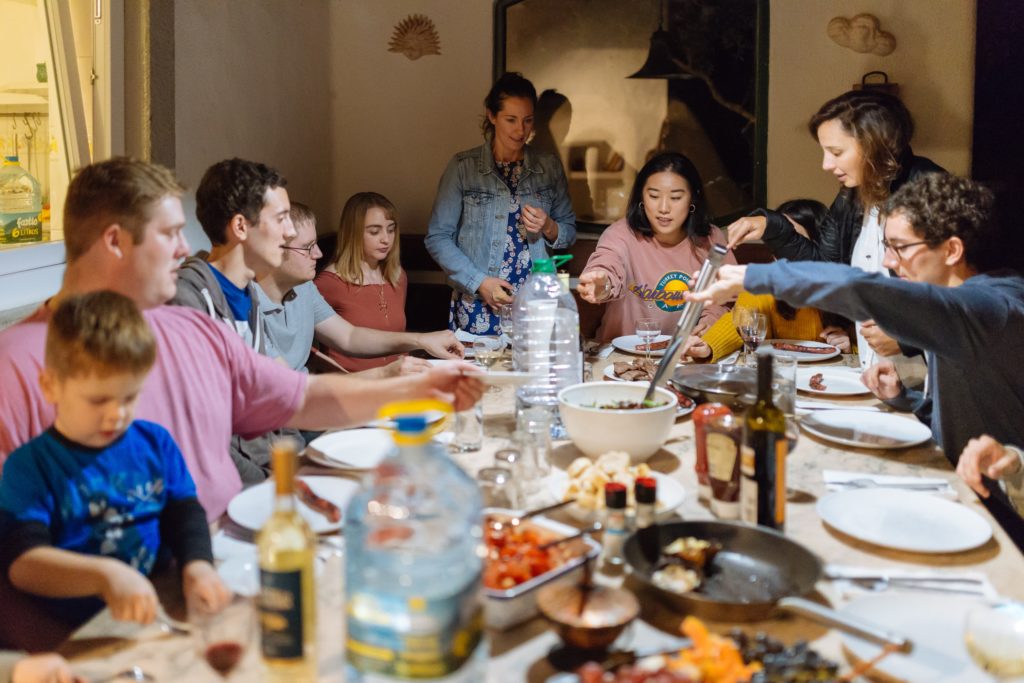
Holidays can be tough. It sounds counter-intuitive perhaps, but it’s true. Sometimes holidays remind us of people or events that used to be here and now for whatever reason are not. Sometimes holidays bring us into close contact with people who are important to but very different from us, and just the closeness can create tension. Often the travel involved can be very taxing on our bodies. In short, holidays can remind us of the brokenness in our lives, past and present. When I talk with my friends about the holidays, some of them seem genuinely hopeful and excited. But many anticipate the holidays with a measure of anxiety. They just want to make it through without any major blowups or other kinds of pain. How about you? As you look toward Thanksgiving and Christmas, what emotions are primary for you? I’m reminded of my friend Josh Riebock’s book Heroes and Monsters. It’s a brilliant memoir, and in it a twenty-something Josh recounts the deaths of his father and mother. All that’s left of his immediate family is his relationships with his siblings, and he could see them all drifting apart from each other very easily. He makes a deliberate choice to reach out, to be a brother who is present and concerned and giving. What if we made a similar choice? Here’s my humble contribution to that effort. I want to offer five questions you can ask your family and friends. My hope is they will help you engage the people closest to you in ways that are healthy and life-giving. 1. What’s your favorite movie and why? Movies are a cultural commonality. They make for a convenient place to start a conversation that could take us to unexpected places if we listen closely to what the other person says. [Tweet “5 Questions to Ask Your Family and Friends during the #Holidays via @ChadRAllen”] 2. If you could visit anywhere in the world, where would you go and why? The places we long to visit often reveal things that are important to us. 3. What do you consider one of your greatest accomplishments and why? This is an opportunity to celebrate something that is dear to your loved one. Give them a high five! 4. What’s one of your happiest memories? This, again, is a reason to celebrate. Relive the memory with them. 5. What are you thankful for? This one is tried and true for Thanksgiving tables all over the country. It’s a natural question to ask, and again it can be revelatory. [Tweet “”What’s one of your happiest memories?” and other ?s to ask family during the holidays via @ChadRAllen”] 3 Question-Asking Tips When you ask these questions, remember these three tips: Leave your phone in a different room and listen carefully! Really listen to what the other person is saying. Ask follow-up questions. This often is very natural when we’ve followed tip 1 above. Don’t judge. The person you’re asking may answer differently than you hoped or expected. That’s okay. They are who they are! I hope and pray your holidays are filled with joy and meaning. [callout]Want these questions on one sheet of paper, divided into boxes for easy printing? If you want, you can cut the questions into cards and then pass them out to folks so they can ask one of the questions. Just CLICK HERE. Happy Holidays![/callout] Which of these questions could you envision yourself asking your family or friends?
Answer This One Question and You Will Live a Better Story
Why do we go to movies?” he asked the audience. “Escape!” someone shouted. “An experience!” “Yes,” the speaker said, “we go for those reasons, but we also go for clarity.” I’m here in Chicago for Donald Miller’s Storyline conference as I write this, and I think Don nails it in the above exchange. We go to movies for clarity. We watch a character who is very clear about what she wants, and the escape, the experience, is in rooting for her. Watch this trailer for example. Walter Mitty is a guy who works for LIFE magazine. Ironically he wants, you guessed it, a life. We root for Walter Mitty even as we root for ourselves to get a fulsome, brave life. Why Clarity Is So Important When we live cluttered lives, we’re living a story that no one would want to watch. We’re living a poorly written story. When we’re clear about what we want and we pursue it, that’s the stuff of a good story. What do you want? This is a vital question, but it can also be paralyzing. Try breaking it down. What do want in your marriage, your relationships with your children or siblings or parents, your professional life? Try adding a timeframe. What do I want this year, in the next three years? Freedom to Pivot Once we’re clear on what we want, we can get busy pursuing it. If it doesn’t work out for some reason, that’s okay! Miller reminded us that if we need to pivot, we can pivot. The point is movement. We need to decide on a direction and go. [Tweet “If we need to pivot, we can pivot. The point is movement. We need to decide on a direction and go.”] What Do I Want? As I write all this, I’m thinking about what I want. What I want is to serve a lot of creative people. I want to help them pursue their dreams. I like helping writers. I want to help them get their books out. I can do that. I’ve done it for hundreds of writers. I want to help creatives unleash their voices. I want to foster a community where we can help each other do that. I’ve already started, but I want to keep it going. I hope this pursuit has the makings of a good story! What do you want?
5 Reasons Christians Should Love Celebrating Halloween

Did you know Halloween is a religious holiday? It is! The term “Halloween” itself is a shortened form of “All Hallow’s Eve.” That word “hallow” is the same one that appears in The Lord’s Prayer: “hallowed be Thy name.” The noun form refers to a holy person or saint. All Hallow’s Eve is just a fancy way to say “the eve of All Saint’s Day,” which is a sacred day indeed, when Christians around the world commemorate our martyrs and other faithful pilgrims who’ve gone before us. An Act of Faithfulness In the same way we Christians have a Christmas Eve, we have an All Saints Eve. On Christmas Eve we keep vigil for the arrival (or celebration of the arrival) of the Holy One. On Hallow’s Eve, we prepare to commemorate our many holy ones by making fun of evil and even, perhaps, acknowledging in a playful way that none of us is perfect. That’s the business with costumes. We’re poking fun at scary and even deadly things because we know that God has it all sorted out. And I’d argue we can even be poking fun at our own imperfections, confident that God’s work within us is ongoing. We can do these things because God has conquered evil and death in the world once and for all. And while this reality is hard to believe sometimes, our practice of Halloween can be one terrific night of faithfulness–of reassuring ourselves that, by God, we do know how this story ends, and it is the very essence of a a happy ending. [Tweet “That’s the business with costumes. We’re poking fun at scary things because we know that God has it all sorted out. via @ChadRAllen”] 5 Reasons Christians Should Love Celebrating Halloween Let me offer 5 reasons Christians should love celebrating Halloween: Celebrating Halloween is a way of affirming that God has overcome evil once and for all. Costume wearing is a way of mocking evil and reminding ourselves that we’re not perfect! Amen? Candy! Celebrating Halloween Christianly can have a good influence in communities where Halloween is sometimes an excuse for vandalism and other delinquencies. It’s a splendid opportunity for us to have a good time with our children–to be present with them, to walk in the dark with them (reassuring them that the dark is okay, even wondrous), and to have some fun. I don’t know about you, but I’m a big fan of fun. So stay safe, enjoy yourselves (enjoy your children!), and know that God is ever with us, calling us steadily onward to a glorious future that has already begun. [Tweet “Celebrating #Halloween is an act of Christian faithfulness: 5 reasons from @ChadRAllen”] Do you have a favorite Halloween tradition? I’d love to hear about it!
What if the Best Thing You Can Do for Your Writing Has Nothing to Do with Your Writing?

We write who we are. Or at the very least, we write from who we are. In the same way that beautiful gardens and happy productive children don’t just happen, neither does good writing. All of these are products of an environment. How’s Your Writing Ecosystem? So what if you took an ecosystems approach to your creative life? I’m not talking about where you write, though that’s important. I’m talking about the larger setting in which your writing takes place: your life. What if the way to become a better writer has nothing to do with writing? What if it has just as much to do with things like rest relational support exercise your reading life and other intellectual stimuli reflection prayer or meditation being connected with those we love recreation I’m reminded of a writer who found that running was crucially important to his writing life. I’m not advocating a one-size-fits-all approach here. Running may not be your thing, but don’t miss the key principle here: assessing vital areas of your life now and again is important to your writing career. [Tweet “What if the way to become a better writer has nothing to do with writing?”] Don’t get me wrong. If you want to become a better writer, there’s no substitute for the B.I.C. method—butt in chair. But it’s important to look at the larger context of your B.I.C. How can you become healthier—more connected and reflective and whole? What about Unhealthy Writers Who Have Been Successful? Wait, some will say, Hemingway was a drunk. That didn’t seem to slow him down much. And it’s true. Many of our best writers throughout history struggled with myriad forms of self-sabotage and unhealthy behavior. Obviously some writers are just gifted for whatever reason, but Hemingway did not write drunk. And I have a hard time believing the best world literature has to offer was produced by a sustained lack of health. Don’t be fooled. The quality of your life has profound influence on the quality of your writing. The Health Benefits of Writing Remember, too, that this is a two-way street. Being healthy improves your writing, but it’s also true that writing improves your health! Numerous studies have revealed that expressive writing is really good for our physical and emotional health. It has even helped people suffering from PTSD to recover more quickly. Generally speaking, the evidence reveals we are wired to be writing creatures. When we write, we grow and heal and develop and become better versions of ourselves. [Tweet “Generally speaking, the evidence reveals we are wired to be writing creatures.”] That’s some good news for writers! A Brief Exercise for Assessing and Improving Your Writing Ecosystem So what to do with all this? How does a person apply this practically and move forward? I’ve put together a little self-assessment and action plan that you might find helpful. It uses slightly different language than I’ve used here, but I think you’ll get the connection quickly enough. To have a look, click here. What’s one area of your life where with a little concentrated effort you could make real progress? Do it for your art’s sake!
How to Get Your Book Written Once and for All

Do you have a nonfiction book idea? If you’re reading this, chances are you do. But here’s the thing. This idea you have is not guaranteed to become anything. If you don’t do something with it, in time your idea will fade away. And maybe that’s okay. Maybe it’s not an idea you care very much about. If so, let it go. No shame in that. But if you really do like this idea and you really do want to write this book, it’s important to take action. Dreams in Need of Action Sometimes I wonder if writers’ heads are where books go to die. That may sound harsh, but I regularly talk with writers who have really compelling book concepts. They share their vision with me, including a possible title perhaps, and I’m impressed. I do nothing but encourage them to follow through. Then weeks go by, and weeks turn into months turn into years. I might see them again and ask whatever happened to that book idea. Sometimes the writer has deliberately made a decision to focus her efforts elsewhere, but more often the book did not get written because the writer got distracted. The idea never made its way from head to paper. The distance between idea and book can be lengthy, and so your book runs the danger of going no further than your gray matter. That’s sad because your book idea is worthwhile–for you and for many would-be readers. Todd Henry says the most valuable property in the world is not an oceanfront paradise but a cemetery because there are buried the unfulfilled dreams of countless creatives. Tell you what. Let’s use this blog post to make a deliberate choice. This is your opportunity to jettison your book idea or take action on it. Let’s reject indecision and go one way or the other, right now. Ready? Take thirty seconds to decide. Go. 7 Reasons Writing a Book Proposal Is Your Next Step Still with me? If you have decided to take action on your book idea, I want to suggest that you take the step of writing a book proposal. Why? Here are seven reasons: Writing a book proposal takes the idea out of your head and begins to make it more concrete. It goes from your head to paper. Structure precedes action. To write a book proposal is to imagine a structure for your book. Once you’ve imagined the structure, building it becomes easier. Writing a proposal opens the door to discussions about your book idea–with your friends and writing peers but also with agents and publishers. Writing a proposal opens the door to the possibility of a book contract. If you get a book deal and a check shows up in the mail, now you’ve really got some motivation to write the book. That’s exactly what happened to my friend and client Chuck Tate. You can read more about his story here. Writing a proposal lengthens your imagination about it. When you go to the effort of describing the book, plotting the chapters, planning the promotion, the creative flywheel starts turning. Momentum builds, and again it’s just easier to cross the threshold of writing the book. Writing a proposal will help you avoid mistakes. As you develop your idea in the process of writing the proposal, you’re likely to notice pitfalls and problems that you might have walked right into if you simply started writing the manuscript. Writing a book proposal involves actual writing! [Tweet “”How to Get Your Book Written Once and for All” @ChadRAllen on the benefits of book proposals #amwriting”] If you have a book idea that won’t go away, I hope you’ll take action and write a book proposal. Consider giving yourself a deadline for each element of your book proposal. Write your deadlines in your calendar. Don’t know what the elements of a book proposal are? Click here to receive a copy of my book proposal guidelines. They have helped countless authors write contract-winning book proposals. You can do this! Do you have a book idea that you really care about?
Give Me 79 Seconds — And I’ll Help You Stay Motivated on Your Passion Project
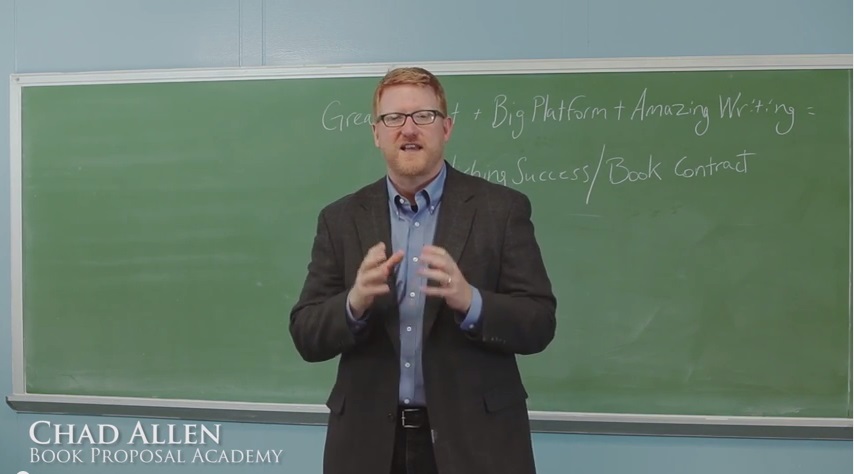
Wait, what? We need to stay motivated on our passion projects? Yes! No matter how much we love what we’re doing, we get tired. Or we get distracted. Or both! In this 79-second video I share an essential tool for creatives…
How to Be Yourself and Make Money

[guestpost]This is a guest post from my good friend Samir Selmanović, an executive coach, organizational consultant, and entrepreneur living in New York City. Connect with Samir on LinkedIn, Twitter, and Facebook.[/guestpost] The way we work is changing rapidly. The number of us who have opted out of traditional corporate or government employment is growing. According to such sources as Forbes and Public Sector Digest, by the year 2020, 40 to 50 percent of the workforce in the U.S. will be freelancers. By 2030 we will be the majority. Moving from cubicles to freedom is appealing for many reasons. Perhaps the most significant is the fresh air of possibility and permission to create products, services, and ideas that would never be possible in the often monochromatic, dehydrated, and angular space of traditional business. Corporations and government organizations are also awakening to the realization that human freedom and a sense of purpose make business sense. Those living in denial of this softer but more powerful aspect of business will be awakened one day soon by the success of their competitors. But that’s what they have to worry about. The Nursery of Creativity What we have to worry about is the flip side. It only takes a short while to realize that this new creative space comes with a whole new set of limits placed on us. We have to create on demand, produce what can be sold, and deliver what the market wants. The good news is that this very tension—between being oneself and providing valuable service—is the nursery of creativity. [Tweet “”The tension between being oneself and providing valuable service is the nursery of creativity” via @SamirSelmanovic @ChadRAllen”] Being oneself in work—which translates to doing what we love—is the holy grail of vocation, and it usually comes in the later years of our lives. As we move from having a job, to having a career, to having a calling, we become increasingly aware that who we are is far more important than what we do. Young adult zeal to prove ourselves gives way to deeper movements toward understanding ourselves. As we mature we realize we are not human doings but human beings. Our leadership influence correlates far more with who we are than with what we do. Doing more, at some point, becomes unproductive. Freedom to attend to who we are becoming, however, is often visited by freedom’s well-meaning brother: fear. Once we walk out of the map of conventional ideas and practices, we are going feral. Wilderness brings freedom but also wipes away our assurances, safeties, and consolations. No one can guarantee your survival anymore. We’re left to make it work. And this means doing what your difficult entrepreneur boss, your less-than-ideal clients, or the circumstances of life itself are asking of you. 5 Ways to Be Yourself and Make Money Here is what I have learned in my leadership coaching practice from leaders who have learned to inhabit their own lives while doing what they have to do whether in the cubicle world or outside it: Give yourself permission to use your work as a tool of becoming the person you were meant to be. Claim this and never let it go again. Commitment to becoming yourself is your freedom, your bliss, and your heaven on earth. It is also your door to success. If you are not doing your work as you, there will be someone who will do it better. By being yourself, you make your competition irrelevant. This is your anchor and your sail. [Tweet “”By being yourself, you make your competition irrelevant” via @SamirSelmanovic @ChadRAllen”] Embrace limits. Reject the cultural fear of limits. Limits are where art comes to life. Create with the canvas you have, the technique you are limited to, and the experience that is yours. Within these boundaries, set by your project, clients, or circumstances, you have full freedom to be yourself. The narrower the boundaries, the more creative you are called to be. Find a way to turn the commands into choices and you will find a way to freedom. Embrace money as one of the measures of your creativity. Money is what people work for and where they deposit their sense of safety and their personal aspirations. Like Jesus said, “Where your treasure is, your heart will be also.” People give their treasure to you because they believe you can contribute to their safety and their aspirations. Respect what they want and need. It is about their heart. If you don’t see it, it is because you are not creative about the way you see. Learn to enchant yourself with their story. Lose, grieve, and let go. When tempted to complain about circumstances or resent what life is doing to you, remember that half of life is made of losing, grieving, and letting go. We all love the win-celebrate-achieve half of life. Learn to love the other half. If you are chronically stuck, it is probably because you are avoiding states such as anxiety, frustration, and boredom. They are partners on your journey. Let them in. Breathe through them. [Tweet “”Embrace limits. . . . Limits are where art comes to life” via @SamirSelmanovic @ChadRAllen”] Master your irreducibly human skills. Technical and transactional competencies required in your business are necessary, but you need something far more foundational. To perform in the midst of volatility, uncertainty, and ambiguity, you need meta-competencies. What is it that you can do because you are human? What is it that you can do because you are this particular human? Get very good at these things. Whatever you do, make a life-long commitment to learn to love the harsh world that seems to be pushing against you. Work is intimacy, a place where your inner world comes into full contact with the outer world. It is a conversation between lovers, a continual negotiation between what you want and what the world wants. Like in a marriage, you will learn what love is only when you are