6 Strategies for Getting Your Book Published
The #1 question writers ask me is, “How do I get my book published?” Too often they can’t get a straight answer to that question. They get vague responses that aren’t really actionable or helpful. That’s about to change. I’m going to share six strategies that are all but fail-proof for getting a traditional publisher interested in your nonfiction book. I share the strategies and exactly what tools other published authors have used to implement them. This process is effective. As you take action on these strategies, you can be sure that you are doing what you need to do to become a successfully published author. I’ve compiled all six strategies into an illustrated guide you can follow step by step. If you follow these six strategies, you’re all but guaranteed a book contract. Click here or the image below to download the six strategies.
How Writers Can Get Back to Their First Love

He had done his art for over 35 years. Every morning he woke up and went to his studio. These days he was older so he limped more than walked there. He looked at his subject—some peaches on a table or apples or grapes. These simple beauties still dazzled him. Then he breathed, picked up his palette. And he painted. Just a small-town artist doing what he loved. Over the years he occasionally would give one of his paintings to a neighbor or friend, always to the open-mouthed delight of the recipient. Or maybe when family was over, he would bring out a piece or two to share. Eventually an art dealer in Paris heard about the artist’s work and convinced him to let the public have a look. The dealer put together an exhibition, and art collectors were astounded. For the first time the world stood before the work of Paul Cezanne, whom many today consider the father of modern art. Cezanne himself was taken aback. Making his way into the gallery that revelatory day, Cezanne staggered a bit. He leaned on his son’s shoulder and said, “Look, they have framed them.” Our First Love We get into this because we love it. Our creative work feeds our souls, and every now and then we feel like we’re helping to feed someone else’s soul too. We write for hours and hours and don’t want to stop. We get wrapped up in it, and when we’re away from it, we pine to get back. We, like Cezanne, don’t think about anything else. It’s just us and our art, and the rest falls away. And then something happens. Or often it does anyway. Maybe the reason Cezanne could maintain his purity of perspective was because he lived before the Internet. Regardless, something changes for us. We start worrying about traffic and comment count and subscribers and platform. We’re told we have to worry about these things if we want publishers to take us seriously. And we can begin to lose our first love. It can be crowded out amid a mass of nagging concerns. “Will anyone read this? What will they think of it? Is this my breakthrough?” It becomes harder to get lost in our work. A Holy Naiveté A certain naiveté is essential to every artist, regardless of your medium, be it words or acrylics or tempos or even interviews and board meetings. (In my mind you’re an artist if you use your mind to solve problems. Writers do that. So do musicians and managers.) The kind of naiveté I think we all need is the kind Cezanne had. We need in some way to become like children again. I see it in my own kids. When they’re out riding their bikes or swinging in a tree or building Legos or imagining a parallel universe with their stuffed animals, they’re completely immersed. It’s just them and their art. Their naiveté about other cares of the world is precious, holy even. And my guess is that’s why you’re in this. You’ve experienced those moments when time stood still and everything vanished around you. You’ve had moments when you got lost in your art. But maybe you’re struggling. Maybe now you’re wrought with so many other anxieties, it’s hard to see anything else. Maybe sometimes it’s hard to remember what it felt like to love this. Has it started to feel like more of a grind than anything else? If so, I want to offer some ideas for getting back to that sense of wonder and passion and love for this gift we’ve all been given. Do the art thing first. Before you get on social media or text or take a phone call or look at your stats, do your writing. Let creativity be one of if not the first thing you engage in each day. At times I think creativity is the only truly human endeavor. It’s certainly more humanizing than doing email! Block it out. Make time for this. Decide when you’re going to write and schedule it. And remember to linger sometimes. An author I’ve worked with, Alan Hirsch, has referred to “loving on” his writing. I like that. Sometimes our words need us to linger over them a bit, particularly when the first draft is done. Don’t overdo this. More prose has been murdered than nurtured by an excess of attention. Try to find the right balance. Create sacred space. Your work is nothing if not sacred. Do what you can to facilitate an environment that honors the holiness of your work. For some (me sometimes) this can be as simple as an awesome cup of coffee in a café with some ambient tunes. For others it might be dim light and a candle burning. If you haven’t already downloaded my worksheet that helps you develop your process, click here. Sometimes just a small change in your routine can make a huge difference. Respect your art. It’s important, so give it its due. Set up your life in a way that honors this endeavor. If you do, odds are good you’ll find yourself back in the flow. Just you and your art. [Tweet “Writers: How to get back to your first love . . . via @ChadRAllen #writing #amwriting”] What’s one thing you can do in the coming days to help you recapture your first love? Editorial Note: I first heard the story about Cezanne in The Spirituality of Imperfection by Ernest Kurtz and Katherine Ketcham (Bantam, 1993). My version above takes some imaginative liberties, but the main events of the narrative cohere to what I read in Kurtz and Ketcham.
The Writer’s Stress-Free Guide to Meeting with an Acquisitions Editor or Literary Agent

Meeting with an acquisitions editor or literary agent can feel like a mixed blessing. Getting to talk with a publishing pro about your work is obviously a great opportunity. But these meetings often come with severe time limitations, which can make the whole experience very stressful. In this article I’d like to offer five things you can do to remove or reduce the stress of these meetings and maximize their value. 1. Set Reasonable Expectations Wouldn’t it be great if when you sat down with an acquisitions editor, they greeted you warmly, shook your hand, and said something like, “We’ve read your proposal and think it’s perfect. Would you please sign this?” as they present you with a publishing contract? It would be awesome, but that’s not likely to happen. In fact, I would wonder about the editor or publisher if this did happen! Regardless, if you go into this meeting with the expectation that it is going to lead you inexorably to publication, you’re likely to be disappointed. So what is a reasonable expectation for such meetings? . . . To continue reading this guest post for my friends at the “Do a New Thing” blog, click here.
See How Easily You Can Get Unstuck with This Trick

If you’re involved in creative work, whether it’s writing or leading or designing or coaching, you know what it feels like to get stuck. A question I receive regularly goes, “This project is important to me, but I’m stuck. How do I get started, and how do I finish?” We’ve all been there. Getting stuck is a drag because we know that our creative work is some of the most important work we do. It comprises what is probably the most profound contribution we have to offer the world. If we stay stuck, if we can’t figure this out, at the very least we could end up feeling unfulfilled—like we didn’t accomplish all we thought we could. In this post I want to share a question that can make a significant difference in your creative life. If you ask this question or one of its variations regularly and follow through on where it takes you, it can quickly help you get unstuck and jumpstart the projects that are most important to you. The Question Your project is often more difficult in your imagination than it is in reality. When you’re stuck, the problem is often not the work itself. It’s the vagueness of how we imagine the work will be. So, without further ado, here’s the question: How could I make this easier for myself? We get stuck because we make whatever the project is this big deal in our minds. We think it’s going to be like building the Eiffel Tower when, really, if we just give ourselves a chance, it won’t be like that at all. [Tweet “”Your project is more difficult in your imagination than it is in reality.” @ChadRAllen”] Variations on the question: What if this were easy? What would that look like? What if I’m making this project more difficult in my head than it really is? What do I need to do to make this easier for myself? What would need to be true to make this project a lot easier? What are one or two things I could do to make this easier? I’m not saying creative work doesn’t require, well, work, but let’s not sabotage ourselves by making it more difficult than it is. Applying the Question to Your Project When you ask a question like “What if this were easy?” you are forcing yourself to get concrete about your next steps. To think creatively about how to make the project doable. Instead of having this vague impression that the work is “too tough” and you “don’t have enough time” and “probably no one will want it anyway” and all of that kind of thing, just pause for a minute. Give yourself a chance. Ask yourself: What if this were easy? What do I need to do to make this easier for myself? From there, you could go a lot of different directions. Do you need to schedule 30 minutes a day? You could do that, right? That’s not so hard. Do you need to use some vacation time and get away for a week? I’ll bet you could make some amazing progress if you did that. Do you need to take a break from the idea of this project? Seriously. Do you need to just walk away from it for a while and give yourself a prompt to pick it up six months or a year from now? That would be better than having this nagging sense of failure all the time, right? Maybe it’s best to set it aside for a while so that you can tend to other matters. You’re not deciding to kill it right now. You’re being intentional about delaying it. Do you need to talk it out with a friend or two? It can be difficult to admit we need someone else’s listening ear, but doing this almost guaranteed to lower the temperature on how you’re feeling right now. Do you need to start a group of people who get together once a week or once a month for accountability and inspiration? That could be a game changer for someone reading this. Do you need a new tool or a course or a coach? Would that make this project easier? Your creativity may not be worth a trip to the poor house, but it’s certainly worth some investment, right? Consider BookCamp! Listen, you can do this, this is within your reach. Start asking this question and then do something that makes it easier for yourself. You can do it, and the reality is we need you to do it. We need you to share your gift with us. As you consider your most important project, what’s one thing could you do to make it easier?
3 Ways to Make the Most of a Writer’s Conference Before It Even Starts

[guestpost]EDITOR’S NOTE: I’m delighted to bring you this guest post from Christa Hutchins. Christa is a writer and online marketer who specializes in coaching, project management, and administrative support for speakers, writers, and ministry leaders. She’s passionate about moving creative people from vision to action. Christa lives in South Louisiana with her husband in their delightfully empty nest. Connect with Christa at her website Do A New Thing and on Twitter @mckdbooks.[/guestpost] About this time last year, I signed up for a writer’s conference, the She Speaks Conference hosted by Proverbs 31 Ministries. I thought, “This is going to be fun!! Can’t wait till I get there!” But reality confronted me when I joined a Facebook group with other attendees. There was actual WORK to do before the conference! For real?? It seemed a million things were added to my to-do list. Business cards, networking events, workshop options … and I wasn’t even planning to meet with an acquisitions editor or participate in a critique group. I watched my friends completely stress out, scrambling to write book proposals and polish up one sheets. But this year, I’m prepared. I have a game plan. And if you are attending one of the dozens of writing conferences being held around the country, you need a game plan too. [callout]Visit Do A New Thing to get your FREE downloadable Conference Plan Worksheet.[/callout] Here are three ways you can make the most of a writer’s conference before it even starts. 1. Devour the Conference Website I mean, read every single word on it. You will find a wealth of information there. A few specific things you should look for: payment deadline hotel and travel accommodations workshop descriptions and sign-up editor/agent appointment details speaker bios dress code All of that information will go into your preparation over the next few months. Speaking of which… 2. Make a Preparation Plan Reviewing that website may generate a mile-long to-do list for you, and it can be overwhelming at best, paralyzing at worst. Truth: It takes a lot of time to prepare for a writing conference. Truth: It is doable if you break it down in chunks and spread it over time. Truth: It is worth it to maximize your experience. Make a plan to do certain tasks each month to prepare. Get your travel and logistical arrangements settled first, then start focusing on your book proposal if you are meeting with editors or agents. [Tweet “Preparing for a #writing conference takes time, but it’s worth it. More tips via @mckdbooks @chadrallen”] The book proposal is probably the single most time-consuming task and you’ll want to allow plenty of time to do it right. It’s your first-impression handshake with a publisher and needs to be your very best work. Seriously, I saw people last year spend hours agonizing over just the right fonts and flourishes to put on business cards and then slap together a book proposal at the last minute. They probably had their priorities out of order. #understatement 3. Connect with Other Conference Goers Networking (and making friends) is one of the best parts of going to a conference. People who understand your craft and your passion for words surround you. If that kind of affirmation is not part of your everyday life, it is water for your soul and fuel for your fire. To maximize your networking time at the conference, connect with others before the conference. Check to see if your conference has any official forums, chat rooms, or Facebook groups where you can connect. Visit the conference Facebook page often and use the conference hashtag on social media to help others find you. You can also search Facebook for unofficial groups, usually run by past participants with a passion for that particular conference. These groups are a wealth of information on what to expect and how to prepare. Many of them organize networking opportunities around the conference — helpful especially if you are attending the conference by yourself. You’ll arrive to a room full of familiar faces, now with flesh and bones attached to those floating profile pictures. Yes, there is a lot of activity leading up to a conference. But most importantly, be prepared with an open heart and open mind for whatever comes your way. Free Resources to Make Your Next Conference a Success Thanks for taking the time to read this post. I hope it’s been helpful to you. I couldn’t do a guest post for Chad’s blog without offering his readers something special. I’d like to send you these resources for free: Conference Prep Worksheet – Record all the important information about your conference and create a month-by-month plan to make it your best conference ever. 65 Christian Blog Post Ideas – For those days when the words just won’t flow. Plus 5 extra ideas just for fun! Simply click here, enter your email address, and I’ll send them to you! Are you attending a writing conference this year? What part of the preparation is most daunting to you?
An Amazing #Giveaway for Writers Who Want to Get Published (Worth $7000)

I confess: I love a great giveaway. One of the reasons I love them is because I’ve been the recipient of free gifts that have made a HUGE difference in my life. I also like the rebelliousness of overturning the typical money-for-service paradigm and just giving somebody a huge gift. To register right now for what may be the best giveaway in history for writers, click here or on the image below. If you want to know the backstory, keep reading. The Perfect Giveaway for Writers If you’re like many writers, you have a book idea but you’re not sure how to get started. Or you’ve started writing, but you’ve stalled, and now an unfinished manuscript languishes on your hard drive. Or maybe you’ve written a good deal, but the whole ordeal of writing a proposal and finding an agent and then a publisher—it all seems so complicated. And your dream of a published book seems distant at best. Or maybe you are a published author, but you know there’s always room for improvement and the landscape is always changing. As I thought about the best giveaway I could possibly offer to writers, I considered all of the above scenarios. I wanted to give away a package of resources that could help any writer, regardless of where they are in the process, to go from where they are all the way to a successfully published book. I thought about walking with someone on the journey, coaching them one-on-one, not just for a month or six months but a whole year. And I thought about courses created by my friends Michael Hyatt, Jeff Goins, and Jonathan Milligan. These guys have created the best courses on the planet for some of the most important steps of the writing and publishing process. I thought about my own course, Book Proposal Academy, which I believe is the best course available for writing a nonfiction book proposal. Well, long story short, I sent some emails and am pleased to announce Michael Hyatt, Jeff Goins, and Jonathan Milligan all agreed to sponsor a license to their courses for this giveaway. Their generosity enables me to offer what I think is quite possibly the best giveaway in history for nonfiction writers. What’s in This Giveaway? Have a look at what’s in the giveaway and how much it’s worth: One-on-One Coaching with me for a year $5000 Jeff Goins’ “Tribe Writers” course $1097 Michael Hyatt’s Platform University – 12-Month membership $444 My own “Book Proposal Academy” course + book $267 Jonathan Milligan’s “Kindle Your Passion” Kindle publishing course $197 Total Value $7000 Price for the Winner of This Giveaway FREE! This is going to be a game changer for whoever wins it. Think of it as a scholarship to some of the best training and education available on writing and publishing. It truly is a once-in-a-lifetime opportunity. How Can I Improve My Chances of Winning? To enter, all you have to do is click here and register. It’ll take you five seconds. How do you improve your chances of winning? You can multiply your chances of winning up to 10 times by sharing the giveaway via your social networks. Just follow the directions as you enter. To register for the giveaway, click here.
How Hemingway Kept His Momentum Going and You Can Too
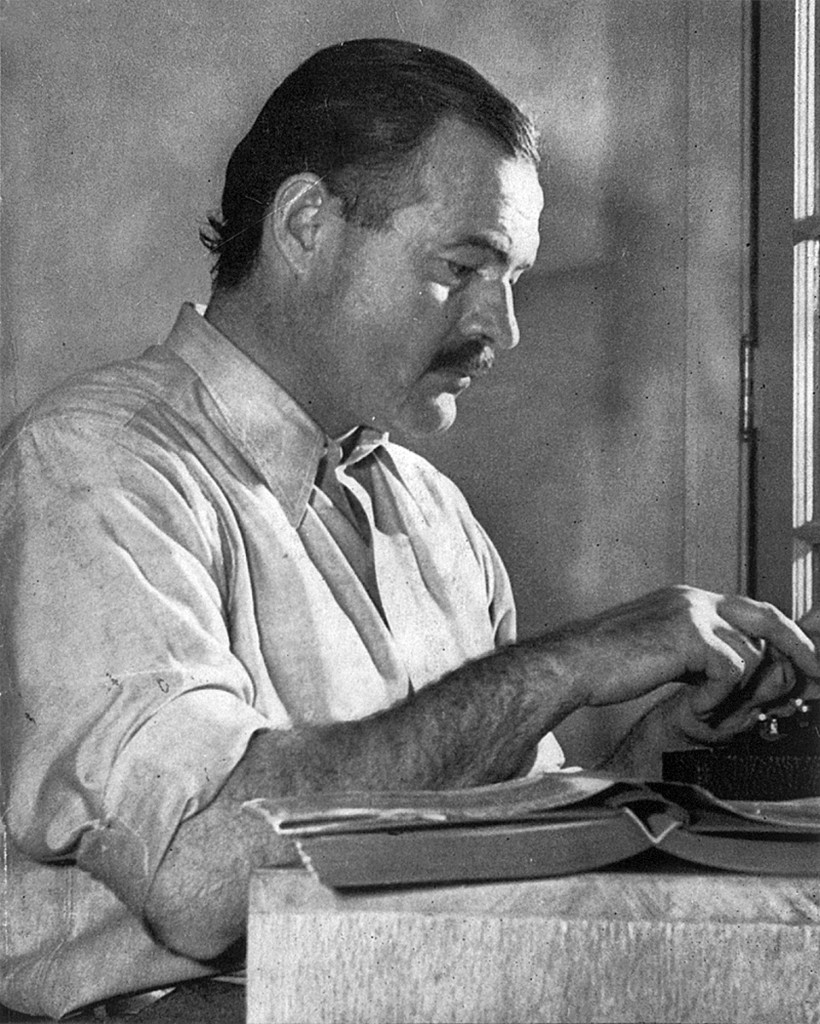
Not long ago my wife and I finished reading Roald Dahl’s classic Charlie and the Chocolate Factory to my son. A great feature of the particular edition we read him was an interview with the author in the back. One of the questions the interviewer posed to Dahl was, “How do you keep the momentum going when writing a novel?” Dahl responded with a writerly hack he learned from Earnest Hemingway. Apparently they knew each other, which incidentally is just fascinating to me. Think about the places they must have gone in conversation. Anyway, to keep momentum going, Dahl said, echoing Hemingway, “When you are going good, stop writing.” Hemingway’s Hack That’s right: When things are going well, stop. It takes great discipline to stop when you know where you want to go next, but that’s the advice of these two great literary masters. Stop, they say, so you’ll be excited to get back to work the next day because you’ll know what you want to say. If instead you keep writing until you’ve teased the whole thing out, you’ll get there and think, “Okay, hm. Where to now?” The nemesis of any productive writer is the blank page. Dahl says it’s “not very nice.” I say it’s positively awful. [Tweet “Want to know how Hemingway kept his momentum going when #writing? Check this out.”] It’s relatively easy to see how this would work when writing a book. Books are long-arc projects. If you find yourself three-quarters through a chapter and you know where it’s going, halt. Unless you’re writing something that will take only one sitting, you can use the same tactic when writing articles and blog posts too. Early Momentum But how do you beat the blank page to begin with? Hemingway was concerned with harnessing the momentum of an idea or storyline as it’s developing, but his hack can be applied as well to an idea as it is germinating. Here’s what I mean. Any writer worth her salt knows it’s important to be in the habit of capturing good ideas. That’s the key to beating the initial blank page—idea collecting. Take this blog post. When I read this bit of wisdom from Dahl/Hemingway, I could have thought “Wow, great tip!” and then forgotten about it. Instead, I took a picture of the quote, saved it to the “Blog Post Ideas” notebook inside my Evernote account, and started a draft blog post about it using just a few words to jog my memory. I actually use a tool called Zapier so that as soon as I save a note to my “Blog Post Ideas” notebook in Evernote, a corresponding blog post is drafted automatically. To watch a brief screencast about this, click here. I try to do this regularly so that I always have several blog post drafts waiting for me. That way I’m never starting with a blank page. And of course you can use a similar system for ideas related to whole books, essays, articles, and chapters. Once you’ve captured the idea, you have some stored-up momentum for when you sit down to write. It sure beats staring into the great white abyss! How can you use Hemingway’s Hack in your writing projects?
How to Write Your Book in Six Months

Have you ever started writing a book but stalled? Do you have an unfinished manuscript or two on your hard drive? How about an unfinished book proposal? Here’s a question I heard recently: “How do I start my book project in a way that I’ll actually complete it?” That is such a good question. Writers often have a difficult time finishing. They get started, but then they stop. It’s this inability to see the way forward that results in countless stillborn books. It’s sad when you think about it. Millions of would-be books never make it off the ground. Many writers go to their graves without having made their contribution. And many readers would have benefited from these hoped-for-but-yet-to-be-written books. It doesn’t have to be this way. In this post I want to break down the writing process in a way that makes it doable. I want to offer some questions to help you get started in a way that will enable you to complete your manuscript. I’ve even provided a worksheet to help you! The Most Important Step Everyone Forgets The hardest part is not deciding on a concept or a framework or any of that. The hardest part is establishing and committing to a routine—a process. If you’re going to write a book, it’s important to establish a pattern of writing. Think about it this way. A decent length for a trade book is 50,000 words. That means if you hang in there for a hundred writing sessions and write five hundred words each time, you’ve written a book. What’s Your Process? Let’s assume you’re going to write four days a week. That means you need twenty-five weeks to get to 50,000 words—about six months. Can you imagine writing 500 words per day, four days a week, for six months? What would you need to pull this off? [Tweet “100 #writing sessions x 500 words = Book! You can do this!! Find out more here via @ChadRAllen:”] Start scratching out your process using the following questions. What time of day will you write and for how long? And what impact should this have on when you go to bed? Adequate rest is so important for writers! What relational support would you need? Would you need to check in with a friend each week or month to be accountable? Would you need an ongoing support group? A private Facebook community maybe? When and how would this happen? [callout]Writing your responses to these questions is the first step toward completing your book project. I’ve made it easy by creating a “My Writing Process” worksheet, and it includes four additional questions. To download it, click here.[/callout] What tools do you need to make it as doable as possible? How about a stand-up desk or a new monitor or computer? Maybe you need a new journal to use for jotting down your book-related ideas. How about an ergonomically correct keyboard? Your writing is worth the investment! Where will you write and what will the environment be like? Do you think you’ll need to be in the same place for each writing session, or will you want to mix things up? Do you want music in the background? What kind of lighting is important to you? Want a candle or incense burning? What rewards would you need to give yourself? Would you need to plan a vacation halfway through, or at the end, or both? Would you need a monthly massage to reward yourself for doing the work? What will your response be if you miss a writing goal? Why not think ahead of time about what to do if you miss your writing goal for a given week? Here’s an idea. What if you committed to giving $50 to charity every time you missed your four-day minimum per week? What if you decided right now what your self-talk will be if you miss a goal? And what if you wrote that down and kept it somewhere just in case. How could you supercharge your process? Could you get away over a long weekend for some focused writing time? What about a writing retreat with friends? This kind of focused time can reduce the time it takes to write your book significantly. What stimuli should you be engaging that could inform your project? Are there books related to your area of interest that you should be reading or listening to? What movies or shows or blogs or magazines could inform your thinking? There’s no right answer to these questions, but it’s important to think ahead of time about these things and create a doable plan—a plan that acknowledges you’re human and gives you the best shot at success. Have you taken the step of writing out your process? Download the “My Writing Process” worksheet and take action! What part of the writing process do you think is most important to your success?
Interview with Daniel Harkavy, a Living Legend

I’m so pleased to bring you this interview with my friend Daniel Harkavy. Daniel is the coauthor of the bestseller Living Forward: How to Stop Drifting and Get the Life You Want and the author of Becoming a Coaching Leader: The Proven System for Building Your Own Team of Champions. He’s the founder and CEO of successful executive coaching firm Building Champions, based in Portland, Oregon. And he’s been an executive coach for over twenty years. In this interview I ask Daniel: What happens in people’s lives when they create a life plan? What’s your top piece of advice for someone who is thinking about creating a life plan? How do you think creating a life plan would be helpful to writers? What was one of the biggest challenges of the writing process, and how did you overcome it? What was it like to write with a coauthor, and would you recommend doing so? What’s your top piece advice for writers? [callout] If you would like a transcript of this interview, click here[/callout] If you order Living Forward today (Friday, March 11), you’re entitled to a bevy of bonuses, but tomorrow they go away. For more information, visit www.livingforwardbook.com. [Tweet “Video interview about life planning #LivingForward with exec coach @Daniel Harkavy via @ChadRAllen @ReadBakerBooks”] What’s one thing you learned from this interview?
The Best Thing I Have Ever Done for Myself
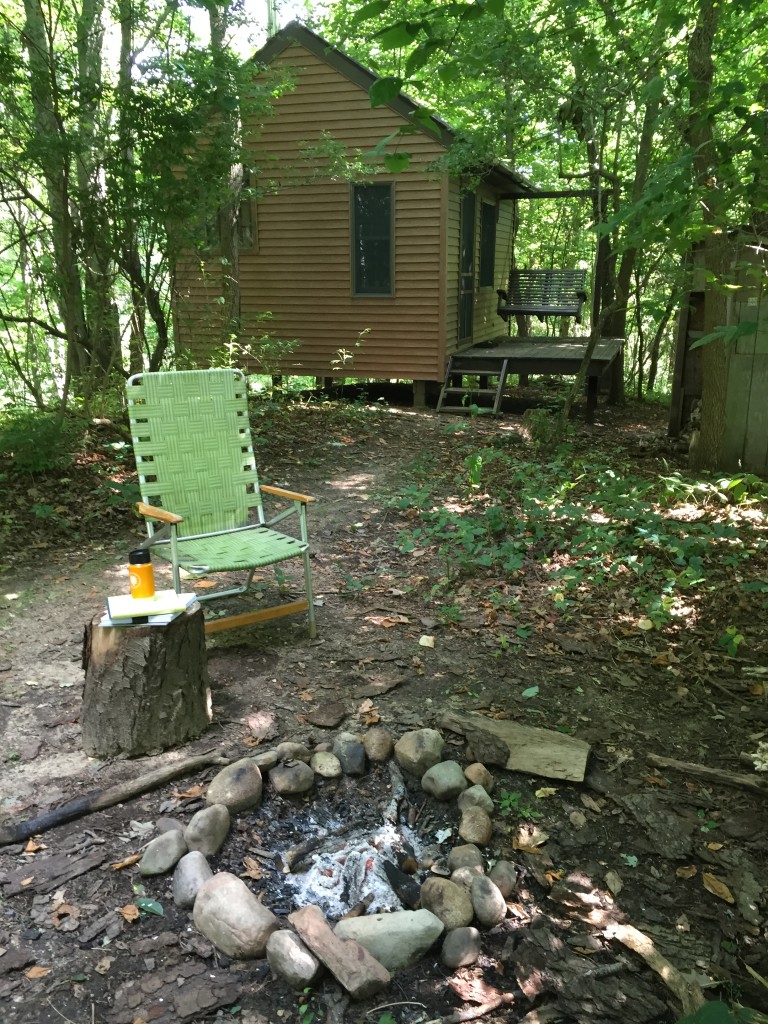
By far the best thing I have ever done for myself is create a life plan. A life plan is a simple document that you create as an intentional way of envisioning and committing yourself to a future you desire–in every area of life. I wrote my life plan about seven months ago as I write this, and within weeks I saw remarkable results. Here are just a few: I lost ten pounds and weigh less than I have in five years. My relationships with family members, friends, and colleagues are the healthiest they have ever been. I have renewed direction, focus and energy for my work at Baker. I have goals and commitments in place for you—the community of folks who read this blog. I have an acute sense of the areas of my life that need more attention, and I am making progress in each of them. My financial situation has never been better. My family is on a budget, and we are more secure financially than we ever have been. And for all these areas, I have a vision for where I want to go. The Back Story In late 2014 Baker Books, the division of Baker Publishing Group I work for, entered a publishing agreement with Michael Hyatt and Daniel Harkavy to write a book titled Living Forward: How to Stop Drifting and Get the Life You Want. Michael Hyatt is the former CEO of Thomas Nelson Publishers, a New York Times bestselling author, and a highly rated blogger and podcaster in the leadership space. Daniel Harkavy is an executive coach, author, and the CEO of Building Champions, a successful executive coaching firm. Living Forward is a user-friendly guide to creating a life plan. I was the acquisitions and developmental editor on the book, and within the first few chapters I was hooked. I knew I had to do this. The rest is history. Creating a life plan has been one of the most significant things I’ve done to improve my overall well-being. And because of the transformative impact it had on me, I want to encourage everyone to create a life plan. It really is a game changer. If you can commit twenty-four hours to this, I promise it will make a huge impact on your life and on the lives of those closest to you. The purpose of this post is to give you the basic steps of how to get started. Along the way I’ll share how I went about the process. [Tweet “Creating a life plan is a game changer. You’re 24 hours away from a more fulfilling life.”] Set a Date for Creating Your Life Plan The single most important step in creating a life plan is setting a date. Think of it as taking a brief retreat. Even if it’s six months to a year from now, set a date. I recommend blocking out a two-day window just to make sure you have ample time to complete your life plan. I looked at my calendar in the spring of 2015 and saw August 5-6 was open. My plan was to arrive in the afternoon on August 4, get settled, create my life plan on August 5, and finish it up on August 6 before returning home. On the church calendar this just happened to be The Feast of the Transfiguration, which seemed fitting enough! Decide on a Place The second most important step is deciding on a place where you can get away from the normal distractions of life. I went to a spiritual retreat called The Hermitage in Three Rivers, Michigan. It’s just a few hours from where I live, and I knew it would provide the solitude I needed to think carefully about the questions Living Forward asks. I stayed in a little shack affectionately called The Hut. It was 12 x 8 room with a wood stove and no electricity or running water. I spent most of my time by the fire ring outside. One morning I was greeted by a doe and her two fawns. It was a beautiful setting. Your idea of getting away may look very different. A colleague of mine went to Estes Park and hung out at a coffee shop. Others may want to check in to a nice hotel. Budget is obviously a consideration here. The point is to pick some place that you consider awesome and inspiring if you can. And if you can’t, at least pick a place that will be quiet and distraction free. Setting a date and reserving a space—that’s the hard part. Once you’ve done these two things, you’ve set yourself up for a great experience. Go Through the Process The process of actually creating your life plan has three main steps. The first step is imagining how you want the people you care about most to remember you. The second step is identifying your “life accounts” or “life areas,” as I prefer. The third step is writing out your purpose, envisioned future, current reality, and commitments for each life account or area. If you can only block off a day or if you want to do some of the process before your retreat, you can do the first step and probably even the first and second steps beforehand. The process of writing out your purpose, envisioned future, etc., does take time and a significant level of concentration, so I would reserve this step for the retreat. Take Care of Yourself The questions Living Forward asks are penetrating, deep questions. This may well be an emotional experience for you. It was for me and for the colleague to whom I referred earlier. Drink plenty of water. Get as much sleep as you can in the nights leading up to the retreat and during it. During the retreat don’t be afraid to take breaks to stay fresh. I remember tackling a life area or two or three and then going for a walk or having a healthy snack. It’s important to pace yourself and practice good self-care