What You and a Beluga Whale Have in Common

I’ll tell you the story of a moment that shook me in a good way. It didn’t last long, but it pierced the black that so often fills my interior life. Maybe you’ll relate. As I write this I’m in Atlanta for the Catalyst conference, and this took place in the preconference sessions, the “Labs,” as the folks at Catalyst call them. So picture a big room much like the kind hotels call “ball rooms.” They’re ugly but spacious. And on stage up front there is a bespectacled man of Asian descent in stylish urban duds named Gideon Tsang—pastor of what seems like a really wonderful, artful community down in Austin called Vox Veniae. Gideon walks us through the creation story, the one in the Bible (not that there’s just one). And he talks about when, for example, God created the first beluga whale “dancing in the waves.” God raised his hands, Gideon shows us, and God proclaimed with guttural delight, “Ohhhh, it’s sooooo gooooood.” And God created the very first night (can you imagine?), with all the stars and crispness of the cool air, and obviously Gideon wasn’t there, but I believe he captures something of the essence of how God felt in that moment in the way he performs God’s delight. Raising his fists and smiling and laughing, Gideon tells us what God said: “It’s . . . so . . . good.” Then God turned to one of the first trees, and he blinked to reveal the first robin, chittering and blinking and puffing out its auburn chest. And again God couldn’t help himself. He loved the robin. “It’s so, so, so good.” And then Gideon looks at us, seated there in that thoroughly uninspiring cavern of a room. He looks at us and says words that weasel their way into my own caverns. “And when God created you, he did the same thing.” God raised his hands, and he shouted, ‘You’re so gooooooooood!!’” Can you hear God say that about you? I know it can be hard. Believe me, I know. But he did. I don’t believe it most of the time, not really, but today for some reason I don’t have access to, I feel something of truly believing it. And it breaks me. I may be wrong, but friends, I think most of the problems in the world stem from our inability to believe this simple truth: God loves you, and God loves me. You are so good. Whoever you are, I pray that God will reveal his love to you. I pray something breaks that hard shell in which we have a habit of encasing ourselves. And I pray that for just a moment, or longer if possible, you feel just how much you mean to God. That’s my prayer. [Tweet “Most of the problems in the world stem from our inability to believe this simple truth…”]
How One Writer Went from Blogging to Book Contracts in 5 Years
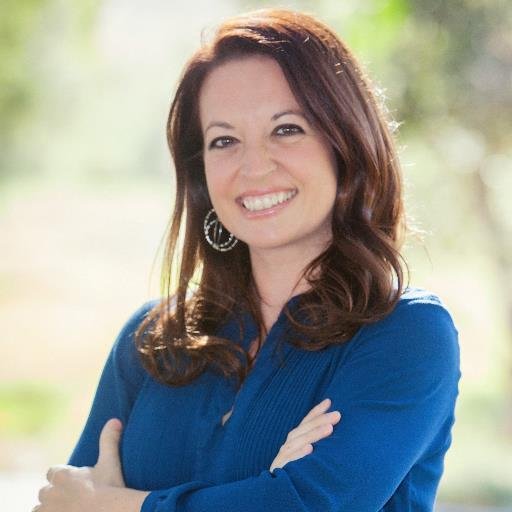
If you’re a writer with a book inside you, a platform builder, or someone who simply wants to have an impact in the world, this interview is for you. Join me today for a conversation with author and blogger Natasha Crain. Over the past five years Natasha has steadily grown her blog traffic and subscriber list. Her first book released earlier this year, and more are on the way. This is not the story of someone who experienced crazy over-night success and rode off into the sunset. This is the story of someone who felt called to serve, went after it steadily, and now is experiencing success and impact. Translation: you can do this! In this interview Natasha and I talk about the key to growing your email list, how your blog can help you hone your voice and develop books, the hidden gifts of rejection, and more. Enjoy! [youtube id=”zmclw0KqIXc”] To learn more about Natasha Crain, visit www.ChristianMomThoughts.com. Can you think of someone who would find this interview helpful? Consider sharing it with them! [Tweet “No Platform to Book Contract in 5 Years…You can do this! @Natasha_Crain @ChadRAllen”] What’s one thing you learned from this interview and plan to implement?
Top 10 Things I Learned at Jeff Goins’ Tribe Conference
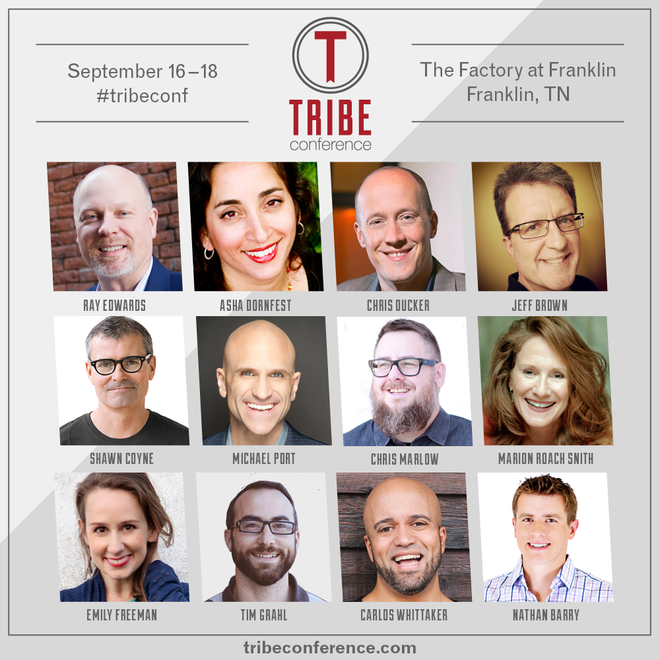
I recently attended Jeff Goins’ Tribe Conference and thoroughly enjoyed it. If you’re a writer or a creative of another type who wants to hone your voice and expand your reach, I highly recommend Tribe! Below are the top 10 things I learned from Tribe: 1. Jeff Goins nurtures a terrific community. I was uber impressed with the people I met at Tribe. These are brilliant, generous people who are out to serve the world and change it in the process. 2. Rest to receive. Carlos Whittaker kicked off the conference with a talk about creating magical, life-giving moments. The point he made that resonated most with me was this: rest to receive. So often, when we’re burnt out or disappointed, the answer is rest. Inspiration will come when we take time to slow down and rejuvenate. 3. Find your frustration. Baker Publishing Group author Emily Freeman talked about the importance of frustration, passion, and hope as we hone our voice. She referred to a conversation with Seth Godin in which he said he waits for frustration to prompt him to write a book. This element adds some urgency and purpose to one’s writing/creating. 4. Tribe builders need an automatic pitch. This one comes from software genius Nathan Barry, creator of ConvertKit, who encouraged us all to send a few emails to new subscribers and then invite them to go deeper with a low-priced Nice tip! 5. Life’s better with donuts. Amen? 6. Think of your family and friends as your shareholders. Carrie Wilkerson likened the tribe builder’s family and friends to the big corporation’s shareholders. Just as big companies need to perform well for their shareholders, solopreneurs need to perform well for their families and friends. 7. Going pro is about self-validation. This came from Shawn Coyne, an editor who has collaborated with Steven Pressfield. Too often, he said, we look outside ourselves for validation. We look to publishers or bestseller lists or Amazon reviews or blog traffic or email lists. Coyne said being a pro is about self-validation. It’s about doing your art regardless of anything else. Here’s the quote I wrote down: “Becoming pro is about saying, ‘I may not have a big email list, but I have a blog post to write today. That’s what I’m gonna’” 8. Jeff Goins is a generous guy. For one thing, following a presentation in which Chris Ducker pointed out that $100,000/year is $297/day, Jeff gave $297 to an attendee who didn’t believe her coaching was worth that. She came up on stage, coached him, and Jeff struck a check. But beyond that Jeff was generous with his time throughout the conference and with his own transparency about his mistakes. Love the guy. 9. Use the whole stage. Michael Port knows how to give a speech! He was all over the state in a high-impact presentation about, what else, public speaking. One takeaway: Use the whole stage. Second takeaway: YOU are the presentation, not your slides. It was so good I’m now reading his book Steal the Show. 10. Mingle, mingle, mingle! Often the best part of a conference is the hallway chats, mixers, and late-night conversations. I met some fascinating people. I’ll mention just three here, and my apologies for not mentioning the many other amazing people I met! Marsha Shandur of yesyesMarhsa.com was our “awkwardness controller.” She led us through some great exercises and taught us invaluable things like how to end a conversation at a conference or party. Mike Berry of http://confessionsofanadoptiveparent.com/ is a big-hearted guy who is truly having an impact in the world. He reminded me that consistency is king. And Gabi Logan of www.gabilogan.com is proof that you can make six figures as a travel writer. Who knew?! All in all a great time. I have a feeling I’ll be back to Tribe in the future! [Tweet “”Going pro is about self-validation” and 9 other things @chadrallen learned at @TribeConference @JeffGoins”] Live Tweets, Mike Kim’s Review, and Handouts Throughout the conference I tweeted quotes, observations, and a few pictures. To see my Tribe tweets in one place, click here. To read more about the Tribe Conference, check out Mike Kim’s excellent article, My Takeaways and Review of Jeff Goins’ Tribe Conference. Carlos Whittaker and Emily Freeman generously offered digital packages of freebies during the conference. I secured their permission to include links to these below: Carlos Whittaker: carloswhittaker.com/tribe16 Emily Freeman: hopewriters.com/tribes Which of these lessons from Tribe resonates most with you and why?
What Book Should I Write?

Deciding what book to write can be tough. Writers often have a lot of different ideas, and we know that writing a book requires a significant amount of time and energy. Even if you have a direction in mind, establishing a particular angle or hook can be difficult. How to choose? This problem can be frustrating at best. At worst it can prevent you from doing the most important work of your life. What if there was a way to guarantee your book project is worth the effort? What if you could start writing your book with confidence because you knew (a) the book is true to who you are and (b) a solid market exists for your book? It’s possible. Follow these five steps. Step 1: Look Within The place to start is the terrain of your own heart, soul, and mind. Spend some time there. Ask yourself: What am I passionate about? What do I feel called to write? What is the future pulling out of me? In what direction is my own life’s story leading me? What am I ready to write? Hopefully questions like these will help you draw a circle around a cluster of ideas. If you end up with multiple clusters because your ideas are widely disparate, you likely have more than one book idea. If this is you, consider these questions: Which one am I ready to write now? Does one of these feel like a future idea? Now move on to the next step. Step 2: Find the Need “The place God calls you to,” wrote Frederick Buechner, “is the place where your deep gladness and the world’s deep hunger meet.” If the first step was about identifying your deep gladness, this one is about listening for the world’s deep hunger. The importance of this step cannot be overstated. Don’t rush it. Ask: What do people really need? Where is culture right now? What are the crises of our time, and how does my book help? What’s the problem to which my book could be the answer? What would others say they needed from me if I asked them? How can I help them? What can I offer? What would it be possible for readers to walk away with after reading my book? What would people be willing to pay for? Finish this statement from one of your potential readers: “I wish I could read a book that . . .” How would they express the need your book will address? And while it’s good to ask yourself these questions, it is even better to ask your potential readers. If you have a bit of a platform and you can ask your subscribers or Facebook community, do that. Try to formulate questions that (a) will be easy for them to answer and (b) will give you actionable information. You might say something like: I have a handful of book ideas I’m trying to narrow down. Below I’ve briefly described each of them. Which of these appeals to you most? Which of these would you be most likely to purchase? If I were to write a book on . . . , what would the book need to include for you to feel like you just had to get it? Let’s assume someone knowledgeable was about to write a book on . . . just for you. What does it absolutely need to cover? What else would you want in a book like this? Make it your goal to have one tight cluster of ideas by the end of this step. [Tweet “5 steps to help you decide what book to write via @ChadRAllen #askeditor #amwriting”] Step 3: Play with Titles and Subtitles This is the fun part. Now that you’ve identified an area of passion that overlaps with an audience’s need, it’s time to develop some different angles for your book. Do this by brainstorming possible titles and subtitles. I happen to be working on my own book idea right now, so let me share some of my own brainstorming. Hopefully seeing an example of how this plays out will help you do the same. I’m passionate about creativity. Creativity has been a profound force for good in my life, and I believe it can be the same for others. The need I think my potential audience has (I still need to verify this) could be summarized in a statement like this: “I know I’m a creative person, but life is busy, and I wish I could read a book that gave me the tools I need to maximize my creative output.” With that as background, here are some of the titles I recently brainstormed: Create Your Life’s Work Your Best Work Creative Getting Your Best Out of You Creative Soul Possible subtitles include: 5 Rhythms to Maximize Your Creativity Essential Practices to Help You Get Your Best into the World The Essential Tools You Need to Do Your Best Work How to Make Your Most Profound Contribution to the World 5 Essential Practices for Creatives Nurturing Who You Are to Serve the World Step 4: Take Your Top 3 to 5 Titles to Your Tribe It’s time to survey your tribe. If I force myself to pick my top, say, four title-subtitle combinations I come up with: Creative Soul: Nurturing Who You Are to Serve the World Creative: Essential Tools You Need to Do Your Best Work Getting Your Best Out of You: 5 Rhythms of Life to Maximize Your Creativity Your Life’s Work: Essential Practices to Help You Get Your Best into the World Now I can take this list to my potential audience and ask them to let me know which one of these titles they’d be most likely to purchase. I can ask them some other relevant questions too. (Hey, would you be willing to share your opinion on my book? I would really value that! To help me out, click here.) Step 5: Pick One Hopefully by the end
A Writer’s 3-Step Guide to Eliminating Fear of Rejection

Recently I asked some writers about their deepest fear when it comes to writing. One of them flatly said “rejection.” Another said, “Will publishers take me seriously if I don’t have a platform?” I hear versions of this all the time not only from writers but from the chattering inside my own head as a writer and creative myself. We are scared of failure. Terrified. We’re afraid no one will take us seriously and the whole thing will be a bust. In fact, I would wager no other force on earth annihilates more creative dreams than fear of failure. The purpose of this post is to help writers and other creatives eliminate this fear so they can get their work into the world. 1. Don’t Wait for Permission Listen: You don’t need anybody’s permission to write your book and get it into the world. And if you feel called to do this, if you feel passionate about a message and know in your bones you’re meant to get it out there, the world needs you to follow through. Permission is a smokescreen. It’s how the forces that oppose our best work try to keep us from doing it. Imagine a writer standing in front of the wall of permission. Imagine that writer is you. You look up at it, scared, but this time you decide not to give in. You turn away from the wall, walk several paces, and then turn back to face it. You screw up your courage to bust through, and you run. You run for all your worth. A half-second before you make contact you’re convinced this is going to hurt like hell, and then . . . nothing. Now you’re on the other side of it. You look back, and you realize that barrier called permission was just a vapor. [Tweet “”Permission is a smokescreen.” @chadrallen #amwriting”] 2. Reframe Success Too often, I think, writers define success as getting a publishing contract. In their minds the path to success looks like this: Idea –> Proposal –> Agent –> Publishing Deal I want to question this formula. What if success looked like this: Book concept –> Proposal –> Write the Book –> Build Platform –> Publish and Promote In this scenario you may or may not get a contract, but that’s not the point. The point is publishing and promoting. To my mind that is a much better measure of success. It places the focus on the book and readers of the book. Notice too this second (better) path to success doesn’t get you off the hook in terms of building a platform and promoting your book. Those things are important regardless of whether you traditionally publish or self-publish. I’m all for pursuing an agent and getting a contract, but don’t let these possibilities define success for you. Success is crafting your book to be the best it can be, finishing it, and chasing it out into the world to reach as many people as possible. Stick to Your Process The one thing you can control is your process. Decide on your writing process and stick to it. So let me ask you: What’s your process? When are you going to write? How many words per day? Music or no music? What are your writing tools? How will you celebrate your wins? This is worth some intention. I created a three-page worksheet to help you design your process and build it into your life. It’s a writeable PDF, so you can type your responses in the fields provided and either save or print it off for future reference. Pretty nifty. To download the “My Writing Process” worksheet, click here. What’s the book that you’d like to get into the world?
How Do I Write My Book and Build a Platform at the Same Time?

Recently I was on the phone with a writer who was trying to figure out the answer to this question: How do I write my book and build a platform at the same time? Many of us want to get our books into the world, but we also understand the power and importance of a significant platform. We understand that if we write a book without a platform, we will have difficulty reaching an audience. We not only want to write a book, we want some people to read it! This blog post shows you how to do both. You’re Already a Master at This My first piece of advice is to give yourself some credit. Fact is, you already have a lot of experience getting multiple things done. For example: How do you work a full-time job and find time to be a wife/husband? How do you make sure your kids are getting enough time from you and also do all the things it takes to run a household? For younger people, how do you work a part-time job, have a social life, and go to classes and get your homework done? These are not rhetorical questions. Think for a second. How do you accomplish the multiple long-arc projects on your plate? However you do it, you can use those same tactics to write your book and build a platform. My guess is you carve out time for each long-arc activity. You pay the bills on a particular night. You reserve Saturdays for family. You mow the lawn or do the grocery shopping at particular times. And so on. It works! Somehow it all gets done. It might get hectic at times, but it all gets done. What it takes is commitment and a plan. What’s Your Plan? There’s no one right plan. You might: Book these early mornings of the week for platform building and these others for writing your book Build your platform a few years before writing your book Write a book proposal and if you get a contract write a book and build platform Write a book, turn it in, then build your platform in the time between submission and launch Self-publish a book and then build you platform to make sure people know about it Use vacation time to get bigger slices of time. I’ve seen versions of all of these approaches, and they all can work. It’s probably a good idea, though, to be willing to change your plan if the one you pick doesn’t work out. Give your plan a probation period. If it’s working, great. If not, fire that plan and hire a new one. Question the Gap between Book and Platform Obviously books and platforms are not the same thing. A book is about 40,000 to 60,000 words of content (remember, I’m a trade nonfiction guy). A platform is your means of getting people to notice your work, including your book. But sometimes we make the gap between the two bigger than it needs to be. Get suspicious about that gap. We think it’s bigger than it really is. Key strategy: Look for ways the two can overlap. Are there ways your work can do double duty? What if your blog posts (aka platform builders) were sketches of parts of your book? New York Times bestselling author Mark Batterson once told me his blog posts were his “test balloons.” Can you ask your audience questions and learn from their responses what direction to take your book? Here you’re building your platform by engaging your audience, and you’re working on your book too. What if you gave away a chapter from your book in exchange for email addresses? When you’re developing a concept, what if you asked your tribe which title/subtitle they’re most likely to buy? You will have to make time for writing and platform building, but look for and pursue a symbiotic relationship between the two. How could you build your platform by writing your book? How could you write your book by building your platform? The Really Good News Writers tend to wish they could ignore platform building and just write their books, but let me share the really good news in all this. Building your platform connects you with your audience. It helps you understand their needs and gives you an idea of the kind of book they would find most useful. If the point is to get your message into the world, you’re at least beginning to do that with your blog or podcast or speaking or whatever you do to build your platform. When it’s time for your book to launch, you have a built-in audience. You know that people are going to buy your book because they have asked you for it. And that is a great position to be in. [Tweet “”How Do I Write My Book and Build a Platform at the Same Time?” blog post via @ChadRAllen”] What tactics do you use for writing your book and building your platform?
A Chance to Make Your Voice Heard

I’m excited to announce my 2016 Reader Survey. I’m really proud of this survey, not least because I think it serves multiple purposes. So without further ado here are three reasons to take my 2016 reader survey. 1. Taking the survey will help you think about your creative life. A good number (not all) of the questions will prompt you to think about your next steps creatively. They will help you prioritize what you most want to accomplish in your life. And they will help you do some constructive dreaming about your future. In other words, this survey is good for you! (Want to skip the rest of this post and take the survey? Click here.) 2. Taking the survey is your chance to influence how I serve you. I don’t conduct surveys very often–the last one I did was more than a year ago. But this survey will have a huge impact on my agenda for the coming months. I will use it to determine what to blog about, what tools or courses to develop for you, and what format those tools should be in. The more I know about you, the better I’ll be at creating content that is tailored to your needs. I want to invest my efforts in ways that truly move the needle for you, so please make your voice heard! 3. Taking the survey will strengthen this community. I have already received well over a hundred responses to the survey. The more responses I receive, the better I’ll know how to build this community and make it stronger. Many people have already said that accountability is a huge obstacle for them. So many of you need a community that will support you on the creative journey. Taking this survey will give me the information I need to continue nurturing our sense of togetherness and common mission. Ready to take the survey? I hope so! Click here.
4 Emotional Obstacles That Trip Writers Up, Plus How to Work Through Them

[guestpost]Editor’s Note: I’m delighted to host Maria Ribas on the blog today. Maria is a literary agent and blogger, specializing in nonfiction, particularly the areas of cooking, home, health/diet, personal development, business, psychology, and memoir. Having worked as an editor for Simon & Schuster, Harlequin Nonfiction, and Adams Media, she knows both sides of the biz. She blogs at cooksplusbooks.com.[/guestpost] I often laughingly say that the job of a literary agent is to be a therapist and coach as much as a negotiator and advocate. It’s funny, but it’s true. On an average day we’re just as likely to be talking an author off the ledge as negotiating a contract. Through this I’ve found one thing to be unfailingly true: the creative process can drive you batty. I see how authors pour their entire hearts and souls into their books, sometimes sharing the deepest parts of themselves with the world. And I’ve seen how this often leaves them vulnerable to all kinds of fear and doubt. But I’m a firm believer that 80 percent of the creative battle is won in the mind. That’s why authors often need the perspective and encouragement of a friend and agent to talk them through the particularly tough parts. After walking dozens of authors through the publishing process, I’ve come across many of the same emotional sand traps, just waiting to swallow up an unsuspecting writer. So today let’s pretend we’re sitting across from each other, sipping lattes and catching up. Let’s talk through some of the emotional obstacles that may come up on your path as a writer. Emotional Obstacle #1: Attachment to a book concept that may not align with your larger goals What This Looks Like: “I have an idea for a book, and I’ve been wanting to write this book for so many years. Why should I listen to you and rework my concept?” What I Would Say: You certainly don’t have to do anything you don’t want to do, and I would never try to make you! But it is worth thinking long and hard about what your goals are in writing this book. If your goal is to write a book because it’s something you’ve always dreamed of doing, then absolutely, go ahead and write it exactly as you please. There are so many wonderful options for self-publishing these days, and you should never feel obligated to go the traditional route if it doesn’t align with your goals. However, if your goal is to partner with a traditional publisher so you reach as many people as possible with your message, I encourage you to get very focused on what readers want and need. Book ideas live in a vacuum inside our heads, but books live on a bookstore shelf (or an online search listing), right alongside similar books on your topic. It’s crucial that your book add something new and significant to your topic, or readers won’t feel compelled to select your book instead of the one right next to it. More importantly, they won’t come away from your book feeling like they just read something life-changing and powerful. [Tweet “”Book ideas live in a vacuum inside our heads, but books live on a bookstore shelf.”–@Maria_Ribas”] So if your book isn’t offering something unique, let’s work on it together until we make it an irresistible new addition to your field. After all, we want readers to come away feeling delighted, changed, and satisfied that your book was worth every penny of their hard-earned money. If you’re not sure if your book concept is unique enough, try this 6-step brainstorming process coupled with this approach to market research. Emotional Obstacle #2: Fear of losing creative control when working with a publisher What This Looks Like: “I’ve built my brand for years, and my audience is expecting a book that stays true to who I am. I don’t want to cede creative control to a publisher.” What I Would Say: I completely understand, and that’s the last thing I would want for you, either! Working with a publisher doesn’t mean you’re signing your creative control and business away—it’s actually quite the opposite. A partnership with a publisher can do tremendous things to grow your business, flex your creative muscles in different ways, and vastly improve your access to the kinds of readers and customers you want. A publishing partnership is built on collaboration—it’s about two entities coming together to create something greater than either party could do on their own. And publishers rely on authors to bring their built-in audience to the book, so the last thing they want is to create a book you’re not proud of. That is every editor’s and agent’s nightmare: ending up with a book the author isn’t thrilled about. That’s why we work so closely from Day One to make sure we all agree on the vision for your book. The publisher’s hope is that they can use their expertise in book selling in tandem with the author’s topical expertise to help create a book that’s even more wonderful than the one the author had originally envisioned. However, sometimes we don’t all agree. We’re human—it happens! So in situations where differences of opinion do come up (for example, you hate that shade of red on the cover, or the subtitle just isn’t doing it for you), my job as an agent is to make sure we open it up for conversation until you and your editor arrive at an option that everyone can live with. (This is what we call “meaningful consultation,” and it’s something we require in all of our publishing contracts.) So think of it as a mutually beneficial partnership, not a constant power struggle. And rather than entering the publishing process holding tightly to certain ideas, try to keep an open mind and allow new ideas and perspectives to shape your book into something you’re even more excited about. Emotional Obstacle #3: Feeling anxious and intimidated about talking to editors What
How an Acquisitions Editor Reviews a Book Proposal
This year I will review well over a hundred book proposals, and my personal goal is to acquire at least fifteen high-quality original books within the year. Just because I present a book in pub board does not mean I’ll acquire it because other publishers will also be pursuing it. Assuming a 50 percent success rate, I need to pick about 30 books to bring to pub board. Other editors may review hundreds of book proposals and have a goal of acquiring more or fewer books, but at least in trade publishing I doubt the math I’ve laid out here changes much from house to house or editor to editor. We review a humongous number of book proposals and try to acquire a fraction of them. So how can a writer make sure their book proposal rises to the top of the stack?… What you’ve just read is the beginning of a guest post I recently wrote for literary agent Maria Ribas of Stonesong. To keep reading, click here.
5 Obstacles Every Writer Must Face and How to Overcome Them

In the sixties and seventies anyone who followed NFL football knew that Jim Marshall was a reliable player. In fact, when he retired from the Minnesota Vikings in 1979 no one in the league could match his record for consecutive starts and games played. But his otherwise spotless reputation for consistency faltered on October 25, 1964, when he recovered a fumble from the San Francisco 49ers and ran the ball 66 yards in the wrong direction. Marshall scored for his opponent. Want to see it? Here’s the 30-second clip: If football players don’t know which way to run, they end up scoring for the wrong team. If writers don’t know which obstacles to overcome, they can end up scoring for “the Resistance,” the term Steven Pressfield coined for that persistent force that tries to keep us from doing our most important work. The purpose of this article is to share five obstacles every writer must face and how to overcome them. I’ve been working with writers every business day for the past 18 or so years, and these five obstacles are in my opinion the ones we as writers cannot neglect. We have to face them, and we have to beat them. If we don’t we flounder. If we do we give ourselves every chance of success. 1. Failing to Commit to a Process The number 1 obstacle we must overcome is failing to commit to a process. William Faulkner said, “I write when the spirit moves me, and the spirit moves me every day.” How often does the spirit move you? What’s your process? When do you write, what tools do you use, how many words do you shoot for each day or each week? [Tweet “”I write when the spirit moves me, and the spirit moves me every day.” –Faulkner via @ChadRAllen”] A few more tips. Be realistic about what works for you. Know ahead of time what you’re going to do if you mess up. Let me give you an example. I like to publish my blog posts on Friday. I’ve gotten into that rhythm and it helps me go into the weekend feeling good—like I made good on my blogging commitment. I’m publishing this on a Saturday. Why? Because I’m human! We’re going to mess up. Don’t let that stop you. Decide now what you’ll do when that happens. If you don’t already have a copy of the “My Writing Process” worksheet, click here to download it for free. It’s a great tool for writers who want to get more intentional. 2. Not Believing in the Importance of Your Message or Story Let’s face it: we’re all desperate for validation. Writer or not, each and every one of us needs to hear a friend or parent or lover say, “Hey, you’re all right, you know that? You’re doing fine. I like what I see in you, and I like the person you’re becoming.” We need that. I know I do. And writers need it all the more. One of the main reasons people hire me for coaching is for the encouragement I provide. They need or at least want me to keep cheering them on, to keep telling them how important their message is. But let me challenge you with a question: What if the reason you think you need this validation is because you’re trying to give yourself an excuse to quit? I think sometimes we trick ourselves into thinking our message isn’t valuable so we don’t have to deliver it. It’s a lame cop-out. You’re better than that, and your message is extremely valuable. Believe that, and keep believing it until you’ve shared it with the world. 3. Trying to Go It Alone Writing is by nature a solitary act. Try sharing your keyboard while you’re typing, and things won’t go very well. But we need to be checking in with others. We need to be connected with people who are rooting for us and who can keep us accountable to the goals we set for ourselves. Please don’t try to do this on your own. Here are two ideas for building some relational support around you: Start a writers or creators group. Get together once a month or once a week or every other week. Tools like Google Hangout make it possible to do this via video with people who live across the country or even the world. Call a friend who’s also a writer and set up a monthly coffee or lunch. Agree to a format for your meetings that you both like. 4. Waiting Too Long to Get Serious about Your Platform The longer you wait, the more difficult it becomes. The sooner you start, the more your platform will grow before you publish your first book. There’s no silver-bullet solution to this, building a platform takes time. That’s why it’s so important to get started as soon as possible. If you haven’t already, I recommend doing two things: Read Platform: How to Get Noticed in a Noisy World by Michael Hyatt. Start capturing the email addresses of those who come to your blog or website. 5. Failing to Learn about the Publishing Process It would be nice if we could just write our book and then—poof—see it magically go to the masses. Unfortunately the real world doesn’t work like that. That would be like trying to develop an app without learning code. Books exist within an industry, a context, and if you want to reach people, it’s important to start learning about this industry—how it works, who the players are. It’s actually surprising how quickly the average Joe can become savvy about the publishing trade. One idea for learning about publishing is to pick two or three blogs to follow regularly. I submit mine as a possibility. Also Google “Best literary agent blogs” and “Best publishing blogs.” Or you can get more specific—“Best Christian literary agent blogs,” for example. [Tweet ““5 Obstacles Every Writer Needs to Face and How to