5 Ways Writing Can Increase Intimacy between You and Your Spouse

[guestpost]Editor’s Note: This is a guest post by Scott Kedersha: husband to Kristen, dad to four boys, and marriage pastor at Watermark Community Church in Dallas, Texas. Scott writes about marriage, parenting, ministry, and leadership, and is working on his first book, scheduled to come out in February 2019 with Baker Books. Connect with Scott on Twitter and his blog.[/guestpost] My friend and coworker started off our premarried class by proclaiming to a room full of optimistic but naïve engaged and dating couples, “MARRIAGE IS HARD, AND YOU’RE ALL GOING TO DIE!!!” While the chances of death for each of us continues to clock in at a solid 100 percent, all married couples know the truth of this statement and the challenges marriage brings with it. Time is short, and the demands of life and marriage (i.e., laundry, dishes, bills, kids’ sports) pull us away from one another instead of toward each other. One thing that has helped my wife and me cultivate a healthier, more intimate marriage in the midst of the chaos is by looking for ways to maximize our time together. We serve together, do house projects together, and have even learned to write together. Kristen would tell you she’s not a writer and doesn’t want to be, but no other person is more important or influential in my writing process than my wife. Based on our experience, I’d like to share five ways you can invite your “nonwriting spouse” into your writing process. Invite your spouse on the journey. If you haven’t already, start by having a conversation in which you let your spouse know how much you’d love for them to be more involved with your writing. Engage with each other about your hobbies and work life. Don’t expect your spouse to have the same passion and gusto for writing that you do, but look for ways to partner better together. The more you communicate and are aware of each other’s lives, the stronger your relationship will be. For example, every Sunday night Kristen and I hold a weekly schedule meeting. In this meeting we discuss schedule, expectations, commitments for work and the kids, and much more. This small investment every week builds our marriage and grows our writing partnership in the process. Ask your spouse to write a guest post. Your spouse has a perspective about whatever you’re doing on your blog, and you might be surprised how interested your readers would be to hear about it. Here’s another idea: Write an article from your perspective and then ask your spouse to write their own post on the same subject. Or your spouse could write a response to a post you’ve recently published. Two takes on the same subject can be very helpful for readers. Ask your spouse for creative input. Maybe your spouse is intimidated by or simply not interested in writing but is happy to give you input on your blog post ideas, your blog post titles, or on how you’re planning to structure a post. Maybe your spouse has a gift for finding and creating images or has technical skills to make your website load faster. These are essential nonwriting tasks. What if your spouse was able to help with them? Involve them in social media. Is your spouse active on social media? Can they help you by sharing your posts? Kristen does a great job of sharing whenever I write something new. This doesn’t take long, but every time she does it I know she supports my writing! Another idea: would your spouse feel comfortable commenting on your blog posts now and then? Ask your spouse to hold you accountable and give perspective. There are times when writing consumes me. I lose sleep; sacrifice time with my wife, kids, and friends; and I obsess over shares, likes, and traffic. Can you relate? One of the best ways Kristen helps me is she gives me perspective and reminds me of what’s really important. Yes, writing is a big part of who we are, but it’s not the whole picture. This will look different for every couple and is not a one-size-fits-all prescription. Some significant others want to be very involved in the process, others are less interested. Simply and regularly opening up the lines of communication about your writing can be significant for you and your spouse. [Tweet “5 Ways #Writing Can Increase #Intimacy between You and Your Spouse via @skedersha #marriage”] Here’s a challenge for you. Sometime this week or next week, have a conversation with your spouse about your writing. Thank them for the ways they already help you, ask if they would be willing to help you with your writing, and discuss ways you can help them in their areas of interest. (Pro tip: Share this article with them and ask for their thoughts about it.) A Special Gift for Chad’s Readers One of the best ways to strengthen your relationship or marriage is to continue to date and pursue each other. While we probably did a great job pursuing our spouses while dating or as newlyweds, once we’re further down the road, we often get stuck in ruts or routines. To help, I put together a guide called 124 Killer Date Night Ideas. It’s full of ways you and your spouse can have fun together, including adventures, outdoor activities, challenges, and many other entertaining ideas. It’s been a big help to many couples, and I’d love to give it to you for free. To download it, click here. What’s one way you could ask your spouse to be more involved with your writing? How could you be more involved in one of their interests?
Do You Make This Mistake in Your Writing?

What would you say is your first job as a writer? Do you write to serve people? To make money? To express yourself? This is an important question because the wrong answer will lead you to fall short of your best work. That’s what I address in the following slide presentation. In it you’ll discover: What writers must do before anything else Why architecture is a great metaphor for writing How to make your writing as engaging as possible Simply click below to get started. Writers as Experience Architects – Created with Haiku Deck, presentation software that inspires Many thanks to my friend Gary Neal Hansen for introducing me to Haiku Deck, the web-based program I used to create this presentation. [Tweet “Do you make this mistake in your #writing? A helpful presentation from @ChadRAllen”] What are you focusing on right now? Your concept, your structure, or your writing?
3 Essential Tips for Writing Compelling Stories

One morning not too long ago I walked into our kitchen at about 6:30 and was startled by what I saw. There stood my nine-year-old son in his pajamas, hunched over a piece of paper with a pencil in his hand. His nose was less than five inches from what he was drawing, and his tongue protruded slightly above his bottom lip. The kid was in deep concentration, but I couldn’t help myself. “What y’up to, buddy?” I asked groggily. “Looks important.” “I’m drawing the Battle of Endor,” he replied, not looking up. “Did you just make that up, or is that a thing?” I asked. He leaned in closer. “It’s the one with the Ewoks.” “Ohhhhh,” I said, “that one.” Now, if I just did my job as a writer, you stuck with me from the beginning of this piece until now. From here I could reflect on the compulsive creativity of children, what a father can learn from his son, or why the Battle of Endor truly is that important! But if my story didn’t hold your attention, I don’t get to tell you about any of those things because you’re already gone. That’s what makes good stories so important. If they’re engaging, we earn the right to be heard. If not, readers will wander off to whatever else does grab their attention. In this post I want to share what I consider three essential elements of irresistibly engaging stories. Whether you’re writing a memoir or self-help or inspirational nonfiction, these elements will help you hold your reader’s attention. Tip 1: Make Them Filmable The most engaging writing is concrete writing, and perhaps the best way to grasp the definition of concrete writing is to think of it as synonymous with filmable writing. If someone tells a story well, you can see it in your imagination. Sometimes you can feel and taste and smell it too. I recently attended a conference and took in a talk by great writer and thinker Ian Morgan Cron. He told a story about when his mom discouraged him from writing a book on the enneagram (a personality-typing system). He added the detail that his mom was 89 years old and had smoked a pack of Pall Malls every day for decades. Ian so deftly brought us into their phone conversation that I could see them talking and even hear his mom’s raspy voice. While the audience’s attention may have drifted at other times during the conference, they were completely engaged by Ian’s story about his mom. Why? Because his story was filmable. When you tell stories, strive for this quality. Tip 2: Don’t Overdo Your Descriptions To make a story come to life in the reader’s imagination, you might think you need to describe every little detail. The problem with too much description is it drags the pace. Remember that films show you a bunch of details all at once in just a fraction of a second because of how much our eyes can process. When writing, the trick is to give enough detail that the reader can fill in the gaps herself. If you take the time to go into every possible detail, your prose will slow way down and readers will check out. Give enough detail for them to see the scene; then keep things moving. Tip 3: Spread Them Out If prose can be likened to a meal, stories are like the seasoning. When they’re underused, the writing is bland and boring. When overused the effect is overwhelming, like when you taste so much salt you can’t taste the full flavor of the food. But if you get the balance right, stories will bring your words to life and create an enthralling, page-turning experience. As you fashion your prose, strive for a good balance—enough stories to keep things moving but not so much that we can’t hear the points you’re making. [callout]Need some help getting intentional about your writing process? I created a worksheet titled ‘My Writing Process’ that helps you design a writing process that is customized specifically for you and what you’re writing. To download it, click here.[/callout] [Tweet “Check out these 3 tips for #writing attention-grabbing #stories via @ChadRAllen”] Which of these tips do you find the most useful for your own writing right now?
6 Takeaways for Writers from the #1 New York Times Bestseller *Originals*

As I’ve gone about my travels recently, one book has stood out to me again and again. For one thing the cover is irresistibly head-turning; the promise of the title is also compelling. I’m referring to Originals: How Non-Conformists Move the World, the #1 New York Times bestseller from respected Wharton business school professor Adam Grant. I recently picked up Originals and was pleased to read it, noting six actionable strategies for writers. 1. Write. And when you get scared, write some more. One of my favorite quotes comes early in the book: “The people who choose to champion originality…feel the same fear, the same doubt, as the rest of us. What sets them apart is that they take action anyway. They know in their hearts that failing would yield less regret than failing to try.” Grant goes on to explain that successful originals aren’t the best judges of their own ideas. Thus their best strategy to improve their chances of hitting on greatness is to do a “huge volume of work,” quoting This American Life‘s Ira Glass. The reality is that the work of creative geniuses is not inherently better than that of their peers. Creative geniuses are simply more prolific, which significantly increases the variety of their output and their chances of successful originality. [callout]Takeaway: Fall in love with the process. Fall in love with trying. Fall in love with showing up again and again. (Want some help designing your writing process? Click here.)[/callout] 2. Get feedback from your peers. Because we are not the most reliable judges of our own work, we need help from people Grant calls “fellow creators.” Folks involved in work similar to ours have an understanding of the possible pitfalls, but they also know ingenuity when they see it. “They’re open to seeing the potential in unusual possibilities,” says Grant, “which guards against false negatives.” We can translate “false negatives” here to mean choices writers make that might seem unconventional. One thinks of the work of Austin Kleon, for example, or even Baker author David Kinnaman’s impulse to enlist others to comment on his chapters in unChristian. [callout]Takeway: Get connected with some fellow creators and solicit their input.[/callout] 3. Broaden your stimuli. Did you know scientists are more likely to win the Nobel Prize if they take up a form of artistic expression, like playing an instrument or painting? And did you also know that fashion designers become more innovative when they travel to and steep themselves deeply in a foreign culture? As we strive to attain our creative best, we would do well to broaden our field of experience and diversify the stimuli that hit our cerebral cortex. Ways this could look are infinite, of course, from attending a religious service different from our own to traveling to a far off land to reading something we normally wouldn’t. [callout]Takeway: Commit to a practice of consistently shaking up what is presented to your grey matter.[/callout] 4. Argue against yourself. Grant provides a fascinating profile of how entrepreneur and Babble cofounder Rufus Griscom pitches his business ideas to potential investors. We’d expect Griscom to highlight the strengths of his ideas, but he goes the other way. He starts by telling his possible partners all the reasons they should stay away from the opportunity he’s presenting. This has a disarming effect on Griscom’s listeners. They go from sitting through a sales pitch to collaborating on how to solve a problem. One way a writer can take this practice to heart is by telling publishers why they shouldn’t publish her book. Or at least a writer could be clear about her project’s weak spots so she can be sure to address these as compellingly as possible in her book proposal. Another way to build this practice into one’s writing is to ask, “Why might readers criticize or be left wanting after reading my book?” Once you’ve identified a problem within your manuscript, you’re in a position to do something about it. [callout]Takeaway: Preempt your weaknesses by beating them to the chase.[/callout] [Tweet “6 Takeaways for Writers from the #1 New York Times Bestseller *Originals* via @chadrallen”] 5. Vary your motivation depending on where you are in your project. Often at the beginning of a book project we’re high on adrenaline and our level of commitment is off the charts. We live out our cry: “Let’s do this!” In these moments Grant’s research-based advice is to focus on how far we have to go. We’ll be that much more motivated to “close the gap,” he says. But when we’re midway and the honeymoon of our initial commitment wanes, it’s time to shift our focus to how much progress we’ve made. Having come so far, how can we stop now? [callout]Takeaway: Know where to focus in order to give your motivation a boost.[/callout] 6. Keep pursuing a thoroughgoing understanding of your audience’s problems. Again and again ask the people you want to serve what their struggles and pain points are. If you always rush too quickly to answer-giving mode, you’ll end up with a stunted perception, and your ability to help will be limited. This is one of the reasons, Grant points out, that the Segway failed as a product despite embodying unquestionably brilliant technology. The Segway was the result of excitement and brilliance, not of a careful listening to what transportation consumers really wanted or needed. [callout]Takeway: Let’s not create the literary equivalent of the Segway, amen?[/callout] [callout]Want some help customizing a writing process for yourself that optimizes your creativity and helps you develop a strong writing habit? I’ve designed a worksheet titled “My Writing Process” to help. To download it, click here.[/callout] As you think about your own writing life, which of these strategies do you want to put into practice?
Veteran Book Publicist Reveals How to Attract Media Attention

Book publishers often think of publicity as the Holy Grail of marketing and for good reason: Media attention has the potential to skyrocket sales. So how does it all work and what do writers need to know about attracting media attention? To find out I turned to 20-year book publicist Heather Adams of Choice Media and Communications. Heather has extensive experience securing attention in the most desirable outlets for authors of every background—from those who have large followings to those with almost no following at all. Questions I asked Heather include: What is publicity and how does it differ from other forms of marketing? How can writers make themselves or their stories as attractive as possible to media outlets? Do all writers need publicity to be successful? How do writers make a publicist’s job easy? Do you have a story you can tell us about a writer who didn’t have a massive platform but still managed to attract strong publicity and saw a lot of success as a result? What if a writer (or a writer’s publisher) can’t afford (or doesn’t have the budget) to hire a publicist? What advice do you have to offer a writer in this situation? Is there such a thing as DIY publicity? What’s the #1 thing writers need to know about publicity? Enjoy! If you’re interested in a transcript of the interview, see the link below the video. For a transcript of this interview, click here. [Tweet “Veteran Book Publicist @hrdadams Reveals How to Attract Media Attention via @chadrallen”] How did this interview expand your understanding of book publicity?
5 Scientifically Verified Reasons You’ll Hate Yourself if You Stop Writing

So much of winning at the writing game can be summarized succinctly by the immemorial words of Dory in Finding Nemo: Just keep swimming. Easier said than done, for sure. But it’s important because really the only way to lose is to stop writing. To give up. To abandon your dream of that book or that blog or those articles. As I’ve coached writers and helped them “just keep swimming,” I’ve found that a little encouragement goes a long way. Sometimes we just need someone to say , “Hey, look. You’re doing all right. You’re doing really well, in fact. Keep on. You’re making progress even if it feels slow at times.” With this in mind I’d like to offer five scientifically verified reasons writing is really good for you—for your overall health and well-being. In each case I’ll include the reason and a link to a relevant study or article to back it up. Do These Benefits Apply to Me? One caveat: The studies I cite below are about expressive writing or journaling, and that’s understandable when you think about it. If you’re a researcher who wants to study the possible health benefits of writing, you need all your study participants to be engaged in the same kind of writing for your research to mean anything. And it’s a lot easier to get a bunch of random folks to journal than it is to find and conduct research with a sample of, say, memoirists. But here’s the thing. With the exception of purely utilitarian writing, such as scratching out a shopping list or shooting off a business-related email, just about all writing includes at least some self-expression. Memoir obviously does. But even penning a self-help or business book involves wrestling with the interior life and drawing on personal experiences, be they traumatic or positive. It would be hasty to assume, therefore, that if your writing is not directly about your life, it therefore does not offer these benefits. Far more likely as long as your writing is genuine and comes from a sense of purpose that these benefits do indeed apply to you to one degree or another. Ready to find out some powerful reasons to keep writing? Here goes. 1. Writing Strengthens Your Immune System Several studies have shown that when we write, particularly about stressful events in our lives, our immune system experiences a boost. To read more on this from the American Psychological Association, click here. [Tweet ““Strengthens your immune system” and 4 other science-based reasons to WRITE via @ChadRAllen #ask editor”] 2. Writing Improves Your Physical Health Want to go to the doctor less often? Write! In one study, referenced here, researchers found that participants who write about emotional experiences “reported significant benefits in both objectively assessed and self-reported physical health.” 3. Writing Reduces Stress Want to manage your anxiety, reduce stress, and cope with feelings of depression. Keep writing! This article from the University of Rochester Medical Center, which is specifically about journaling, points to the numerous mental health benefits of writing. 4. Writing Helps You Sleep Better In this study college students wrote letters to socially significant people in their lives about something helpful or harmful the recipient had done for or against them. One of the most remarkable outcomes was better quality sleep and greater sleep duration! 5. Writing Can Make You Happier This study, in which one group of people wrote about negative experiences and another group wrote about positive experiences, concluded that both groups experienced an upswing in their moods. [callout]Want some help customizing a writing process for yourself that optimizes your creativity and helps you develop a strong writing habit? I’ve designed a worksheet titled ‘My Writing Process’ to help. Click here to download your free copy.[/callout] Which one of these benefits to writing do you need most right now?
See How Easily You Can Structure Your Book with This Method

While it’s true a thousand-mile journey begins with a single step, this is also true: If that first step is in the wrong direction, you’ll end up in the wrong place! Like this Air Asia flight, you could end up in Melbourne instead of Malaysia! When it comes to structuring a book, writers can go wrong a lot of different ways. In a recent post, for example, I wrote about the importance of firmly grasping your audience’s needs before you set out to write. Too many writers start scratching before they know where the reader’s itch is. So it’s important to know what your readers’ pain points are, but it’s also important to mine your own wisdom for all its worth. Wouldn’t it be great to have a relatively simple way to do this? An easy way to access your best content on whatever topic you’re writing on? A way that guarantees your first step is the right one? That’s what this article is all about. I’m going to share a question and a process for helping you access your best content and structure it into book form. Start with This Question Ask yourself: What is the most important thing I have to tell people about [fill in your topic of interest]? Go ahead. Fill in your topic of interest and answer the question. Here’s another way to get at it: The most important thing I have to tell people about _______________ is ______________________. Now Keep the Momentum Going Now that you’ve started, keep going. Keep brainstorming the most important things you have to tell people about your area of interest. Don’t think too hard, and don’t get hung up on your tools. A blank Word doc will work. So will a pad of post-it notes. Just go. Keep filling in the blank: The most important thing I have to tell people is _______________ And the next most important thing I have to tell people is ________________ Another important thing I have to tell people is ___________________ If you can, shoot for big sweeping ideas, big categories that are likely to have many subcategories. Keep going until you’re either tired of the process or have over 20 ideas. [Tweet “See How Easily You Can Structure Your Book with This Method via @ChadRAllen #askeditor”] Take Stock Look at what you have now. Do you see some ideas that are closely related to others? Do you see a sequence for your ideas that would make sense? Do they build on each other? Do some ideas seem more fundamental and others more practical? Start grouping and ordering your ideas. Now notice the gaps. What have you completely missed? Fill those in as best you can. Your Book Is Born Guess what? You just outlined the content of your book. You have the buckets. Now all you have to do is fill them. Download the Book Structure Template If you’d like to download a fillable PDF that walks you through the above process step by step, click here. The template also includes a bonus step: how to create a compelling table of contents for your book. To download your copy, click here. What book are you working on?
How a Writer Self-Published a High-Quality Book That Now Generates a Passive Income
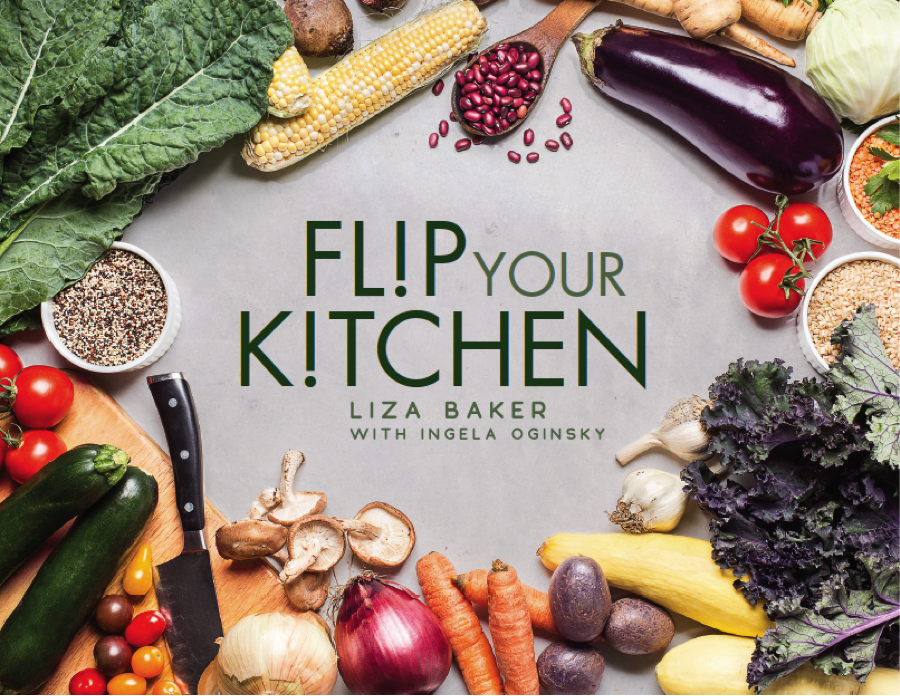
[guestpost]Editor’s Note: This is a guest post from my friend and coaching client Liza Baker. Liza is an integrative nutrition health coach, kitchen coach, and COO of a family of four. She brings her passion, knowledge, and experience to the table to help you reach your goals and achieve optimal health by discovering how best to show up in your life . . . and in your kitchen. Liza lives with her husband and 2 children in Ann Arbor, Michigan, and is passionate about health and happiness, education and exercise, SOLE food and social justice. Her first book, Fl!p Your K!tchen, was published in October 2016. You’re invited to get a nibble of the book or a bigger taste of her work as a health coach.[/guestpost] Anyone looking at my resume would probably not consider me employable. And yet every job I’ve worked has informed what I do now in my life as a solopreneur. Once I finally decided what I wanted to be when I grew up (at 50), I decided to publish a book. The book had been inside me for about twenty years. Over those years it grew from a simple cookbook to a repackaging of a culinary school curriculum for the home cook, a meal-planning tool, and a message about bringing mindfulness back to the kitchen and to the table. I spent much of 2014 writing the book and teaching cooking classes, which doubled as a testing laboratory for most of the recipes. And then I got stuck. I played a role in my husband’s and bosses’ book projects for years, serving as unofficial editor, proofreader, and indexer, so I was familiar with the writing and book proposal processes. The sticking point was that I had almost no platform to speak of and very few connections in the publishing world. Enter Self-Publishing Self-publishing has become a huge industry in recent years. Numerous courses and webinars can tell you how to do it, and myriad self-publishing platforms are at your disposal. When I surveyed them, I discovered you could self-publish a physical book using offset printing for anywhere from $1,000 to $10,000, the difference being what suite of services you require, from simply printing to editing to design to publishing to marketing and distribution. As with anything, you get what you pay for. I have seen numerous samples of self-published works done with these online platforms, and I knew right away this was not the sort of quality I demanded of and for my own work. Let’s be real: if you buy a cookbook, it must have beautiful pictures, it needs to lie flat on the counter, and it needs to stand up to daily wear and tear. Add to this the fact that a large part of my book is about the importance of buying local and supporting small, locally owned businesses, and I was really stuck. I don’t recall who gave me this advice, but I was told that many locally owned bookstores will not carry books self-published by Amazon’s CreateSpace, which is probably the largest and least expensive self-publishing platform around. This information was validated when I approached my favorite indie store and the first question was, “Did you self-publish with CreateSpace?” But part of my integrative nutrition health coach training is in positive mindset and manifesting your intentions, so in October 2015 I put my intentions to publish out to the Universe . . . and I didn’t have to wait long! Watching It Happen I had been fortunate to be introduced to Chad Allen’s online work as a creativity coach through a colleague, and I stalked him online for a few months before hopping onto a webinar he hosted about writing a compelling bio. I was even more fortunate to win a free coaching session with him and from there, deeply inspired by the session, moved on to hiring him to be my support in self-publishing. I’m sure I was a somewhat “alternative” client for him as self-publishing is not officially his field, but I think my desire to self-publish in a way that was similar to commercial publishing may have convinced him to take me on. The most significant lesson I learned from Chad was to treat my project holistically—that is, as a part of my professional and personal life, not the be-all end-all in and of itself. He also shared with me how the publishing process normally flows, and we made some progress on fitting my square peg of a book into this round hole. Then he set me free to make it happen. And happen it did: I often tell my clients, “Be very sure of what you ask the Universe for—she will deliver in spades.” You have to be ready. Having met with Chad and put my intentions out in a much clearer fashion, it was almost like sitting back and watching the project unfold rather than struggling with each step. An entire village grew up around the project in the space of one year: A friend agreed to edit the book, and another member of my village—the one who initially started the “When are you going to write a book?” idea— agreed to test every recipe (she kindly refers to it as her own Julie/Julia project). Through a photo shoot my son did, I connected with Chuk Nowak, whose talents as a photographer made my modest home-cooking recipes glow and who used my home and kitchen ware for his work, saving me money on food styling and rentals. Through a cooking class I had donated as part of a school auction, I connected with a woman whose husband is a graphic designer: Sean McDonald gave my book the clean, professional look I was seeking. I met the owners of a local print shop, CMYK Imperial Printing, at another cooking class, and they gave me excellent advice as well as a great price on the printing of the book. Christian O’Grady and Victoria Zegler of FYT Productions created a stunning promotional video (see below)
Why Missing Your Goals Can Be a Good Thing . . . Really!

As we barrel toward the end of this year, I’ve been thinking a lot about my 2016 goals. It looks like my success rate in 2016 will be 40 percent. When I first noticed this, I was disappointed. I was even tempted to think horrible things about myself: “I’m a loser! I’m no good!” But here’s what I’m learning about setting and achieving goals: It is more art than science, and like any art, proficiency takes time. Those Sneaky Goals! I tend to think our lives are composed of short-, medium-, and long-term projects. Short-term projects are things like mowing the lawn or cooking dinner. Medium-length projects are things like renovating a kitchen or developing a product or editing a manuscript. Long-term projects are measured in years—like earning a college degree. Here’s the thing. Goals are sneaky. Setting and achieving goals seems like a short-term project (setting goals) followed by a series of medium-term projects (actually achieving those goals). But what’s missing here is the reality that the whole endeavor of setting and achieving goals is a long-term project. You get better at it as you do it. Over time (and if you’re setting goals annually, from year to year) you learn: How to pick your goals When to let goals go When to change strategies to achieve your goals The importance of setting some realistic goals, some stretch goals [Tweet “”Goals are sneaky” and other things worth knowing about achievement via @ChadRAllen”] Key Things I’ve Learned about Goals So how do I feel about my 40 percent success rate? I’m okay with it! For one thing the goals I did accomplish are really important to me, and I may not have hit them if I hadn’t gone through the process of setting and pursuing them. For example, one of the goals I achieved was “Go on a two- to three-night hiking/camping trip with Lucas [my son] by September 1, 2016.” Below is a snapshot of our trip. We had a blast! In fact, Lucas and I enjoyed this trip so much we’re planning to do it again in 2017. Also, when it comes to the annual process of setting goals and the throughout-the-year process of achieving goals, I’m a newbie. Learning how to do it well is a long-term project. It’s going to take time. One more thing. My friend David Wenzel reminded me of this: If you achieve all your goals, they’re probably too easy. My goals, I can safely say, were not easy. Would I have liked to hit more of my goals? Of course! But I did accomplish things I wouldn’t have otherwise, and I’m going to cut myself some slack because I’m new to this whole annual goal-setting thing. [Tweet “”Setting and achieving goals is more art than science. Proficiency takes time.” via @ChadRAllen”] What about Your Goals? Where are you in all this? Did you set goals for 2016 and you’ve already forgotten them? Did you set goals but failed to achieve them? Did you nail every goal you set? Are you looking back at 2016 wishing you had set goals? Whatever your situation is, I want to encourage you to jump in to this long-term project of setting and achieving your goals. You know the old adage: “If you don’t have a target, you’ll hit it every time.” As I engage the process, I hope you will too. If you want to get started today, consider taking the LifeScore Assessment, designed by my friend Michael Hyatt. Your LifeScore Assessement will give you a quick glimpse into how you’re doing in a variety of areas in your life, from personal to professional. I just took it and got a 63. It was fun to take. It’s quick. And it’s a great way to begin entering the goal-setting mindset. To get your own score, CLICK HERE. After you take the LifeScore Assessment, stop back here and leave a comment with your LifeScore and your own thoughts about goal setting. I look forward to hearing from you.
3 Ways to an Acquisitions Editor’s Heart

I recently had conversations with two first-time authors, and I feel very hopeful about both of them. Whether the publisher I work for pursues them or some other publisher, I’m quite certain these authors will be offered contracts. And as long as the publisher doesn’t overpay, chances are good these books will be successful for everyone involved. The authors with whom I normally interact have multiple published books already in the marketplace. Not so with these two authors. Knowing many readers of this blog are in the same position, I thought I would pause long enough to share the three reasons I’m so hopeful about these writers and their book projects. Steadily Growing Audiences Over the years both of these authors have worked hard to develop an audience. One of them has done so in the context of a full-time job, which is to say the job itself helped her develop an audience. The other did so “on the side,” as it were, but this “on the side” platform has grown steadily over the years. What can you learn from them? The amount of time it takes to build an audience is counted in years. It is the result of steady, consistent interaction with your tribe. Listen to what they need, do your best to help, do that over and over again, and get better at it as you do so. It takes time, but you can work smarter not harder by following and applying the advice of people who’ve “been there, done that” already. People like Michael Hyatt, Bryan Harris, Ray Edwards, and Jeff Goins come to mind. Incidentally, Jeff Goins just opened registration (I’m writing this October 24, 2016) for his Tribe Writers course. If you’re trying to build an audience, it’s a great option. To find out more, click here. Meeting Real Needs Both of the authors I spoke with shared concepts that meet real needs that real people really have. So often publishers receive proposals for concepts that address imagined needs or needs the author thinks the world should have. This is important. You may have something to say, and that’s awesome. The key is figuring out how to shape what you have to say so that it engages people where they really are. I love the quote from Frederick Buechner: “The place God calls you to is the place where your deep gladness and the word’s deep hunger meet.” Sometimes we’re so enamored with finding our voice that we forget to find the world’s hunger. How do you that? Here are some ideas: Ask questions. Take time to see which of your blog posts are resonating. Set up a Facebook group specifically for the purpose of understanding what your audience is looking for. Keep your ear to the ground and notice when multiple people express the same anxiety or ask for the same thing. [Tweet “Sometimes we’re so enamored with finding our voice that we forget to find the world’s hunger.”] The Passion Factor I sensed from both authors a real passion for the projects they were pitching to me. Their passion was not so much for getting published. It was for the message they want to get into the world and for the people they want to serve. Writers can be like martial artists. The inexperienced martial artist stares at a block of wood and tries to chop it, only to end up bumping the wood and bruising their hand! The veteran martial artist knows that to break the wood, one has to aim beyond it. They know breaking the wood is just a means to an end—not an end in itself. Getting published is like the block of wood. It’s a means to an end. Getting published is gratifying. It’s awesome to hold your own book in your hands. But this satisfaction is fleeting compared to that of conveying a message that’s burning within you and seeing it reach the people you want to serve. [callout]On November 17, 2016, my friend Ray Edwards and I are hosting a webinar titled “How an Acquisitions Editor Reviews a Book Proposal.” In this engaging webinar you’ll learn how acquisitions editors review book proposals so that you’ll know the ins and outs of how to get published. You’ll discover the number one reason publishers turn books down, the first thing editors look at in your book proposal, the elements of a great book project, and a proven method to secure a literary agent. We hope you’ll join us. To learn more and save your spot, click here.[/callout] What’s one practice you’ll take from this article and implement into your writing work?