How Writers Can Use Speaking to Build a Platform and Sell Books

Grant Baldwin is the founder of The Speaker Lab, a training company that helps public speakers learn how to find and book speaking gigs. Through his popular podcast The Speaker Lab and flagship coaching program Booked and Paid to Speak, he has coached and worked with thousands of speakers. His book, The Successful Speaker: Five Steps for Five Steps for Booking Gigs, Getting Paid, and Building Your Platform just released, and it’s a gold mine if you want to use speaking gigs to build your platform and sell books. In this interview we cover: How Grant went from being a youth pastor to a successful public speaker to a trainer and coach for other professional speakers The biggest mistake aspiring speakers make How successful speakers rapidly grow their businesses and platforms How to book more speaking gigs How writers can use speaking to land book deals and sell more books How speaking can help you improve your writing The biggest differences between speaking and writing What you’ll find in Grant’s book, The Successful Speaker, that you won’t find anywhere else And much more! Enjoy! To order your copy of The Successful Speaker, click here. To connect with Grant and hear about his programs for speakers, click here. [Tweet “Have you ever thought about becoming a professional speaker? Check out this info-packed interview with @GrantBaldwin @chadrallen #amwriting #speaker #thespeakerlab”] What was the most helpful thing you heard in this interview?
How a Writer Faced His Fear and Landed a Book Deal

Writing a book proposal and landing a book deal is hard work, but it can be done. I recently sat down for a video call with writer, spiritual director, and speaker Brian Plachta about his journey from a small platform to a landing a book deal. We talked about: how Brian pushed through his fear why he decided to write a book proposal and pursue a traditional book deal 3 strategies he used to grow his platform how friends have helped him on the journey his top 4 pieces of advice for anyone who wants to get published and much more! Enjoy! To connect with Brian, visit www.BrianPlachta.net. Resources mentioned in this interview: To learn more about how I help writers get their books into the world, visit www.chadrallen.com/products. [Tweet “How a Writer Faced His Fear and Landed a Book Deal #amwriting #WritingCommunity #askeditor #writetip @chadrallen”] What did you hear in this interview that you found helpful for your own writing journey?
3 Reasons Now May Be the Best Time to Work for Yourself

I won’t lie to you or sugarcoat things. Working for yourself can be a bear at times. Now that I’m a full-time blogger and coach, I have the pressure of generating enough revenue for my family to live on. That can be tough, especially considering how much my soon-to-be 13-year-old son eats! ? In all seriousness, some weeks are incredibly good, some . . . not so much. But I much prefer my current set of pressures than those of my corporate job. The purpose of this article is to share three of the main reasons now might be the best time ever to work for yourself. 1. More Freedom Back in my corporate days I didn’t have the freedom I wanted. Now? A picture’s worth a thousand words. Here’s my office today: I’m nestled into my friendly neighborhood coffee shop, writing a note to you. Not bad! 2. Greater Financial Rewards I also wasn’t able to scale the rewards of my hard work in the corporate world. Don’t get me wrong. I got raises and promotions and accolades aplenty. The company I worked for was incredibly good to me. But that way of working just didn’t have the upside working for yourself does. In my experience the potential rewards of owning your own company blow the doors off what’s possible when you work for someone else. Now, obviously I could fall on my face, and this whole thing could collapse. But I doubt that will happen, and even if it did, what then? I’d get a job until I figured out my next move. Here’s the thing. Your corporate job, no matter what it is, is not a sure thing forever and ever. Just in the past four months two of my close friends were let go. Do you know anyone who’s lost a job recently? The corporate world can appear really safe and secure, but as our economy goes through massive shifts and more and more labor is outsourced, that cushy position with benefits is a lot less reliable than you might think. Turns out, the “risky” move of self-employment may be the sanest, most reasonable thing you can do. 3. Better Health Benefits Speaking of benefits, one of the main reasons people are scared to go out on their own comes down to two words: health insurance. Let me assure you: you can get health insurance on your own (my family has it), and if your income is below a certain amount, the government will even subsidize it. Health insurance does not have to be the wall people make it out to be. And please, please do not disregard the incredibly rich health benefits, both mental and physical, that are possible when you work for yourself. These have been truly life-changing for me. For one thing, I’m simply having more fun working for myself. This year, for example, I helped a small group of writers craft their book proposals. We met at a botanical gardens here in Grand Rapids to learn and hang out. Look how happy we are! We had such a great time, and we’re friends for life! (By the way, if you want to work on a nonfiction book proposal, hit me up. That’s my jam!) Plus, I’ve lost over 45 pounds since starting this journey and completed my first triathlon earlier this year. You can see the difference: Self-employment as weight loss program? Well, one doesn’t necessarily follow the other. But I’m in the best shape of my life right now in part because I now have the flexibility and energy to take care of myself better than ever before. [Tweet “”Better health benefits” and other reasons now might be the best time to work for yourself #blogger #writetip #selfemployment #writingcommunity via @chadrallen”] Thinking about Working for Yourself? If you’re thinking about making the move, I encourage you to do what I did and enroll in Blogging Your Passion University, curated by my friend, professional blogger, and one of the nicest guys you’ll ever meet, Jonathan Milligan. Registration is open for just a couple more days (I’m writing this on Wednesday, November 13, 2019), and then it’s gone for at least six months. This empowering program could be your chance to experience more freedom, greater financial rewards, and better health benefits than ever. I encourage you to check out Blogging Your Passion University. (Full disclosure: The above is an affiliate link, which means if you use this link to enroll in BYPU, you’ll pay the same amount you would otherwise, and I’ll receive a small commission. In other words, you’ll be helping me feed my ravenous kid. Thank you!!) Which of these work-for-yourself benefits appeals most to you?
See How Quickly You Can Structure Your Book This Way

Not long ago I was in a video call with a coaching client who was struggling with how to structure her book. She has a brilliant concept. Her book meets a real need real people have in a unique way. But her first draft of the contents page did not deliver on the promise of the idea. It came across as plodding and a bit heavy—not at all how I think of this writer. What to do? Structuring Your Book If you’ve ever struggled to build a structure for your book, you know this client’s pain. It can be extremely frustrating to have a vision for a compelling book but not know how to bring that vision to life. Truth is, the process of developing a book structure is where a lot of books get stuck. Writers simply give up. In a moment I will share a simple, effective method for developing an engaging structure for your book, but you’ll get more out of this if you have a book idea in mind. Take a minute to think about the book you want to write. Who is it for, and what need does it meet? OK . . . got it? A Simple Method Back to my coaching client. I had a hunch the way she initially structured the book was not the way she would present the material to a flesh-and-blood audience. I asked her, “If you were to do a series of weekly one-hour seminars on this topic over the course of, say, ten weeks, how would it go?” She answered right away. “Oh, I’d start with . . .” “And then I’d . . .” “Then I would cover . . .” I took notes as she verbalized. By the end of it, we had the bones of a book structure that was much more interesting and engaging than the previous one. In fact, she told me afterwards, “Aha! Now that’s a book I want to write!” The reason this method works is because it forces the writer to get out of her own head—to translate what’s in her grey matter to actual readers. Modifying This Method for Your Book’s Structure Don’t be afraid to tweak this method. A series of weekly seminars is one way to think about your book’s content. But a memoirist might find it helpful to imagine telling one’s story in a serial radio broadcast or podcast. Or what if your narrative became a movie? What would the different scenes be? If you’re writing a business book, it might be helpful to think of leading a two- or three-day workshop for a managerial team. If you’re writing a work of Christian nonfiction, try dreaming up a series of Sunday School classes. The point is to externalize your message or story. Use your imagination to get it out of your head and in front of other people. [Tweet “See how quickly you can structure your book this way #amwriting #WritingCommunity #askeditor #writetip via @chadrallen”] Want to Give It a Try? If you want to give this method a try, think about the best setting in which to present the content of your book. Then start imagining and write down what you see. Keep your mind’s eye moving until you have a solid outline. It might take a few tries, but if you keep at it, eventually you’ll end up with a compelling structure for your book. What’s a book you’ve always wanted to write?
3 Simple but Powerful Takeaways for Writers from The Alchemist
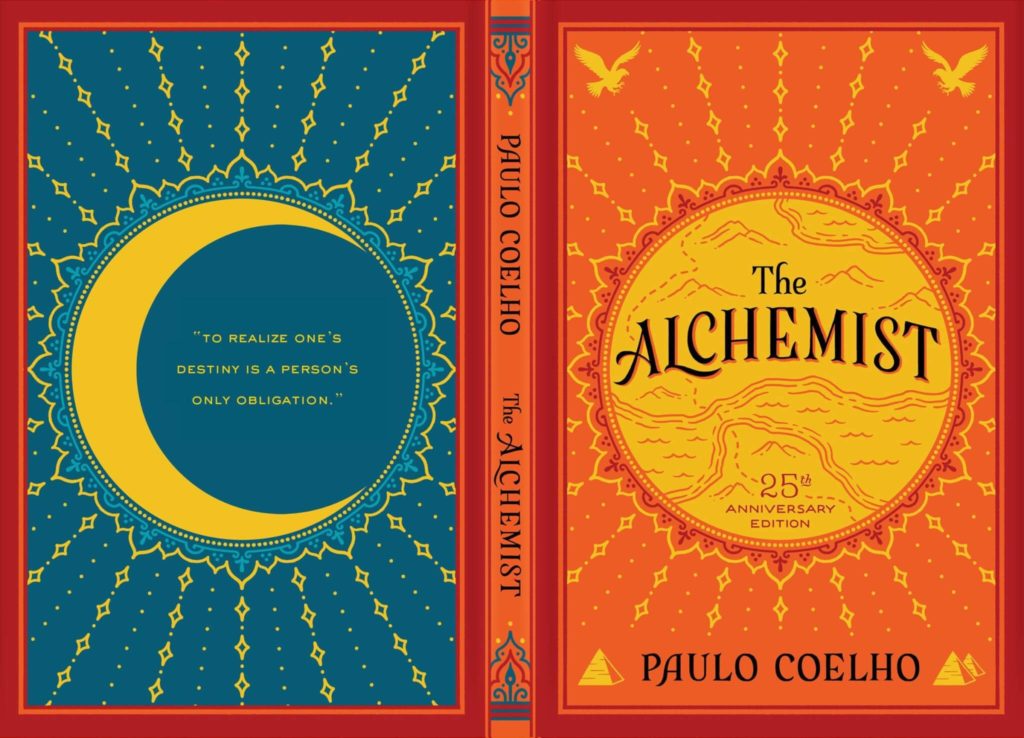
Every once in a while a book captures a truth so well it changes everything. That book for me is The Alchemist by Brazilian-born author Paulo Coelho. Coelho wrote it in his native Portuguese, and the English version reads a little clunkily in my opinion. It’s a bit disjointed and herky-jerky. But the book still gets under my skin. It is an allegorical novel, a story about much more than the story. The Alchemist’s primary theme is “When you want something, all the universe conspires in helping you to achieve it.” It seems crazy, this notion that if you want something, everything around you will help you get it. But I think there’s something to the idea, and I’d like to unpack it here with some help from The Alchemist. 1. Know What You Want The first step, of course, is to know what you want. That’s not always easy, but wonder and imagination can help. Stanford-educated psychologist Gay Hendricks encourages people to think for a week or so about what they most enjoy doing. That’s a key to what you want. (Can I tell you something? As I write this, every other sentence I want to stop, wave and say, “Hey, I know this sounds woo-woo and silly and unbelievable. I get it, I sort of believe that too. And yet I’ve seen enough evidence of the truth of what I’m saying, I want to keep trying it out.” OK, confession over.) The first step is to know what you want, to wonder, maybe for a week, “What do I most enjoy doing?” That hopefully will lead you to what you want. I love helping writers birth their books. When I’m talking with a writer about her book, time stands still. I could do it forever. I might be tired by the end of the conversation, but it’s good tired, like reaching a new athletic high. It feels a bit like falling in love, actually. When you’re falling in love, time doesn’t matter and reality itself seems suspended somehow. Like the world is holding its breath to see what happens next. That’s how I feel when talking with a writer about the book they want to get published. What I want is to do that all the time—to help writers think about their books and develop them and build an audience with a transformative message. That’s my jam. What’s yours? [Tweet ““Every once in a while a book captures a truth so well it changes everything.” 3 simple but powerful takeaways for #writers from *The Alchemist* #amwriting #WritingCommunity @chadrallen”] 2. Take Risks The second step, says Coelho through The Alchemist, is to follow “the omens” and take risks. Santiago, the main character, is a shepherd, but his treasure is in Egypt, so this big question emerges: Should he sell his flock of sheep to buy his passage to the pyramids of Egypt? He does, of course, and that’s what is required of us too. We have to take risks, risks that require a sort of internal breaking or unmooring. I don’t think it’s possible to take such a risk casually. We must do it deliberately. For me, taking that risk meant leaving a steady, good-paying job as editorial director for a major trade book publisher. When my wife and I started talking about this, we eventually agreed we would need to have a year’s worth of expenses in the bank before I could resign. That sounded so far-fetched and impossible, I felt like I died a little inside. Then I opened a new account, and every month I added to it, drip by drip. Eventually we got there. Sometimes going after a dream means looking at the impossible and taking a step toward it. And then another. These steps can seem completely fruitless for a long time, but you just keep going. 3. Get Help Finally, don’t go it alone. I’ve worked with a lot of writers over the years, some of them bestselling authors. And I can tell you not one of them did it alone. Each of them had a support network of some kind. History is very clear. People who achieve great things rarely do so on their own. Santiago in The Alchemist receives support from multiple guides and helpers along the way. I’ve had loads of help along the way, from friends, mentors, coaches, family members, the list goes on and on. Get help. Reach out to a friend or someone who’s a little farther along than you. Join a group or start one. And if no one comes to mind, keep an eye out. The old proverb rings true: when the pupil is ready, the teacher appears. [Tweet “”Sometimes going after a dream means looking at the impossible and taking a step toward it. And then another. These steps can seem completely fruitless for a long time, but you just keep going.” #publishing #amwriting @chadrallen”] What are you doing to do in the coming days to move your book forward?
How to Write a Nonfiction Book Proposal + Free Template

“It all starts with a book proposal.” That’s inevitably what I end up saying to a writer who asks me about publishing. As a 20-year publishing professional who has reviewed thousands of book proposals, I’m regularly asked for advice on how to get published. And that’s my answer: it all starts with a book proposal. What Is a Book Proposal? A book proposal is essentially a business plan for a book. The author submits their proposal to a publisher, sometimes by way of a literary agent, and the publisher uses the proposal to determine whether they want to publish the proposed book. In this article I’m going to share the major elements of a book proposal in the order I recommend. I’ll also share my top tips for each. Each element is important. Any one of them could make the difference between getting published or not. And assuming approval for publication, any one of them could significantly influence the advance against royalties a publisher offers. Start Your Book Proposal with a Cover Page A cover page presents your book’s title and subtitle, your name, and contact information. If you are represented by an agent, the contact information should be for your agent. It sounds simple enough, but a lot goes into a good title and subtitle. Publishers often talk about the importance of a strong book “concept.” Your title and subtitle comprise a label for your book’s concept. Strong book concepts do two things: (1) Meet a need that real people really have (2) in a way that is somehow distinctive. To download an infographic and video tutorial that teaches a step-by-step process for developing a great book concept, click here. Tip: Include a list of alternative titles and subtitles on the reverse of the cover page. Such a list suggests to the publisher multiple ways of positioning your book in the marketplace and also implies that you are coachable and open to input from the publisher. [callout]My Book Proposal Template is free and makes the process of writing a book proposal as simple as filling in the blanks. Click here to download your copy.[/callout] Now, Your Bio Your bio is a one- or two-paragraph statement about who you are and why you’re qualified to write the book you’re proposing. Good bios: Are less than 250 words Begin with a role that is relevant to your book Do not hide the author’s main vocational role Reference accomplishments that are relevant to the book Reference the author’s ability to reach readers Briefly tell the publisher what the author is passionate about Include just a tad of humor or something about the author’s location and family Bad bios: Are more than 250 words Say nothing about why the author is a credible source for the book’s content Hide the author’s main vocational role Do not refer to relevant accomplishments Do not refer to the author’s ability to reach readers Are confused about what the author is passionate about Overdo the humor To watch a replay of a webinar I hosted titled “How to Craft a Killer Bio,” click here. Most proposals I review do not include the bio this early in the proposal. Often the bio comes after the brief description (see below) or later, but I’ve placed it here in my preferred sequence of elements because I think your bio is one of the most important elements of your book proposal. Regardless of where it’s located, I usually flip to it right after I read the cover page, and I doubt I’m the only one. Why is your bio so important? It gives publishing professionals a quick glimpse of who you are as an author and as a person. [Tweet “How to Write a Nonfiction Book Proposal + Ways to Stand Out #amwriting #askeditor via @ChadRAllen”] Brief Description A brief description is a three- to five-paragraph statement that describes your book, including its purpose and intended audience. Your brief description should do three things: Capture the reviewer’s attention. A great way to do this in my opinion is to tell a story or to use some kind of narrative element. Cast a compelling vision for your book, including both the need your book is addressing as well as where your book will take the reader. Give reviewers a taste of your excellent writing. Your writing sample will come at the end of the proposal, but your brief description is the publisher’s first taste of your writing on the content you’re proposing. A while back I coached author Gary Neal Hansen on how to write a brief description of his book. To “listen in” on our coaching session, click here. Competitive Analysis A competitive analysis is a listing of about five other books that are in the same market space as yours. Think of it as providing the publisher with the marketplace context of your book. In providing such a list you’re saying, “This is the company my book will keep.” Your competitive analysis should do two things: Assure the publisher that your book is in a space or genre that has seen good demand in the past. Be realistic. If your competitive analysis is populated only by New York Times bestsellers, the publisher is likely to cry foul. Point out the ways in which your book is unique among its peers. Don’t do this in a way that disparages other books; that’s not helpful. Simply point out the differences. Chapter-by-Chapter Synopsis A chapter-by-chapter synopsis is three-to-five sentences describing each planned chapter in your book. The essential function of each description is to relate the journey the reader will go on from start to finish of each chapter. If you can work in a brief narrative element of some kind for each chapter, this is ideal. To read how I coached Hansen on how to write a chapter’s synopsis, which also happens to be one of my all-time most popular blog posts, click here. Marketing Plan Publishing is first and foremost a
How to Make Sure Your Self-Talk Is Helping (Not Hurting) You

He looks like a baby hippopotamus.” That’s what I overheard my fifth-grade teacher say when I tried out for hurdles before our one-day track-and-field competition. That I remember this comment some thirty-five years later says something about how much it stung. Fast-forward to about three weeks ago, when I’m training for my first triathlon. I’m not too worried about the cycling and running, but the swimming intimidates me. On race day I’ll need to swim a half-mile in the open water. I’ve been sticking to what for me is a rigorous training schedule—twelve weeks of training, six days a week. And on this particular morning I was in the pool, pulling myself through the water, but struggling. What am I doing wrong? Why is this so hard? And that’s when I heard it again: “He looks like a baby hippopotamus.” I slammed my hand on the wall and gulped the air. “Hey, why are you doing this?” I asked myself, catching my breath. “Why are you here?” And I repeated a goal I reviewed almost daily all year: “I want to finish my first triathlon with a smile by October 1.” “Good,” I said back, “then get back out there.” And I pushed off the wall into my next lap. Dealing with Negative Self-Talk One of the most insidious forces on the planet is negative self-talk. Whether it’s an old teacher, a parent, or the voice of our own over-the-top pessimism, negative self-talk smashes the endeavors that are most important to us. If we cannot find a way to combat it, to overcome negative self-talk and move forward, we are not likely to accomplish the work we feel called to do. Nobody escapes this pernicious foe. I have not met a writer yet who does not face it on a very regular basis. [Tweet “How to make sure your self-talk is helping (not hurting) you, a guide for #writers #amwriting #askeditor #publishing @chadrallen”] Finding the Voice of Encouragement A few days later I was back in the pool, doing my best but still struggling a bit. And this time I heard a very different voice than that of my old teacher. I heard what I as a father said to my daughter when she was learning to ice-skate and to my son when he was training for his first 5K. “Remember to enjoy it.” When we’re involved in important work and every cell in our bodies is focused on a particular mission, it can be all-consuming. We can forget to have fun. I heard the voice of encouragement: “Remember to enjoy it. You’re out here doing something good for yourself. You might as well have a little fun while you’re at it.” I instantly relaxed and kept swimming. What Negative Self-Talk Sounds Like for Writers If you’re a writer, you face a maniacal, fire-breathing opponent who’s every bit as deadly as the villains we read about and watch on the big screen. Except this battle is not out there somewhere, it’s happening within us. A lot is at stake. We will either accomplish the projects that are important to us, or we won’t. Negative self-talk takes various forms for writers: “You’re not good enough.” “No publisher is ever going to be interested in your work.” “You’re a terrible writer.” “Who cares about this book?” “You’re not worthy.” “You’re going to get rejected, and this book will never see the light of day.” “Kiss your publishing dreams goodbye.” And on and on and on. Sound familiar? It is vital that you think about how to combat this enemy and put it in its place as often as it makes an appearance. How do you do that? How to Turn Your Self-Talk into an Ally My advice is to start by not ignoring it. It is painful to listen to what that voice is saying, so we often pretend it does not exist. The problem with not acknowledging our negative self-talk is then it chatters away under the surface and slowly consumes our dreams bit by little bit. No more. The next time you hear the voice of negative self-talk, give it center stage. Listen to what it’s saying. Hear it out. After you’ve done this, question what the voice is saying. Is it telling the truth? Another tactic to try, as I did in the pool, is to remind yourself why you’re engaged in this work in the first place. Why are you here? Then call upon your inner voice of confidence, your voice of faith and diligence. If you were to replace what the negative voice is saying with the voice of encouragement, how would that go? What would it say? In my case, it was “Remember to enjoy this.” If nothing else comes to mind, you’re free to borrow that line for yourself. And finally, talk to a trusted friend, coach, or partner about the negative self-talk. Tell them your struggle. Not long after I heard the hippopotamus line in the pool, I shared about it with a mentor of mine. He didn’t say much back, but he was supportive and empathetic. That’s all I needed to move forward. To summarize: Listen to your negative self-talk. Hear it out. Question it. Is it telling the truth? Remind yourself why whatever you’re doing is important to you. Replace the voice of negativity with the voice of encouragement. Reach out to a trusted friend, coach, or partner. The quality of our self-talk is important. When we’re intentional about it and follow the above steps, we’ll be better equipped to do the work that is most important to us. What is something your negative self-talk tells you, and what will you tell yourself instead?
How to Experience More Joy as a Writer
If making your art is adding net misery to the world,” writes Austin Kleon in his mighty little book Keep Going, “walk away and do something else. Find something else to do with your time, something that makes you and the people around you feel more alive.” Elizabeth Gilbert says something similar in her book on creativity, Big Magic. If we as writers are not operating from a place of joy in some foundational way, something is wrong. When I say joy, I’m talking about a sense of calling and excitement as opposed to grinding it out in a state of constant exhaustion. Understand, this is not an argument for laziness. I’m not saying the work we are called to is never difficult. Of course it is. But if underneath it all we don’t have a sense of “This is a privilege, it’s an honor to do this;” if we don’t have a sense of gratitude at some base level, something is off. Joy isn’t just about us; it’s about our readers. When we’re not able to work from a foundation of joy, our work becomes less helpful to other people. I’m not saying it’s of no value, but it is likely less valuable than when it springs from a place of joy and gratitude. So, what do you do when you feel like you’ve lost the joy? What do you do when it does feel like you’re grinding it out? I have three tips for you. 1. Remember the Beginning One tactic to use when your marriage gets tough, say many marriage therapists, is to think back to the wedding and the honeymoon. Recall and reflect on how in love you were with your spouse back at the beginning. If there was a season when you and your spouse felt deeply romantic with one another, you can refer back to that as a way to fuel yourself forward. On the other hand, if that sense of bliss was never there (maybe you got married for some other reason than love), this can spell trouble for a marriage. Similarly, if you are not able to look back on your project and say that the genesis of this was joyful, consider letting it go. Like Kleon says, you probably should find something else to do. But assuming you started with positive, joyful energy, maybe it’s time to reconnect with it. Stephen King said, “If you can do it for the joy, you can do it forever.” [Tweet “How to experience more joy as a #Writer, 3 ways #amwriting @chadrallen”] 2. Manage the Tension between Joy and Hard Work We’re always on a continuum between hard work and energizing, joyful work. If you have been in exhaustion mode for a long time and the work has ceased to be fun, it’s time to go back and find the joy. It’s time to take care of yourself and get in touch with the reasons you wanted to do this in the first place. It might be sabbatical time. It might be time to scale back what you’re doing and get in touch with the roots of why you began. Remember: if you’re not operating from a place of fueled-up joy, chances are the work you are producing is not living up to its potential. 3. Send It with a Smile Finally, when you have completed something, send it with a smile. Send it with gratitude for the unfathomable opportunity you had to work on it. If I was personally coaching you, I’d say this: Don’t cling to it. Don’t keep checking whether or not people respond favorably to it. Let it go. Launch it into the world with grace and joy pursuing it. Yes, you hope it is a blessing to other people, but you also recognize, particularly as you are sending it into the world, how others respond is not the point. The point is you have done your work. This was never, ever about getting anybody’s approval. It was always about doing your best to create something. That’s what it always has been about. And that’s what it’s about right now. [Tweet ““Send it with a smile” and 2 other encouraging tips for #writers #writingcommunity @chadrallen”] Which of these methods resonates the most with you?
6 Things I’ve Learned from a Year of Self-Employment

About a year ago I packed up my office at Baker Books and “went out on my own,” as they say. I’m pleased to say I’m still self-employed, although that’s a bit of a misnomer for reasons I’ll get to shortly. This is a significant milestone and bears reflection on what I’ve learned along the way. Here are six lessons that seem worth highlighting. 1. The risk was worth it. My wife and I went into this transition with some trepidation. It’s true I had started a business on the side and had built up a financial buffer before casting off the lines of my day job. I’ve always liked the idea of building a bridge to a new endeavor like this as opposed to taking a leap. We did our best to build that bridge before I left Baker, but it was still risky. We knew I could fall flat on my face. And we knew, if that were to happen, finding a new job could be difficult and might require uprooting our lives to a new location. So I had a small business started, some ideas for how to grow it, and a deep desire to give it a try. It turns out, the risk was worth it. I’m not living on Easy Street. I don’t have a million dollars in the bank. But I have managed, with help, to grow the business enough to assure both my wife and me that this really is a viable business. I am offering services others find valuable. And I’m watching books come to life, which is what it’s all about for me. I just completed my third quasi-annual life-planning retreat. This is when I go to the woods and live in a hut for a few days without electricity or running water. It’s a wonderful way to clear out the distractions and get focused on the life I’m meant to live. At some point, as I was either pumping water or tending the fire, I stopped and looked up. “Thank you,” I said. “This is fun. It’s fun to live out my calling, to follow my passions, and to help others follow theirs.” I really don’t know what the future holds. Still, I have more confidence than ever that what has begun will continue. And I know, more than ever, that the risk was worth it. [Tweet “”The risk was worth it” & 5 other important things publisher-turned-writing-coach @chadrallen has learned from #self-employment”] 2. I could not have done it without the support of family and friends. I said above the term “self-employment” is a misnomer. The reason is because this work is far from work I do by myself. In fact, if I had to do it by myself, I think I’d fail within a week. It’s only because of the support of my wife, my kids, and my friends that I’ve had some success up to this point. I’d be remiss not to mention the names of some of the people who have been instrumental in guiding and supporting me—people like Michael Hyatt, Jonathan Milligan, Jeff Goins, Bryan Harris, Grant Baldwin, Joseph Michael, Carissa Magras, Matt McWilliams, Jodie Von Kamecke, and Andy Traub. I’ve also benefited enormously from the Fast Track Lab Insider community that Jonathan Milligan facilitates. And this is to say nothing of my personal friends and clients who make me way better than I could ever be by myself. People call this “self-employment” or “solopreneurship,” but make no mistake. People who think they can do it on their own are fooling themselves. I’m just extremely fortunate to have people around me who care about me and want to see me succeed. 3. It’s one big experiment. The big difference between working for somebody else and working for yourself is, when you work for somebody else, in most cases you have a program, a plan that’s laid out for you. Your job is to follow that plan and make something happen. When you work for yourself, the reality is the plan doesn’t exist until you create it. Creating the plan and then executing it is one big experiment. Entrepreneur Magazine asked Sara Blakely, founder of Spanx, to share what she’s learned as she’s grown the company to 200 employees. “Looking back at the past 10 years,” she said, “my biggest takeaway is to fire faster.” To just try stuff. That’s been useful advice to me. I can either kvetch and worry and theorize whether something is going to work or actually try it and see, once and for all. In other words, I’m learning to iterate as quickly as possible, to fail fast, to learn quickly what works and what doesn’t work. Here’s something I’ve noticed. Very rarely do I try something that is immediately successful. So far, my path has been, I try something, it doesn’t work, I tweak it, and then it does work, at least well enough to try again. So the only way I’m going to to make something that works is by trying the thing that does not work. On my recent life-planning retreat, I started a number of campfires. When I started a fire, very rarely did the fire catch where I thought it would or where I intended. But if I hadn’t lit the match and put it somewhere, the place that did catch wouldn’t have. That’s how it’s been with my business. 4. Self-employment has a LOT to do with self-care. Dan Allender, in his book Leading with a Limp, makes the profound point that we lead from who we are. Our leadership, everything about it from the tactics we use to the communication style we employ to the tone we express ourselves in—all of it comes down to who we are. The better we live, the better we lead. I’ve had to learn (I’m still learning) what self-care looks like, what the rhythms are, how much is too much, how much is not enough. How to
3 Easy Questions to Help You Improve Your Book Idea

She was about the coolest girl I’d ever met. And she’d invited me, still in high school, to hang out near her college campus about an hour away. That’s right, friends. This was the big leagues. I was relaxed, though; you would’ve been proud of me. In the days leading up to my big date, I only mentioned it a measly 581 times. Well, the day came, and I guess I wasn’t ready for the big leagues. I took a left instead of a right and traveled in the wrong direction for a good half hour before realizing my mistake. That made me an hour late. She said it was no big deal, but I was mortified. Some wrong turns have bigger consequences than others. Say, for example, you pitch book A to publishers when book B would have been much better received. Admit it. Just hearing of the possibility stings a little, right? Problem is, how on earth do you figure out which idea to lead with? How do you gauge the strengths of one book concept over another? Well, look no further, because the purpose of this article is to help you evaluate the strength of your book concepts. We’ll do that with three questions. Question #1: Is this book idea at the intersection of my passion and the world’s need? Frederick Buechner said the place God calls you to is where your “deep gladness” intersects with the world’s “deep hunger.” Both are important. If you’re passionate about something but your audience isn’t, you can write your book, but it won’t sell. If your audience is hungry for a topic you don’t give a rip about, you’re not likely to write a very good book. And again, it won’t sell. So, keeping both in mind is crucial. How do you determine your audience’s needs? One of the best ways is to produce a lot of content (think blog posts, articles, speeches, podcasts, videos, or webinars) and note which kinds of content resonate the most. You can also send out a survey that asks readers to tell you where they most need help. [Tweet “3 Questions to Help You Evaluate the Strength of Your Book Idea #amwriting #writingcommunity #askeditor #askagent @ChadRAllen”] Question #2: How original or unique is this book concept? Solomon from the Bible said there’s nothing new under the sun, and of course he was right. What can be new is how we combine different ideas or our specific approach to a topic. Publishing pros refer to this as an “angle,” often asking authors, “What’s your angle on this topic? What makes your approach unique?” The Five Love Languages, a perennial bestseller by Gary Chapman, is not popular because it’s a relationship book. It’s popular because it’s a relationship book with an original angle (and it’s well written). Publishers and readers are looking for a fresh idea—one that helps them make sense of the world in a new way. As you consider your concept, consider: How original is this approach? Question #3: How surprising or intriguing is this book idea? Often ideas that spread are intriguing or surprising. Simon Sinek told business leaders to “start with why,” and they wondered what he meant. In the subtitle for his book Free to Focus, Michael Hyatt tells us we can “achieve more by doing less.” That’s intriguing. When considering this question, you might assume your idea is sort of boring, but consdier: Is there a way to turn the volume up on your idea? Can you make it more extreme? Marie Kondo’s book could have called A Comprehensive Guide to Decluttering. Instead it’s called The Life-Changing Magic of Tidying Up. She turned up the volume. She “extremified” her book idea, or maybe her publisher did. Either way, it worked. The book has sold a bejillion copies and kicked off a Netflix series to boot. Evaluating Your Book Concept Is Important The above questions will get you started. Other questions are helpful too. Does this concept lend itself to a book-length treatment? Does this book speak to our cultural moment? As I’ve worked with writers over the past twenty years, what I’ve noticed is an eagerness to move right past the concept to the manuscript itself, or to getting a book deal. But hanging out in concept land for a while is a worthwhile use of time. If you can develop a concept that meets your passion and an audience’s need, stands out as original and surprising, you’ll be going a long toward landing a book deal and writing a book that enjoys a wide and enduring audience. As you think about the concept of your book, which of the above questions is most helpful to you?