How a writer started and quickly grew his audience . . . in East Africa!
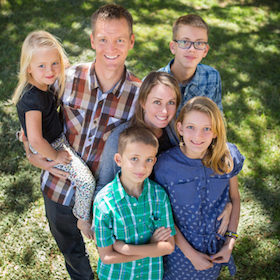
A little while back I saw this post in the BookCamp Facebook group: This caught my attention, so I reached out to George to hear more of his story. It turns out, George, his wife, and four children live in Burundi, a very poor country in East Africa just south of Rwanda. They’re missionaries who are helping train up Burundian doctors. I thought, “Wow, if George can do this in Burundi, where WIFI is often spotty and he’s doing the hectic work of a missionary on a medical team, surely the rest of us can do it too!” I really enjoyed connecting with George and think you will too. In this interview you’ll find out: How he picked up his first 100ish email subscribers The BookCamp tactic he used to add another 40 to 50 subscribers in less than an hour Why social media posts by themselves aren’t enough to grow your audience How writing emails to your list can improve manuscript! The method I recommended to George so that he can keep growing his email list (it involves Facebook) And much more! Here’s the conversation . . . Find out more about BookCamp at www.bookcamp.us. Connect with George Watts and his work in Burundi at www.ggwatts.com.
How to Write Blog Posts That Expand Your Audience

Blogging is a great way for writers to build an audience, but how do you get people to pay attention to your posts? There’s nothing more demoralizing than working for hours on a post only to hear crickets after hitting “publish.” Having blogged professionally for five years now, I’d like to offer my top seven tips for writing blog posts that grab attention 1. Write a great post using the PASTOR method. I learned the PASTOR method from copy writing expert Ray Edwards. Click here for a podcast about the PASTOR method. Click here for an article about the PASTOR method. The PASTOR method of copy writing creates and releases tension in the reading experience, which will keep readers engaged. I don’t follow every jot and tittle of the PASTOR method with every blog post, but it is a really helpful framework that I always keep in the back of my mind. I hope you find it as helpful as I do! 2. Read it out loud or (even better) have a program read it to you. As writers it’s almost impossible to be objective readers of our own work. This is a problem because it means we miss stuff. We miss strange sentence construction, skipped words, repetition, and so on. One way to get ahead of this is by reading aloud what we’ve written. Or, even better, have a program read it to you. These days I tend to work in Microsoft Word, which has a “Speak selected text” feature. I select the text of my post, hit an icon, and the text is read back to me in a robotic voice. The robotic voice is actually helpful because if even a robot sounds okay reading what I’ve written, I know I’m in good shape. My friend, novelist and copywriter Erin Bartels, recently told me about a free online service that does the same thing: https://www.naturalreaders.com/online/ 3. Consider using headings. If your blog post is fewer than 500 words, you may not need headings. But if it’s 500 words or longer, I think they’re a good idea. They break up the reading experience and signal to the reader how you’ve organized the content. My advice when writing headings is don’t get too fancy. In most cases keeping them straightforward and explanatory is the best way to go. [Tweet “7 steps for writing blog posts that expand your audience via pro blogger @chadrallen #amwriting #writingcommunity”] 4. Develop a compelling blog post title. I can’t stress enough how important this step is. Most readers will decide whether to read your blog post or skip it based on the title alone. Your title should accurately reflect your content, of course, but its main job is to get people to click. Here’s the process I use when developing a blog post title: I usually start with a possible title or two in mind. The original title for this post, for example, was “How to Write a Wicked Awesome Blog Post That Grabs Attention!” Then I write the blog post to see what it becomes. Next I consult Copyblogger’s article titles. With my topic in mind, I simply skim the article titles on Copyblogger and look for ideas. Then I open the Kindle app on my desktop and peruse David Garfinkel’s Advertising Headlines That Make You Rich for more inspiration. Finally, I use Coschedule’s Headline Analyzer app to refine my headline. I always shoot for a score of at least 70. (The current title on this post received a 74. My original title received an 81, but I just couldn’t stomach it. These tools are guides, not masters!) This process helps me develop blog post titles that are many times more attractive than they would be otherwise. 5. Add an image that will go well with your title in social posts. One of the main ways you’ll share your blog post is via social media, so it’s a good idea to insert an image within your post that will pair nicely with your blog post’s title. I sometimes will purchase an image at Shutterstock, but more often I use one of the following services for free images: Unsplash Vecteezy Pexels There are others, but these are the sites I use most often. Be sure to follow the guidelines from the image site to provide appropriate attribution. 6. Promote your post via email and social media. So you’ve written a high-quality blog post, inserted some headings, developed a great title, and added an arresting image. Now it’s time to go get some traffic! In the past this step used to really bother me. I mean, I spend all this time writing a blog post, and now I have to spend even more time writing promotional copy! Good grief, when does it end!? But these days it’s far less aggravating. Why? Because I keep it really simple. Sometimes I’ll promote my blog post by simply excerpting or adapting the beginning of the blog post. Then I drop in a link, and I’m done. Other times I think about a particular person who I think would benefit from the post. I write an email to that person and adapt it to promote the post. If I have time, I’ll include a bulleted list of the benefits a reader can expect from the blog post. One practical tip: For the text that you hyperlink in an email, refer back to your blog post title. For this blog post my link text might be “Click here to write blog posts that expand your audience.” 7. Grow your email list. Sharing detailed tactics for growing your email list is beyond the scope of this blog post, but suffice to say, it’s important to solicit email subscribers. I have a whole section in the BookCamp Members Area designed entirely to help writers increase their number of email subscribers. As you grow your email list and let your subscribers know about your new blog posts, you’ll increase your views and get
My Top 10 Takeaways from *Write Better* by Andrew Le Peau
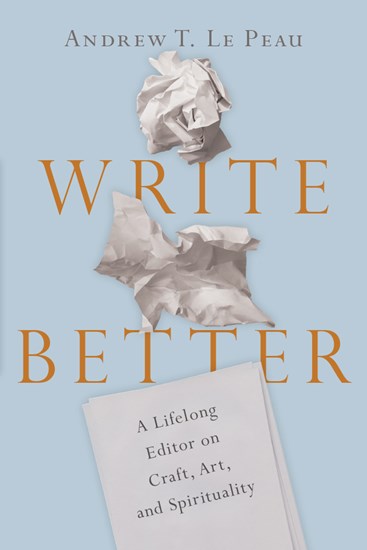
Do you know about the book Write Better: A Lifelong Editor on Craft, Art, and Spirituality by Andrew T. Le Peau? I recently led the BookCamp community through this book and strongly recommend it to any writer. Below I offer my top 10 takeaways from Write Better: 1. When you start, don’t worry about where to start. In other words, stop obsessing over your opening. Just start writing. Later come back to see what you have. Don’t be surprised if your best opening is actually four paragraphs down. Pay particular attention if you tell a story a little ways down; that story is likely your best beginning. 2. When you’re writing, have a specific person in mind. One of the biggest mistakes writers make is thinking their book is for everybody or for a loosely defined group. Be specific. You may get other audiences too, but if you don’t start with one specific audience, you’ll miss all of them. 3. Tone is the key to powerful writing. Le Peau says tone is the “atmosphere” our words create, be it humorous, candid, pastoral, or foreboding. As readers we all know tone exists, but Le Peau describes what it is and helps you be more intentional about it. 4. Don’t rely too much on your book’s subtitle. Have you ever known, perhaps subconsciously, that something is a problem, and then someone comes along and says, “This, this right here, it needs fixing.” That’s how this takeaway hit me. In short, make sure the title of your book is carrying some of the weight of the book’s purpose. If you use an obscure phrase or reference in your nonfiction book title that only makes sense to you, your subtitle will have to do all the work. And that makes marketing your book that much harder. 5. Don’t worry about your audience, but do worry about your audience. In other words, when it comes to choosing what to write about as well as your early drafts, write for you. Do your thing and don’t worry about your audience. Later, come back and make sure what you’ve written will address the needs of your readers. [Tweet “Writing coach @chadrallen’s top 10 takeaways from the book *Write Better: A Lifelong Editor on Craft, Art, and Spirituality* by Andrew Le Peau #amwriting #askeditor”] 6. Rewriting is really important. It’s not what we want to hear, but it is what our writing needs. Be sure to read what you’ve written aloud, and ask for some trusted advisors to critique it for you. 7. You can increase your creative abilities. We’re not born with a defined capacity for creativity and that’s it. Our creative range is flexible, and we can do things to enhance this ability. Le Peau offers several suggestions for how to do this, including trying a new sport, engaging new experiences, and reading books that are different than you normally read. 8. Writing can be part of one’s “calling.” Your calling is what others might call your destiny, the fulfillment of your purpose in life. Andy provides questions to use in discerning your calling, such as (these are my paraphrases) “What makes you happy?” “What do others appreciate about you?” and “What direction do your dreams offer?” 9. We needn’t be obsessed with “finding our voice.” Voice is hopefully the result of dialectical tension between inner and outer worlds. We draw on our inner life and bring it into engagement with the world around us. If we show up and do this consistently, we’ll nurture our own unique voice. 10. The Genesis narrative encourages writers to have courage and let go. Rather ingeniously, Le Peau tells writers to look at what God does in Genesis. God creates, evaluates, and does more. Then God does the same thing again—creates, evaluates, and does more. This happens six times, and then God rests, giving creation to all of us to enjoy, to work with, and also to critique and abuse. All of this serves as a richly helpful model for how writers can approach their own work. Bonus Takeaway: If self-promotion makes you uneasy, look to the psalmists, prophets, and apostles. As a way to overcome our fear of shyness or distaste for self-promotion, Le Peau points to the psalmists, prophets, and apostles as people who were passionate about getting their message into the world—not because they thought they were “all that” but because they believed their message could change the world. Which of these ten takeaways is most helpful to you?
Get Rid of Writer’s Block Once and for All!

I rarely get eater’s block. If I want something to eat, it doesn’t take long to satisfy the urge. That’s because my family keeps a grocery list. Whenever or just before we run out of an item, we write it on the list. Then once or twice a week, one of us goes out to pick up whatever we need. With this system, we always have access to food. In the same way, writers need a system for always having access to ideas. What causes writer’s block is not the writing itself or a lack of ideas. It’s the failure to capture the ideas you have. As productivity expert David Allen has pointed out, our brains are great at generating ideas. They’re not so good at storing them. If you store your ideas, writer’s block will become a thing of the past. How do you do that? I have three tips to share. 1. Develop the habit of harvesting Did you know forgetting is actually good for you? A February 2019 article in Discover Magazine points out, “Forgetting is essential, some researchers now argue, because the biological goal of the brain’s memory apparatus is not preserving information, but rather helping the brain make sound decisions.” So instead of trying really hard to recall your ideas, preserve them. Not only will you be able to use them later. You’ll be freeing up your brain to make better decisions! This process is a little like harvesting. Imagine a farmer who never harvested his crops and let his corn or lettuce spoil. That would be crazy, right?! We need to develop the habit of harvesting our ideas, or we risk losing them forever. Any time you have an idea, record it. Don’t think too long about it and don’t be picky. See something that intrigues you? Snap a picture. Have an interesting experience? Get it down. Your friend shared an idea you find helpful? Store it away. Take whatever method is nearest you and capture it somehow. Speaking of methods . . . 2. Use a notebook Study after study supports the benefits of physically writing things down. I’m not a purist (see tip 3 below), but I’m a big believer in a good old-fashioned notebook. If you want a sturdy lined notebook that feels good in your hand, I recommend a Moleskine Cahier Journal. You can use these right out of the package or buy a leather cover and change out the insert journals as you fill them. If you like the leather option, I recommend this product from Etsy. You can even personalize it with an inspiring message on the front! If you want a notebook that also serves as a daily planner, I recommend the Full Focus Planner from Michael Hyatt & Co. I’ve been using one of these for over two years now, and I can’t imagine life without it. Do you get your best ideas in the shower? My friend Erin Bartels recently told me about Aqua Notes. We now have them in our showers! 3. Leverage digital tools What if you have an idea, but your notebook isn’t handy? Or maybe you simply prefer digital tools. The number of options is endless. Here are just a few: Use an app like Google Keep, Evernote, or One Note Record your ideas in a word processing doc (e.g., Google Docs, Word, or Pages) Record voice memos to yourself (This is particularly helpful if you not only want to capture an idea but develop it “out loud” as you talk it through.) Send an email to yourself Call your cell and leave a voicemail Take pictures Don’t get overwhelmed by all these digital options. Select one or two that pique your interest and give them a try. May writer’s block become as absurd to you as eater’s block. If you make a habit of harvesting your ideas using both analog and digital methods, it just might. Which of these three tips is most useful to you?
An Easy Way for Writers to Renew Their Energy

Recently I heard from a writer who said, “I feel like I get so bogged down with building a platform, I don’t have time to write!” That’s the cry of so many writers I’ve worked with. Here’s another one: “I feel like I’m just spinning my wheels. I forget why I got into this in the first place.” Sometimes we can get so bogged down in the nitty-gritty of building a platform, serving our audience, and writing a manuscript. It can get exhausting and demoralizing. If you resonate with these sentiments, I want to offer a perspective I’ve found enormously helpful. Your Ancestors and You the Ancestor I read a poem by David Whyte recently titled “Coleman’s Bed” that ends with the notion of becoming an ancestor. Have you ever thought about that? I hadn’t. But it’s true. You, someday, will be an ancestor to other people. It got me thinking about my own ancestors. I thought, for example, of my paternal great grandparents, two people I never met but are legendary in our family. We know them as Big Papa and Big Mama. I thought about those I claim as ancestors—people like Martin Luther King Jr. and Mother Teresa and Thomas Merton. Eventually I began to think of those who will think of me as their ancestor. I thought about the books (books written by readers of this blog!) to which I hope to be an ancestor. In short, I thought about those who’ve had a vital influence on me and those whom I hope to influence, even years after I’m gone. Your Future Happiness Whyte’s poem ends with a surprising twist. He refers to becoming the “Saint your future happiness will always remember,” which is worth pondering. How can you become the saint your future self will smile back on? The idea here, or at least my idea here, is that someday I will look back on the things I’m doing now with some measure of either gratitude or regret. This reframes today’s actions in a way that’s very helpful. Often my concerns are so immediate. I need to get money in the account, food on the table. I need to get the tires rotated or my eyes checked. These things are important, of course, but I can easily get swept away in them and begin to feel like a hamster on a wheel. When I think about my formation as an ancestor, I get a bigger perspective. I begin to see a grander purpose in which all of these quotidian tasks have more meaning. I’m able to tap into a motivation for my actions that both encompasses and transcends whatever’s on today’s to-do list. And because of that, I can approach my day-to-day activities with more energy. I move from a more tactical/practical way of living to a more artful way of living. [Tweet “An easy way for writers to renew their energy @chadrallen #amwriting #WritingCommunity”] Two Easy Exercises I commend these two easy exercises to you: Reflect on the fact that you one day will be an ancestor to others. To what and to whom do you want to be an ancestor? Reflect on being the saint today that your future happiness will always remember. What activities must you engage today so that in the future you’ll look back on this day with a smile? When we think of ourselves as ancestors to others and as the saints of our future happiness, we stand a good chance of renewing our passion for the art we’ve been called to create. To what and to whom do you want to be an ancestor?
A Mindset Shift That Helps Writers Increase Their Brilliance and Creativity

As I’ve worked with writers over the years, I’ve come to believe about 95 percent of the work of any creative is cultivating the right mindset. If we get the mental game right, everything else tends to work itself out. Obviously there are multiple facets to the mental game. I want to talk about just one of them here, and its importance cannot be overstated. I want to address the tendency we have to beat ourselves up. The Truth about You There is a part of you that is unfinished and imperfect. There is a part of you that’s probably going to eat too much dessert at some point this week. There is a part of you that’s not going to show up for your creative work the way you would’ve liked. That part exists because you’re human, and the response I’ve observed among so many writers is self-flagellation. I’m not talking about constructive self-criticism. When you journal about the day you just completed and you point out a few things that could’ve gone better and you’ll try to do better next time, that’s constructive self-criticism. And I’m a big fan of it. But often we are engaged not in constructive but destructive self-criticism. We call ourselves names. Silently or sometimes audibly, we say horrible things about ourselves. We give in to a pervasive mood of self-defeat and sorrow. And we stop creating today because of what happened yesterday. Two Subtleties of a Creativity Killer Toxic self-criticism is subtle in at least a couple of ways. The first subtlety of this interior voice of death is that we may not even know we’re doing it. This is why the first step to beating it is awareness. The next time you fall short of your ambitions, try to notice how you respond internally to yourself. Step back and simply notice. The second subtlety of destructive self-criticism is that it somehow convinces us we need it. It tells us we are weak to avoid it. This is a lie. We are not weak if we silence this voice. In fact, when we say goodbye to destructive self-criticism, we demonstrate our knowledge that it does not actually help us do our work. That’s the truth. [Tweet “A mindset shift that helps writers increase their brilliance and creativity: how & why you should say goodbye to destructive self-criticism: @chadrallen #amwriting #writingcommunity”] Try This Instead Once you’re aware of the fact that you’re beating yourself up, try this instead. Show compassion for that part of yourself. Nurture and cultivate some love for it—for the part inside that’s unfinished, imperfect, has a way to go, makes mistakes. This, after all, is what you would do for your children, your friends, your family, anyone you care about. You would show love and compassion for these unfinished, unsettled, imperfect parts of other people. So why shouldn’t you show the same for these parts within yourself? You and your art will be better for it, I promise. Postscript: How This Blog Post Came About I run a training and community hub for writers who want to get published called BookCamp. One of the features of BookCamp is a weekly coworking session on Monday mornings in which my assistant or I offer a brief word of encouragement or inspiration before we start a 50-minute countdown clock. The 3-minute video below (originally shot on December 21, hence the corny, festive background) is a recording of one of these words of encouragement, which eventually led to this blog post. Enjoy! When have you noticed the voice of destructive self-criticism?
How You Really Can Achieve Your Goals (and Have Fun Doing It)

I’ve been writing down and pursuing goals for about five years and have seen some wonderful results, including: Running my first triathlon Losing 50 pounds Starting my own business and transitioning to fulltime self-employment Becoming someone who prays and meditates regularly The list goes on. But my list of goals achieved is, of course, not the whole story. I have fallen short numerous times over the years—so many times, in fact, I’ve questioned whether goal setting is all it’s cracked up to be. Given all the good that goals have brought into my life, though, I’ve grown suspicious of the internal voice that tells me to jettison them. To do so, I think, would be to throw out a lot of good with the bad. But what if I (what if you) could retain all the positive aspects of goal setting and get rid of the negative aspects? That’s the purpose of this article. I want to commend a handful of strategies that have helped me cultivate goals that are both productive and sustainable. If you implement these into your goal-setting process, I’m confident you’ll see more success and experience less disappointment. You’ll be able to achieve your goals and have fun doing it! 1. Focus on Doable Processes, Not Disembodied Milestones In the past I’ve set goals that are detached from reality. For example, I’ve set a goal like “Bring in an average monthly revenue of X this year.” That’s all well and good, but if that goal is not supported by a strategy that is deeply rooted in reality, it’s not really a goal. It’s a pie-in-the-sky wish or something. It is far better, in my experience, to focus less on disembodied milestones (you can keep them in the back of your mind) than the actions you can actually control to make progress toward these milestones. Bottom line: Frame your goals in terms of what you can do. Furthermore, if you follow through and do the action you specify in the goal, you’ve accomplished your goal, regardless of the outcome. You did that which was within your control to do, and you’re a lot further ahead than if you hadn’t. And you deserve whatever reward you’ve established for hitting the goal, which brings me to our next strategy. 2. Predetermine Rewards for Hitting Your Goals I try to establish a reward for each of the goals I accomplish. Sometimes it’s simple: “Take an afternoon off and go see a movie” or “Go to Cabela’s or REI and buy some camping gear.” Sometimes it’s bigger: “Go skydiving” or “Get a Peleton.” It sounds strange, but coming up with rewards can be really tough. Maybe it’s because we’re not accustomed to being intentional about rewarding ourselves. To overcome this challenge, it’s a good idea to brainstorm possible goals ahead of time. Here are some questions to help you get started: What are some sweet treats you’d really enjoy? (For me, sometimes nothing beats a Peanut Butter Cup Blizzard, amen?) What’s something fun you could do if you took a day or half a day off? (Go golfing? Art museum? Spa?) What trips would you like to take? (Think of places both near and far.) What are some experiences you’d like to have? (Skydiving? Hot air balloon ride? Jet skiing?) What is some training you’d like to receive? (Cooking classes? Guitar lessons?) What are some relatively inexpensive items you’d like to have? (My list includes a new button-up shirt and running gear.) What are some more expensive items? (An autonomous mower? Furniture? A new car?) What are some subscriptions you’d like to try? (Need some ideas? Google is your friend. I just googled “meal subscription that teaches you how to cook” and found an article about four such services. Incredible!) When you do this brainstorming, don’t limit yourself. Just go crazy and list out whatever comes to mind. Then you’ll have a list to refer back to when setting rewards for accomplishing your goals. [Tweet “It’s important to predetermine rewards for hitting your #goals, but this can be hard to do! This article on goal setting helps.”] 3. Set Goals within a Larger Framework of Life Design Goals do not make a life. They are in my opinion one important element of a fulfilling life, but they are not the sum total. To approach my goals as if they alone are an adequate framework for life is to put too much weight on them. In my experience it’s also a good way to set yourself up for a life that’s not much fun. Someone might say that’s because I’ve not included enough fun goals in my list, but honestly this doesn’t go far enough for me. What helps me personally is to think about the trips I want to take during a given year. Importantly, I equate these trips with fun—when I get to see new places, have new experiences, rest, and connect with those I love. I could add all these trips to my goals list, but then I’d have this giant list of goals, which isn’t helpful for reasons I’ll cover in the next strategy. The point is to help yourself see a future life you’re excited about living. Your goals should be part of that vision, but what else should be part of it? What else do you need to write down in addition to your goals? In my case it’s trips I want to take. Someone else may want to write out a way of working that is life-giving or how they’re going to invest in a particular relationship. 4. Limit the Number of Goals You Pursue at Any Given Time Feel free to write out as many goals as you like, but my strong recommendation is to limit the number you actively pursue at any given time. Here’s why. Study after study show our brains are not very good at multitasking. We focus on one thing at a time. The result for me is this:
10 Things Healthy, Successful Writers DON’T Do

In many ways we’re living in a golden age for writers. The path to a sizeable audience for your story or message has never been more accessible. But as I’ve worked with thousands of writers over the past twenty-plus years, I’ve become aware of ways writers can be their own worst enemies. Certain mindsets cut writers off at the knees and keep them from doing their most important work, to say nothing of the fun they could have doing it. In this article I’d like to share ten ways writers get in their own way as well as what the most successful and productive writers do instead. 1. They don’t isolate Instead, they connect with other writers. They check in regularly with a writing buddy or join a writers group for feedback, encouragement, and accountability. They don’t go it alone. 2. They don’t believe writing is indulgent Instead, they see writing as a sacred vocation and a means for effecting profound change in the world. They approach writing as an honor and duty always, a joy sometimes. [Tweet “”They don’t believe writing is indulgent” and 9 other things healthy, successful #writers don’t do. #amwriting @chadrallen”] 3. They don’t see writing and platform building as completely different projects Instead, they see all of it as part of the same endeavor, namely, to serve an audience of like-minded people. Books that have the biggest impact are an organic extension of the platform-related work a writer has been doing for a long time. 4. They don’t work all the time without rewarding themselves Instead, they set goals and celebrate when they hit those goals. These celebrations create momentum in a virtuous cycle of productivity and influence. 5. They don’t ignore other writers in their space Instead, they take time to observe what other authors are doing and encourage them. They realize no book exists in a vacuum. They don’t see other writers as competition but as fellow pilgrims. They are generous contributors to a writerly community. 6. They don’t lack clarity about the change they want to see in the world Instead, they’re passionate about helping their readers in a particular way. And lest you think I’m referring only to nonfiction writers, let me be clear. Novelists too are in the service business. The work of any writer is the art of helping readers. [Tweet “”The work of any writer is the art of helping readers.” @chadrallen #amwriting”] 7. They don’t focus on their passion without regard for the world’s need Instead, they take seriously the sentiment articulated so masterfully by author Frederick Buechner: “The place God calls you to is the place where your deep gladness and the world’s deep hunger meet.” Following passion without regard for the world’s hunger is keeping a diary. (Incidentally, trying to address the world’s need without regard for your passion is unsustainable drudgery.) 8. They don’t believe their writing is not worth promoting Instead, they recognize that if they fail to promote their work, to quote P. T. Barnum, “something terrible will happen: nothing.” They also notice the darkness of all the harmful ideas and products that scoundrels promote the world over without hesitation. And they light a candle in promoting their own work—to give it a chance to do the good it deserves to do. 9. They don’t refuse help Instead, they readily ask for help. Sometimes they even ask for help about who to ask for help. They don’t stay stuck for long. Particularly with matters of technology, they know the right assistance can free them up to do their most important work. And so, for that reason, the right assistance can be worth its weight in gold. 10. They don’t quit Instead, they believe firmly in what Michael Hyatt meant when he said, “You can’t fail if you don’t quit.” They keep showing up. They may take a break for a time, but pretty soon they’re back at it, doing their art. [Tweet “10 things healthy, successful writers DON’T do (and what they do instead), a #writetip article from @chadrallen #writingcommunity”] Which of these ‘don’ts’ do you need to focus on to move forward in your writing life?
A “Choose Your Own Adventure” Guide to the Best Books on Writing

I could simply give you a list of my favorite books on writing, but where’s the fun in that?! I thought it would be more fun to guide you to the one that is most likely to help you based on what you’re looking for. Ladies and gentlemen, welcome to what is likely the first ever “Choose Your Own Adventure” guide to the best books on writing! Ready? Here we go. Pick the statement below that best suits you right now. I want a great book on writing that has a dash of humor. I’d love to read a riveting memoir of a writer that also includes some writing tips. How about more of a Zen approach to the beauty and power of writing? Marketing! Quick, Chad, give me a book how to market my book. I want a meaty book on writing with lots of examples of different techniques. Everybody’s talking about platform. What would you recommend? I need to recharge. How can I enhance my creativity? Let’s get back to basics. How about a simple book on good grammar? If you picked statement 1, I recommend Anne Lamott’s Bird by Bird. Already read it? Another strong book in this category is William Zinsser’s On Writing Well. A third is Andrew T. Le Peau’s Write Better. If you picked statement 2, check out Stephen King’s On Writing. Already read it? Try Annie Dillard’s The Writing Life. If you picked 3, you must read Natalie Goldberg’s Writing Down the Bones. Already read it? Try The Artist’s Way by Julia Cameron. If you picked 4, I strongly recommend Building a Story Brand by Donald Miller. Already read it? Check out Tim Grahl’s Your First 1000 Copies. If you picked statement 5, look no further than Stein on Writing by Sol Stein. (I don’t have a backup for this one. Any suggestions?) If you resonate most with statement 6, check out either Platform by Michael Hyatt or Your First 1,000 Copies by Tim Grahl. Statement 7 is resonating with you? Go find yourself a copy of Elizabeth Gilbert’s Big Magic. Another wonderful book on creativity is The Accidental Creative by Todd Henry. Austin Kleon is the third terrific voice in this space. And if statement 8 is your cup of tea, check out Elements of Style by William Strunk and E. B. White. For a more entertaining approach, try Eats, Shoots & Leaves by Lynne Truss. [Tweet “A “Choose Your Own Adventure” Guide to the Best Books on Writing @chadrallen #amreading #writing”] Which statement did you choose?
5 Simple and Effective Ways to Structure Your Book

Later this year my buddy Mike and I will go on our annual camping trip. It’s one of the highlights of my year. Sitting by the fire. Hot coffee in the morning chill. Long conversations. Man, I love it. Here’s a pic from last year’s trip to Wisconsin’s Kettle Moraine State Forest. Nice, right? But before all the good stuff, we have to prepare. If we just showed up at a campsite without a tent or food or, God forbid, coffee, we’d be in a world of hurt! Similarly, writers often start with an inspiring book idea. They have a vision for the kind of book they want to write just like Mike and I have a vision for the kind of camping experience we want. But it’s one thing to have a book idea; it’s something else to have a book structure. Your book structure is crucial. If Mike and I don’t plan, we’re not going to have a very good camping trip. If you don’t have a book structure, that grand vision for your book is never going to make its way into reality. Key point: Book structures bring book ideas to life. So how do you get there? The purpose of this blog post is to share five simple ways to go from book idea to book structure. [Tweet ““Book structures bring book ideas to life,” 5 simple & effective ways to plan your book #amwriting #writetip @chadrallen”] 1. The Fill-in-the-Blank Method Sometimes the process of structuring your book is as simple as filling in a couple blanks. Let me show you what I mean. Let’s say you’re writing a book about saving sea turtles. I don’t know if sea turtles need saving, but go with me here. Here’s the blank you need to fill in: The most important thing I have to say about saving sea turtles is ______________. After you’ve filled in that blank, you fill in this one: Another important thing I have to say about saving sea turtles is _______________. You just keep going until you run out of big significant things to say about your topic. Each sentence represents a chapter. Simple, right? Click here for a blog post I wrote about this method. 2. The Mind Map Method I learned this method from Chandler Bolt, founder of the Self-Publishing School. It’s simple but powerful. Take out a sheet of paper and write your book’s main topic in the middle. Now draw a circle around it, like this: Now draw spokes off the center circle and add subtopics, circling them as you go, like this: Each subtopic represents a chapter. And with this method, you can go even further and write out ideas for each subtopic by drawing another layer of spokes and circles. 3. The “Start Writing” Method Sometimes you have to start writing a draft of the manuscript before you’ll have any idea what the structure should be. In my experience this is especially true for memoirs. In part 2 of his On Writing Well: Audio Collection, William Zinsser encourages memoirists to pick a memory that is both vivid and emotionally evocative. Write it out, he says. The next day at about the same time, do the same thing with a different memory that is vivid and evocative. Keep doing this for a few months, and eventually you’ll begin to have an idea about the theme and shape of your memoir. 4. The Brain Dump Method Start with the categories for your brain dumping. Some possibilities include stories, quotes, people, statistics, principles or teaching points, other books, articles or new stories. Once you’ve generated your list of categories, start brain dumping into each one. For example, write “Stories” at the top of the page and use brief phrases to list all the stories you know that are relevant to the topic of your book. Now do that with quotes and people and statistics and so on. This may take a while, that’s okay. Once you’re done brain dumping, take a step back and look for patterns. What goes with what? Start grouping things across the categories that seem to go together topically. List them sequentially in a way that makes sense. Each of these groups is a chapter. Click here for a blog post I wrote about this method. 5. The Seminar Method A writer I was working with had a brilliant concept, but her first outline fell flat. I asked her to imagine giving a series of seminars or workshops on her book’s topic. “How would that go?” I asked. “Oh, easy,” she said, “in the first session I’d talk about this. Then I’d talk about this.” And so on. She rattled off about eight topics that formed the backbone of a book structure that was much more engaging. The reason this method works is because it forces the author to externalize her message. Sometimes it’s helpful to stop thinking so hard about your topic and teach it instead. Click here for a blog post about this method. [Tweet “5 simple & effective ways to structure your book #writetip #writingcommunity #amwriting @chadrallen”] Which of these five methods would work best for you and your book?