How Your Mental Health Can Reveal Your Inner Genius
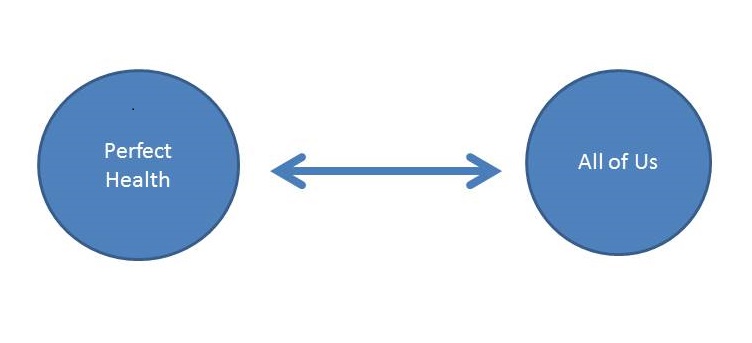
You and I are a lot like Harrison Ford’s character in that famous scene from Indiana Jones and the Last Crusade. Jones, an archaeologist, makes his way through a cavernous labyrinth when he arrives at the edge of an abrupt cliff. Quickly he deciphers some ancient hieroglyphics to discover that before him is the ultimate “leap of faith.” He must take a step into the chasm before a bridge will appear. Will he do it? Watch this.
Want to Know the Key to a Life That Matters?
www.DieEmpty.com
10 Things I Learned about Life from a Year’s Worth of Blogging

In the children’s book The Snowy Day by Ezra Jack Keats a boy walks through his neighborhood after a snowfall and discovers the beauty there. At one point he breaks a branch from a tree and continues walking in the snow. Soon he looks back and observes his footsteps along with the groove the stick has made as he has dragged it behind him. This blog is like that stick for me. I’ve been walking with it for a year (my first post went up August 15, 2012). Now I’d like to look back. Blogging this long has been one of the most challenging and rewarding things I’ve ever done. More than anything it’s been an education! Following are ten things I’ve learned along the way. 1. It’s not about me. In my first post I wrote, “What would knock my socks off is if this space became a gathering place for a community of people who helped and supported one another on the creative journey.” That original vision is still what gets me up in the morning. 2. It is more blessed to give than to receive. When it comes to what to do next on my blog, sometimes it feels like I’m assaulted by thousands of competing voices. I never go wrong when I ask and respond to this simple question: “How can I serve people?” 3. The importance of sustainability. What’s the point of blogging if it drains you or makes you cranky or, worse, if you end up feeling guilty for not posting? Stop, I say to myself. Breathe. Decide what a reasonable pace is, when you’re going to write, and what else you need to do to write during that time. 4. Traffic stats can become an unhealthy obsession. Leadership expert Edwin Friedman compared our modern preoccupation with data to substance abuse, referencing the classic addiction cycle of “self-doubt, denial, temptation, relapse, and withdrawal.” He nails it, I think. They are a useful tool but a cruel, cruel master. 5. My family is making sacrifices for me to do this. My blogging time is early in the morning, which means two to three mornings a week I’m not in the house when my wife and children wake up. That is a real sacrifice on their parts, and I pray God it’s worth it. 6. Finding my voice takes time. I’m grateful that I began this journey without too defined a purpose. I was “exploring writing, publishing, life, and creativity.” I’ve enjoyed the freedom of this tagline. It has allowed me to find my feet, to discover who I am in this space. I feel like I have a better sense of that now, but I needed some leeway to discover that. 7. Blogging is influence. Words matter, and so does blogging. As ephemeral as one’s posts can seem, I have seen with gratitude that at least some of what I do here touches people. That’s real influence, and with influence comes responsibility. 8. Bloggers inspire me. As I write this, hundreds if not thousands of other bloggers are pounding at their keyboards too. Many of them are dedicated to serving or to exploring their inner selves. In various ways they are literally changing the world as they do. 9. Mistakes are reparable. We bloggers take great comfort in knowing we can “update” a post with the push of a button and correct our mistakes. Elsewhere mistakes may take longer to repair, but most of them can be repaired if we just try. 10. The work is its own reward. Who knows what all will come from this blog, but I intend to stick with it. Showing up here, doing my best to silence unhelpful voices in my own head, trying hard to serve readers–that is the reward I treasure most. Thanks for being on the journey with me! If you’re a blogger, what are some things you have learned along the way? If you’re a blog reader, what are some things you appreciate about the bloggers you read? “Finding my voice takes time” and 9 other lessons from #blogging for a year. <Tweet this!> Want to know what #blogging for a year does for you? See here . . . <Tweet this!> “Traffic #stats are a useful tool but a cruel, cruel master” & other lessons for #bloggers <Tweet this!>
This Free Book Can Help Your Dreams Come True
This little book could change everything for you. Do you have a passion or side project that energizes you? It could be a different job, a book idea, an art project, a blog, a business idea, a nonprofit you’d like to start. This brief manifesto uses stories and a series of questions to help you identify your passion and take practical steps toward living it out, intentionally and sustainably. Whether you’ve begun to “Do Your Art” or are just thinking about it, you can do this. And we need you to do it. This book will help. “Chad’s manifesto delivers a simple but profound truth: you have unique art to offer the world, and deliberate action is the only path to making it happen. A wonderful (and welcome) kick in the pants!” —Todd Henry, author of The Accidental Creative and Die Empty Click here to pick up a free copy of the book.
How Answering One Scary Question Can Lead You to the Life You’ve Always Wanted

In The 4-Hour Workweek, author Timothy Ferriss encourages readers to answer this question: If you got fired from your job tomorrow, what would you do to rescue your life from financial chaos? Sometimes reflecting on a worst-case scenario opens up whole new worlds of possibility. Job Search I suspect many people would simply launch an all-out job search. But let’s assume you got fired in a contracting industry. Let’s assume getting the same or similar job you had with a different company is impossible. You could switch industries, of course. You could go to school to learn a new set of skills, and probably some people should do this. If reading this strikes a chord, consider taking a few classes before you get fired! Starting a Business But I’m guessing that some people reading this would or already do feel the impulse to go out on their own. Let’s zero in on that possibility. Deciding Which Business to Start What service could you provide that you think others would be willing to buy? What product could you create that you think other people would be willing to purchase? If multiple directions come to mind, imagine a fully developed, profit-making version of each possible business. Which one excites you the most? (That’s the one to pursue.) Things to Consider Ferriss argues convincingly that 80 percent of our income comes from 20 percent of our actions. Assume he’s right and ask yourself, which 20 percent? With crowd-sourced funding options like Kickstarter, gathering start-up capital has never been easier or more fun! The Internet has changed the rules in terms of reach and influence. I self-published a book in a few months time, for example. It is now available to the entire planet. With companies like elance.com and brickworkindia.com, access to support is both simple and efficient. 3 More Questions Does reading this stir something inside you that you’d like to keep cultivating? What’s one step you can take today that will help you move in that direction? Who is one person with whom you can talk about this? Here’s your chance to reflect: If you got fired tomorrow, what would you do to rescue yourself from financial chaos? ~~ Tweetables ~~ What would you do if you got fired this morning? Powerful question, powerful post here… <Tweet this!> How answering one scary question could lead you to the life you’ve always wanted… <Tweet this!>
3 Life Lessons from Winnie the Pooh
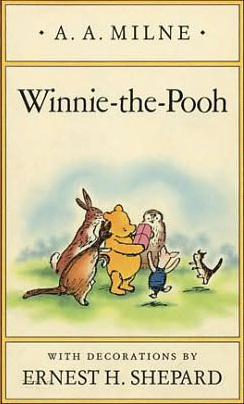
Every now and again a book comes along that resonates so deeply, it becomes a classic. The four books A. A. Milne wrote for children, not least his only son Christopher, did exactly that. My six-year-old son and I have had a blast reading these books at bedtime. One reason they are so popular, I’m convinced, is because we adults realize we too need to learn the lessons of the Hundred Acre Wood. Following are three such lessons. 1. Value the differences in the people around you. Rabbit wants to “unbounce” Tigger because Tigger is, well, he’ just too bouncy. So Rabbit hatches a bounce eradication plan. His plan is to set Tigger up to get lost. Rabbit figures if Tigger gets lost and realizes how much he needs the others, he’ll stop being so bouncy. But the plan backfires, and Rabbit is the one who gets lost. Guess who saves him? The irrepressible Tigger, whose bounciness is a crucial part of the rescue. Let’s face it, we all have colleagues or family members who get on our nerves for one reason or another. The story of Rabbit and Tigger reminds us that the shoe may well be on the other foot. We just might get on someone else’s nerves from time to time, and one person’s nuisance just might end up being that same person’s salvation. 2. When we get in trouble, we need help. Just about every chapter in these books is the story of a character getting into some kind of trouble. Pooh gets stuck in the door of Rabbit’s house. Eeyore loses his tail. Owl’s tree falls over in a storm. It is instructive that the characters are never able to save themselves from these dire situations. They always need help. How are you doing with that? Do you accept help? Do you seek it out? Our culture tells us to do it ourselves. Our pride tells us no one else can do it better. Add to that how busy we are, and asking for help falls by the wayside. Winnie the Pooh and his friends teach us that all of the most important things in life happen when people help each other. Did you hear that? If you’re not giving and receiving help, you’re not truly living. 3. Don’t always trust authority. Christopher Robin leads his friends on an “expotition” to the north pole. They find a random pole in the Hundred Acre Wood, Christopher declares it the north pole, and the adventure is complete. In the words of my son, “Even Christopher Robin gets it wrong sometimes.” Another authority figure in these stories is Owl. “And if anyone knows anything about anything,” says Pooh, “it’s Owl who knows something about something.” Owl is a thoroughly loveable character precisely because he’s so sure he’s right when in fact he is the farthest thing from it. So don’t always trust the authority figures in your life, including the ones in the board room of your own mind. Learn to be just curious enough to wonder about what they’re saying. It is fun, not to mention useful, to step back from the books we’re reading to notice and articulate the lessons we’re learning from them. What are you learning from what you’re reading? ~~~~ If you enjoyed this post, would you help me share it? “If you’re not giving and receiving help, you’re not truly living,” and other Winnie the Pooh wisdom… <Tweet this!> “One person’s nuisance just might end up being that same person’s salvation.” Winnie the Pooh wisdom…<Tweet this!> “Even Christopher Robin gets it wrong sometimes.” This and other life lessons from Winnie the Pooh…<Tweet this!>
How Jackie Robinson Saved My Life

Guest Blogger: Vince Antonucci I grew up in a verbally abusive home. My father’s violent tirades were like heart-seeking missiles. And if my father, someone who was obligated to love me, couldn’t love me—if he couldn’t find anything special in me, I reasoned I must be defective. I needed a place to escape, and I found it in baseball. I tell people baseball was my first love, and I mean it. From age six I was watching games on TV, memorizing statistics on the backs of baseball cards, playing out imaginary games with my glove and tennis ball in the backyard—all of this helped me escape my father. And in baseball I discovered another guy who lived where violent words came rushing at him. But he didn’t go to baseball to escape the abuse, he went there to receive it. Jackie Robinson was born in 1919 into a family of sharecroppers in Georgia. Jackie’s father abandoned the family when Jackie was a year old. Young Robinson grew up in poverty, but with great athletic ability. He eventually became the first athlete at UCLA to win varsity letters in four sports. In 1945 Jackie Robinson accepted an offer to play baseball for the Kansas City Monarchs in the Negro League. Little did he know Branch Rickey, the president and general manager of the Brooklyn Dodgers, was scouting the Negro leagues for a player to break Major League Baseball’s color barrier. Rickey chose Robinson and called him in for a meeting that would last three hours. Rickey explained to Robinson he would be attacked by racists if he joined the Dodgers, but Robinson could not fight back. If he did fight back, racist rage would explode. “Are you looking for a Negro who is afraid to fight back?” Robinson asked. Rickey told him no, he needed a Negro player “with guts enough not to fight back.” Robinson agreed. On April 15, 1947, Jackie Robinson joined the Dodgers and became the first African American athlete in professional sports. Then came the hailstorm. Racial taunts and slurs, death threats, character assassination, physical attacks on the field. It was worse than Branch Rickey had promised or Robinson expected. But Robinson knew the defect wasn’t in him but in those who attacked him, and somehow he rose above it. As a boy I read about Jackie Robinson in my bedroom, hiding from my father who watched TV in the next room. I was captivated. Empowered. Jackie Robinson opened a whole new way of life for me. My room soon became filled with posters and baseball cards of Jackie Robinson. Over the years this culminated in a personalized license plate I happily pay extra for to this day: “42.” It’s my way of honoring a man who lived so courageously. Jackie Robinson taught me I didn’t have to live a “normal” life. I could defy the odds. I could do something with myself despite all the pain and mess of my childhood. I found out that as a young man Jackie Robinson himself was inspired by someone, and that someone was Jesus. Robinson grew up in a Christian home and was later mentored by a minister named Karl Everitt Downs. Though not perfect, he did his best to follow in the footsteps of a man who knew a lot about rising above. Many people don’t know Robinson invested the last years of his life as a supporter and speaker for the Southern Christian Leadership Conference. He also started an organization called The Church Fund, which raised money to rebuild African American churches that had been burned down because of their role in the Civil Rights movement. Branch Rickey was also influenced by Jesus. During their three-hour meeting in which Rickey told Robinson he couldn’t fight back, the two spoke of Jesus’ teachings about loving enemies and turning the other cheek. These teachings became the centerpiece of their strategy. A Jesus-inspired strategy that led Robinson to become not only the first black player in the Majors but also a national hero we’re still making blockbuster movies about today. Jackie Robinson was an ordinary man, but the impact Jesus had on him made him extraordinary. I think that’s what we’re all looking for. A way to break out of ordinary, to overcome the mundane and expected, to live our lives at a higher level. We all desire that, but to experience it we need help. That’s why I wrote Renegade: Your Faith Isn’t Meant To Be Safe. It’s a book about this kind of life – the kind of life Jesus and Jackie Robinson inspire me to live. Today I’m a pastor near the Las Vegas strip, which is definitely out of the ordinary. I’m not sure I live at a higher level everyday, but I am trying. My hope is that Renegade will help people connect with Jesus in a way that moves them toward extraordinary lives. I’m so eager to see this happen, I teamed up with my publisher to sell the ebook version for 99 cents from April 12-19 in honor of Jackie Robinson, who is celebrated in the newly released movie 42. People think I’m crazy. They point out I won’t make any money from a book that’s selling for 99 cents. But money isn’t the point. The courageous, renegade life is, and I guess this is just one more example of how Jackie Robinson has helped me rise above. I hope you’ll pick it up, and if you do I’d love to hear what you think. You can email me here. Vince Antonucci is the founder and lead pastor of Verve, an innovative church plant for the unchurched near the Las Vegas strip. Vince’s passion is creatively communicating biblical truth to help people find God. He blogs at www.vinceantonucci.com and speaks and coaches for Auxano.com. He is the author of I Became a Christian and All I Got Was This Lousy T-Shirt, Guerrilla Lovers, and Renegade. All three of his books are available in ebook form for 99
The Three Essential Movements of Creativity
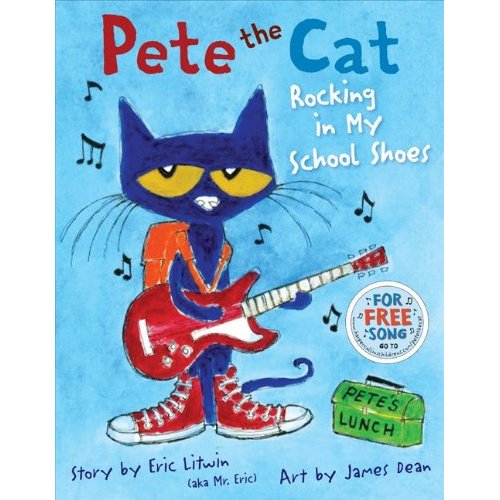
Recently it was “Be your favorite storybook character” day at my son’s school. Last night at dinner we talked about how best to embody Pete from Pete the Cat. Not one for makeup, my son opted for drawing a picture of Pete and pinning him to the canvas of a white T-shirt. My son is six, and he must have spent a solid thirty minutes at the dinner table, getting his picture just right. At one point he got frustrated and asked me to write “Pete’s Lunch” on the feline’s lunchbox because he had trouble writing that small. But he got there. Later he walked the school halls proudly displaying a brilliantly colored Pete on his chest. I loved the whole experience because it was creative—developing a vision and bringing it into reality. We are naturally creative beings. That’s why we have cities and families and houses, art and architecture, businesses and products and charities. Creativity is who we are and who we were meant to be. But we all know what it’s like to stand in front of our equivalent of a blank canvas and not have much to offer. The blank canvass can be a business presentation, a manuscript, a conversation, a gift for a loved one, or just life in general. We know what it’s like to feel burned out, tired, and just empty or dead inside. When this happens, it’s not because we are not creative. It’s likely because we are trying to be outwardly creative without being inwardly creative. Inward Creativity Inward creativity is first and foremost about taking care of ourselves. It’s about eating well and sleeping well. It’s about a healthy rhythm between work and play. It’s about exercise and relaxation. It’s about time to oneself and rich time with others, family time and friend time. I don’t know about you, but the fortifying effects of a good time with a dear friend are better than any money can buy. I don’t have to cite medical studies to convince you of how important this stuff is. We all know it. But we struggle at times. I certainly do. Other forces, both internal and external, run counter to healthy living, and sometimes our obligations prevent it. But being healthy is fundamental to becoming our best creative selves. We could point to any number of artists who did not engage healthy lifestyle patterns yet were enormously creative. I wonder what they could have done if they had been healthy. Inward creativity is also about intentionally engaging stimuli that will feed our outward creativity. The number of forms this can take is literally infinite, but we have to be intentional about it. It doesn’t just happen. Today you will listen to or watch or read or experience all kinds of stimuli, but will these stimuli feed your creative potential? What practice can you incorporate that will help you be intentional with your stimuli? When will you engage them? During drive time? In the evening when you normally watch TV? Sometimes just a few small changes, nothing dramatic, can make a huge difference. Outward Creativity Outward creativity is so much easier if you have done the work of inward creativity, but it is seldom easy in any case. We stare agape at people who say things like “It just came to me” because we all know how rare this is. Outward creativity often requires getting our calendars to do what we want them to do. It’s so easy to be passive with our calendars, to let others dictate how we’re going to spend our time. And of course to some extent this is right and good, but probably to a larger extent than need be. My advice: force it to conform to your priorities and values. Then do the work. Steven Pressfield uses the phrase “going pro” for adopting the mindset of a construction worker for one’s creative work. Construction workers rise early, grab their hard hats, lunch boxes, and go to the work site. That’s what creatives have to do if we are going to produce things of value. The blank page I face on a regular basis is the one that faced me before writing this—the blogging page. What never ceases to amaze me is that when I wake up, show up, and sit down, things happen. Words come. “Eighty percent of success,” said Woody Allen, “is showing up.” The Third Movement The third movement of creativity is acceptance. Let me illustrate. This week was absolutely nutty for me. I had a family funeral to attend in a different state and the work piled up in my absence. The result is that I stayed up until midnight one night and until 1 am another night. If you’re keeping score at home, that means I did not get enough sleep. And I didn’t have as much time as I like to have to engage nurturing stimuli and write. I could beat myself up. I’m tempted to, honestly. That voice is there. But what good would that do? “You’re okay, bud,” I’m better off telling myself. “Tough week, but you did as well as you could do, and today is a new day. You are worth your own acceptance. Take care of yourself.” And then it’s so important to do this: Take. The. Next. Right. Step. My next right step is pushing “Publish” on this blog post. How about you?
How to Start a Group That Nourishes Your Creativity

“Never doubt that a small group of thoughtful, committed citizens can change the world. Indeed, it is the only thing that ever has.” ~Margaret Mead, cultural anthropologist Whether it’s Benjamin Franklin’s Junto, C. S. Lewis’s Inklings, John Wesley’s class meetings, or the Latin American base communities, one thing is clear. Join or start a group of people on a mission, and good things happen. The mission in this case is nourishing creativity. In my last post I talked about why you need a group that nourishes your creativity. Now I want to offer practical steps for starting one. Invite a group of friends to get together. Give yourself permission to be selfish about whom you invite. Don’t invite people you think you should invite. Invite people you want to invite—people whose opinions you value, people doing creative things. Our group is around eight people, and that seems to work well. Establish a rhythm and venue. Our group meets once a month, from 7pm to 9pm, sometimes at a member’s home, sometimes at a pub or café. Make it a social event with a twist. Eat, drink, and be merry. Then get to work. Establish a format. Todd Henry recommends that each participant answer three questions: What’s inspiring you? What are you working on? What would you like prompting on? It’s simple but powerful. We’re always marveling at how these three simple questions produce such rich interactions. Use a timer. We quickly discovered that if we don’t keep ourselves on a timer, some of us get left out. The timer gives each participant 10 to 15 minutes to share, and the group offers feedback after each share. We ask questions, suggest possibilities, add insights. Every now and again, step it up a notch. Next month our group is going to a retreat space for a weekend where we’ll devote time to individual work and group collaboration. Some will be there for the whole weekend, while others will come for part of it. We’re excited about it! To find out why you need a group that nourishes your creativity, click here. Are you part of a writers or creativity group? What have you found useful or not useful in these group settings? What format does your group use?
Why You Need a Group That Nourishes Your Creativity

In the fall of 2011 I invited some folks to get together for the purpose of nourishing creativity. Honestly I didn’t know what would come of it. I was so nervous I literally trembled in our first meetings. I desperately wanted us to gel and support each other, but it was risky. Some of us had never met. We had different backgrounds and aspirations. Would it work? Now we are a little more than a year into this, and so far I think it’s safe to say it has worked. Let me list just a few of our accomplishments: I started this blog. Lisa wrote 30,000 words of a memoir that a publisher told her was brilliant. Nate has written multiple songs. Peter entered a field he’s wanted to pursue for a long time. Joe is wowing clients and developing apps. Ruth wrote an award-winning essay and purchased a url for her forthcoming blog. Dudley is working on multiple books and a screenplay. More important than our accomplishments is how life-giving the group is to all of us. We enjoy being with one another, and we are more creative for the advice and encouragement the group provides. The fact is we need each other. We artists try, don’t we, to do this thing on our own, and there’s a part that only we as individuals can do. But sometimes we mistake the part for the whole, and we end up exhausted and disappointed and defeated. Wendell Berry said we become drug addicts because we’ve lost each other. To do our best work, to change the world, to stay hopeful and daring, to inspire ourselves let alone others, we need a group that nourishes our creativity. But where do we find that? One way to find it is to start it. In my next post I’ll provide some practical steps for starting a “creative circle,” to use Todd Henry’s term. By the way, Todd’s book The Accidental Creative is what got this whole thing started. If you haven’t read it, I promise you it’s worthwhile. To find out how to start a group that nourishes your creativity, click here. How important is a supportive community to you and your creativity? How have you found or fostered it?