Is This Blocking Your Creativity?

My son and I recently learned about electric motors. In fact, thanks to our friends Gretchen and Bill, we were able to build one through a service called Tinker Crate, which I highly recommend. So we were working on this motor, trying to get the wheel to spin, and nothing was happening. Just before throwing it against the wall, we discovered the problem: our electric current was being stopped by the insulation on our copper wire. We sanded off the insulation, ran the current, and shazam! The wheel took off. It was exhilarating. That’s how it is with our creative lives too. Have you ever felt stuck creatively? Like no matter what you try, you’re not getting anywhere? Ever felt like throwing your laptop or notepad against the wall? It can be extremely frustrating. This post is about one major cause of creative blocks and how to bust through them. The Cause of So Many Creative Blocks Creativity is about self-expression, getting what’s inside out. When we have something inside that’s gnawing at us—some weakness or wound or difficulty—and we don’t address it somehow, our creative expression suffers. The creative “current” has no place to go. We are holistic beings. Your creative life is influenced by the rest of your life. <Tweet that!> Don’t get me wrong. I’m not saying everything has to be perfect before you sit down and write or design or paint or otherwise create. “Creativity does not demand perfection,” writes psychotherapist Diana Pitaru, “rather honesty about who one is and what one’s experience in the world is. Creativity requires honesty about who you are and how you feel.” In other words, if you have something significant that’s bugging you, pay attention to it. Maybe it’s a wound or a regret or anxiety or fear or negative self-talk or self-destructive practices. Maybe it’s physical pain that you have never really addressed. Maybe it’s a conversation you need to have. Hear me, there’s no shame in any of these things. They are part of what it means to be human. Fully Present to Our Art When I open up with a good friend or my wife about something going on internally, often the very act of getting it out is the most important thing I can do for my creative capacity. I feel healthier and more free, and so I’m able to give myself fully to my creative work. Here’s how another writer puts it: “I allowed myself to go deep into my feelings and see what was actually going on. And what I found/learned was astonishing! I didn’t have writer’s block at all, as it turns out. But I was afraid and hiding, which is why I wasn’t able to find my voice.” We all want to be free of obstructions so we can find our voice. We want to be fully present to the art we want and are called to make. When we try to create without dealing with what’s inside, our work is less than our best. <Tweet that!> You know the feeling you get after a great workout? That feeling of tiredness mixed with gratitude and vitality? That’s how it feels to deal with an internal block. We feel cleansed somehow and ready to go. It is from this place that we can thrive creatively. What’s the project you’re working on that deserves your full presence? Bonus Content: Want to be fully present to your art? I’d love to give you my free Creativity Self-Assessment and Action Guide. A lot of people have found it helpful.
Who Else Wants the Key to Creative Genius?

Once there was a woman who wanted to help people with a product she had in mind, so she started a company. She read about similar products, and began creating hers. She tested and tweaked it until it was just right. She let people use it to be sure it served them well. She used their feedback to tweak the product even more. She created a strategy to launch the product into the marketplace, and off it went to great success. The woman was happy. For a long time the product performed well for its customers. The woman created a machine to manufacture it, and month after month the product went out and revenue came in. Demand was so heavy, in fact, that the woman had trouble keeping the machine going. It needed constant maintenance, and sometimes it broke! The woman no longer had time to test her product, to read about similar products, or to strategize about the best ways to send it into the marketplace. Then one day nobody wanted her product anymore. Another product came on the market that was superior, and so the woman had to close her company. Woe to the person who focuses so much on maintaining the machine that she forgets about research, innovation, and strategy. Neglecting the Rhythms of Creativity We all have a limited amount of time and energy. Sometimes we get so caught up with “maintaining the machine” that we neglect the whole process of creativity. We neglect reading up on trends, trying to make the machine better, talking with others about it, developing new strategies, and so on. Don’t neglect the things that made you and your work useful in the first place. How to Get Our Brilliance Back I was talking about all this with an entrepreneur friend the other day. He launched an IT company fifteen years ago and is in the process of selling it for more than $50 million. “I tend to think the way to make room for things like research, innovation, and strategy,” I told him, “is to work smarter. Outsource, for example.” “You have to decide it’s important,” he said. “If you make it a priority, you’ll figure the rest out.” He’s right. I could offer all kinds of productivity hacks, and there’s a place for these. But none of it matters if we haven’t already decided that the rhythms of creativity are important. How Does This Look in Your World? In the above I’ve referred to the work of companies, but the same principles apply to the work of a writer or creative or designer or manager. We can get so busy with the day to day that we neglect the rhythms and practices that help us produce our best work. Whether you work with words or images, ideas or people, there’s always a machine to maintain. And if we focus on the machine at the expense of creativity, we end up irrelevant and unhappy. On the other hand, if we keep the machine in its place and clear the table so we can create, we’ll be more useful to those around us, and we’ll have more fun along the way. What’s the machine that you need to keep in its place?
The 2-Step Plan for Increasing Your Creativity

Stand up, everybody,” the perky lady said from up front. “We’re going to do a little stand-in-place yoga to get our blood moving.” Great, I thought to myself. Comfortably seated at a conference with two hundred strangers, I was not excited about getting up and moving my pudgy body in unusual ways for all to see. But escape routes were barricaded by other people, so there I was. All right, I thought. Well, if I’m going to do this, I’m going to give it my all. Five minutes later I can’t tell you how much better I felt. It was the way you feel after a really good night’s sleep. Loose and alive. Our teacher focused, I remember, on one thing in particular. Breathing. She started the whole routine by asking us to stand up, close our eyes, and breathe deeply. “Become aware of your breathing,” she said. “In . . . out.” It was this breath focus that was key to the experience, I think. The Back-and-Forth of Creativity We constantly inhale and exhale, push and pull, press and release, compress and decompress, speed up and slow down, work and rest. The whole universe, it seems, is like this giant set of lungs that is always either expanding or contracting. This two-way movement is essential to so much of physical vitality, but what does it look like for mental or creative endeavor? Can we work in a way that takes advantage of this movement? I’ve come to believe creativity happens along two cycles of nourishing and flourishing. It is in working with (not against) the natural back-and-forth between these cycles that we and our creative work thrive. [Tweet that!] Let’s delve a little deeper. [callout] Bonus Content: Want to maximize your creativity? I have created a special two-page worksheet for you called The Nourish & Flourish Self-Assessment and Action Guide. Look for it at the end of the post or click here to get it now. [/callout] Are You Nourishing Yourself? You nourish yourself when you take care of yourself, when you do things that help you stay healthy and creative. Use these questions to assess your current state of nourishment. Do you know your why? Do you have a deeply felt sense of mission? How are you eating? Are you getting enough rest? Do you have something fun on the calendar? When was the last time you read a really good book? Are you meditating or praying regularly? What’s your communal support like? Are You Helping Yourself Flourish? Flourishing is about doing the work. It’s about accountability and removing distractions and engaging a process that produces something in the end. Use these questions to assess how you’re flourishing. Do you know your how? Have you itemized your plan? Do you have time chunks blocked off for work? Have you set some realistic goals with deadlines? Do you have a content bucket you’re filling? Do you know your process? Have you figured out a way to limit distractions? Are you regularly producing content with which you’re satisfied? Putting It All Together When you have responded to these questions, you’re able to develop an action plan to move toward a lifestyle of nourishing and flourishing. Sometimes just a few small tweaks are all we need to experience a dramatic increase in our creative potential. [callout] Bonus Content: I’ve created a fillable PDF worksheet called The Nourish and Flourish Self-Assessment and Action Guide. It helps you assess how you’re doing within the nourish and flourish cycles, and then guides you to develop an action plan. DOWNLOAD YOUR FREE GUIDE [/callout] Where do you need to focus your attention: nourishing or flourishing? What’s one thing you can do this week to move forward in either cycle?
A Hawk, a Deck Chair, and What They Taught Me about Calling

Recently our family was getting settled around the dinner table when our seven-year-old son halted all his usual bounciness and pointed. “What’s that?” he asked, staring out the back door. We all looked to discover a young hawk perched on one of our deck chairs. I grabbed my phone and snapped this picture: We were floored. What was this mighty bird of prey doing on the deck of our city bungalow? It was so beautiful and yet so out of place. It wasn’t long before we realized something was terribly wrong. The poor bird tried to fly only to go in circles. It wobbled unnaturally. Eventually the hawk managed to fly away from our place, but we learned later, sadly, it died in our neighbor’s back yard. We dutifully, prayerfully laid the young bird to rest near a young tree in our back yard. Well, this is just one of those sad things that happens, but it got me thinking. What can I learn from this? How am I like that hawk? How are we? Beautiful and Out of Place Seeing this young hawk on our deck was jarring because it was supposed to be somewhere else. A hawk’s massive wings, light body, and keen eyesight are designed for flight and perching in high places. Who hasn’t had to correct a car’s course abruptly because a soaring hawk or eagle held one’s attention a little too long? Can you relate to this hawk? Do you ever feel out of place, like you are doing something you were not designed to do? A lot of people feel that way, I think. It can happen gradually. We follow the predominant script of our culture. We study hard so we can go to a good school. We get good grades, earn a degree, and then it’s time to find a job. We can’t be too picky, we think, because rent’s due and we have student loans to pay. Or maybe we are doing what we are designed to do, but only to an extent. We know we could do more of it if only we’d stop getting in our own way. We self-sabotage in a myriad of different ways. When we fail to live out who we really are, we are like beautiful hawks perched atop deck chairs. (Tweet that!) You Have What It Takes If you feel this way, I want you to notice something. This hawk, though injured, was still an amazing sight to behold. Being out of place did not change the fact that the hawk was beautiful. In the same way, you have all you need—all the talents, all the drive, all the resources you need—to go a different direction. This poor hawk was fatally wounded. Are you? I doubt it, but you might be hurt in some way that requires the help of others. Some wounds don’t simply “heal with time.” They need a more deliberate method. The stark reality is that your wound could be fatal if you don’t get some help. Please do that–for yourself and for all the people you have the potential of influencing for good. Sometimes we are not fatally wounded, but we act like it. This hawk died, and that’s sad. But sadder still is the person who acts dead, who has the potential to be and do so much but chooses instead to stay put. I can think of nothing more tragic. How does all this apply to me? Well, I do feel like I’m living out my calling to an extent, and I did get some help for my deep wounds a few years back (read: years of therapy!). But too often I am like that young hawk in that I don’t live up to my potential. I choose other things rather than doing the hard work of facing and embracing my calling. I’d like to take steps that move me progressively more and more into my calling. A Little Question That Makes a Big Difference I’ve been reading 7 Habits of Highly Effective People by Stephen Covey. It’s a classic that I had never read, so I finally picked it up. It’s a great book, and I recommend it. But here’s what I want to emphasize. Covey begins the chapter on the third habit with this question: “What one thing could you do in your personal and professional life that, if you did on a regular basis, would make a tremendous positive difference in your life?” That’s a great question, isn’t it? Here’s another way to word it: What’s one thing you could do that, if you did it each day, would help you tremendously toward living out your calling? Start there. And may we all, like the prophet said, “mount up with wings like eagles.” What’s one thing you could do that, if you did it each day, would help you tremendously toward living out your calling?
A Story about the Right Motivation for Creative Work
We can do it for the money or the prestige or freedom. We can do it because we have a message we want to send into the world. Why do we, why do you, do this creative work? In this video I tell a story about (who else?) my mom that illustrates one of the best motivations we can have for any creative endeavor. Did you like this video? If so be sure to subscribe to my blog for more great content. Also, if you think it would help others, I’d love you to tweet about it or otherwise share it with your social network. What’s one reason you do creative work? What is it that drives you?
How You Can Get Closer to Your Dream Today (Not Tomorrow)

Like most, I do my art in the margins. I have a day job, one I like very much, and so my writing and product making and speaking and platform building have to happen on the side. Some have called this a “side hustle.” I’m supposed to tell you that if you work hard enough, your dream job can become your day job, and of course this does happen. It happened for Chris Guillebeau, Jeff Goins, Michael Hyatt, Jon Acuff, Andy Traub, Dan Miller, Jonathan Milligan, and others. But what if that doesn’t happen for you? What if this is always a side project? So what? How Your Future Can Hurt Your Present Don’t miss this. The minute we start to fear what lies ahead in the future, we sabotage the present. One of the most powerful weapons of the Resistance, to use Steven Pressfield’s term, is to get us to focus on how our art will be received rather than actually making it. We destroy now because we’re afraid of then. We think about the Amazon review before we’ve written a paragraph. We wonder about revenue before we’ve explored the tools we’ll need to launch a business. We’re perplexed about traffic before we’ve published a blog post. Forget all that. A very wise man once said “Tomorrow has enough trouble of its own.” Today is so precious. Today is when you can decide to live out your passion, today is when you can tell the other voices to leave you alone, today you can be the artist you were meant to be. Get to it. Getting Closer to Your Dream Try these these 3 steps: Set a goal and write it down. There’s nothing like writing down a goal to keep you honest and get you motivated. Get some relational support in place. Whether it’s monthly coffee with a friend, a creative circle, a mentor, or an online community, we all need help on this journey. Make a call, send an email. Do what you need to do to give yourself the support you need. And remember, you’ll receive as well as you give. Calendar it. “What gets scheduled gets done,” says Michael Hyatt, and he’s right. The things we place in our calendars are the things we end up doing. If we “make time for the things we care about,” we care about what’s in our calendars. Bonus step: Go “distractions free.” Do what you need to do to clear your mind of distractions when you’re doing your art. I use a good pair of noise-cancelling headphones and listen to ambient music, and I just download ed Antisocial to keep myself away from Twitter and Facebook when I want to be doing my art! What’s one goal you have for helping you get closer to your dream?
2 Questions to Help You Get Focused and Stay Motivated
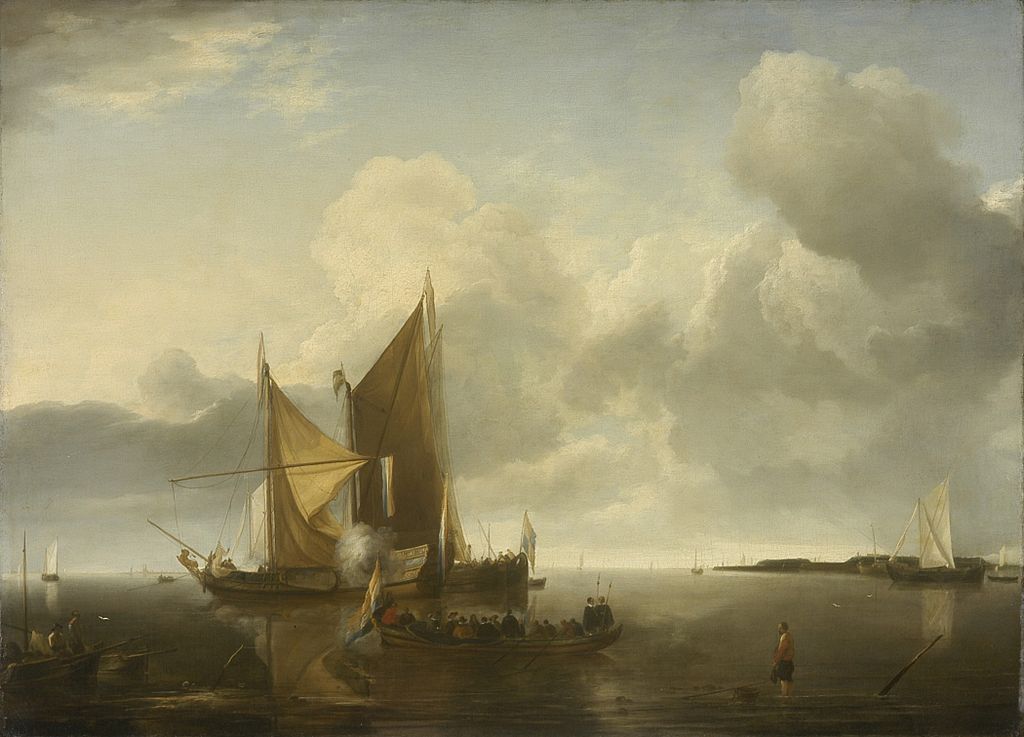
Not long ago I visited an exhibit at the Seattle Art Museum titled Master Painters. The focus was a collection of pieces from The Netherlands during the seventeenth century, a period known as the Dutch Golden Age. One painting in particular grabbed my attention: a stunning maritime scene of ships at anchor. I took in the beautiful blues, dramatic clouds, and glowing sails for a long time. Then I scanned the artist’s biography: “self-taught” “never joined the local art guild” “for the pleasure of it” “second to Rembrandt as a painter of light” The artist was Jan Van De Cappelle, a wealthy industrialist who spent the majority of his time running his father’s dye works, which he inherited. But on the side he did something else entirely. I like to imagine Jan at the end of a workday, grabbing his coat and hat. I like to think of him rushing out to a good view of the water where he could paint. He could have done a lot of other things in his spare time. He had enough money to sit back and relax. He could have indulged himself or watched the seventeenth-century equivalent of The Bachelor. But over a hundred surviving paintings tell us what he did. Jan Van De Cappelle did his art. The Decision We All Face We face the same decision Jan Van De Cappelle did. How will we spend our spare time? We may not be as wealthy as he was. We may not have as much spare time as he did. But most of us have some amount of unclaimed time in which we get to decide how to engage ourselves. The purpose of this post is to share two questions that will help you get focused and stay motivated to do your art like Jan Van De Cappelle did. Question 1 (to Help You Get Focused): What’s Your Art? What’s your side project? What’s your art? Maybe you’re not doing it yet. Maybe you’re just thinking about it. Or maybe you’ve just started. Or maybe you sense that there is some kind of art for you, but you don’t know what it is exactly. Maybe you’ve been doing it for a long time, and you’re tired. Wherever you are on this journey, identifying your art will help you get focused. Question 2 (to Help You Stay Motivated): What’s Your Why? When the going gets tough, you’ll need to be able to articulate to yourself why doing your art is worthwhile. I’ve found it helpful to have a short sentence that I can use to rouse myself into action. Here’s how mine goes: I feel deeply called to helping creative people do their best work. When it’s 5:00 in the morning or late at night and I haven’t published a blog post that week, this brief sentence helps me push on and do my art. Whether you use a brief sentence, a paragraph, or a whole book, knowing the why behind your art will help you stay motivated. What’s your art? What’s your why? I’d love to hear your answer to either or both of these questions.
Do You Make This Mistake in Your Creative Work?
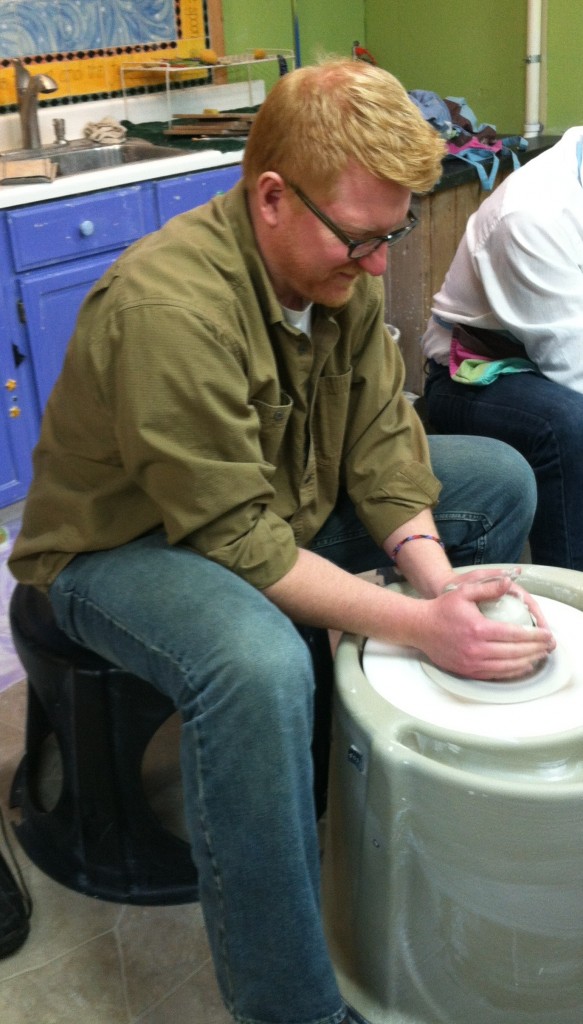
“The hardest part of the process is getting centered,” our instructor told us. My wife and I were fifteen minutes into a pottery class, watching our teacher push on a piece of clay as it spun. “But if your clay’s not centered,” she continued, “it will warp and your piece won’t turn out right.” Don’t make this mistake. Failing to “get centered” when throwing pottery will produce spectacular ugliness, but the results are no less disappointing in other creative pursuits. Do you ever come to the end of the day frustrated because you didn’t get to the one thing you really wanted to accomplish? Do you ever feel like you just react to whatever’s coming at you rather than having a larger vision and direction for your work? In this post I want to lay out what it means to get centered, what stands in our way, how to do it, and what’s possible when we are centered. What It Means to Get Centered I’m using “getting centered” to refer to a process whereby we get clear on our priorities and our values. People who are centered orient their lives around what matters most to them. They’re less likely to waste time or do things that fail to move them forward. At any given moment they have a clear sense of their calling and the incremental steps they need to take to live out this calling. The Things That Get in Our Way Getting centered is just about the most countercultural thing we can do. Here are just a few things that prevent us from getting centered. Some are internal to us, some are external: Internal: Anxiety Lack of discipline Fatigue External: Social media Technology Entertainment Pressure to produce tangible results in the short term One thing’s for sure. If we’re going to practice the discipline of getting centered, it will take decisive effort. If you aim at nothing, you’ll hit it every time. 5 Tips for Getting Centered Following are 5 pointers to help you make progress toward getting centered. Get in touch with your WHY. Why do you do your art? In your best moments what is it that drives you? What drives me, for example, is a deep sense of calling to help creatives produce their best work. I want everything I do to be connected with this calling. Write out your WHY, and then revisit this regularly–daily if possible. Develop a system of daily, weekly, monthly, and quarterly checkpoints. Daily checkpoints need not take longer than 15 minutes. Weekly checkpoints may take an hour, monthly checkpoints 2 to 4 hours. Ideally you would be able to block out a full day for quarterly checkpoints. The goal of these checkpoints is to get centered: to focus on what matters most and align your life (your calendar, your relationships, your resources, your goals) around this sense of centeredness. Pray or meditate. Regardless or your religious persuasion, it’s important to make space for hearing from your Higher Power. Just about every day I read from a devotional called Touchstones and pray for God to be with me and guide me. Give extravagantly. If your art is all about you, it will tend to hit dead ends and fall apart. Make generosity an integral part your work. You’ll be amazed at how invigorating this is, and how much focus it will give you. Commit to self-care. This is one I struggle with, but it’s just true that we can’t help others if we don’t take care of ourselves first–physically, emotionally, intellectually, and spiritually. The Payoff Back to our pottery class. The thing about getting your clay centered on the wheel is that once you do, it’s relatively easy to mould the clay into a reasonably good-looking piece. Alyssa and I are not master artisans, but we’re pleased with how our pieces turned out. Take the time to get centered, and you’re likely to be more productive and more fulfilled in your work. I’m not saying it will be easy. I am saying that if you’re centered, the work will be worth it. What’s one thing you can do to help yourself get centered?
The Best Books Ever Written on Creativity, Writing, Platform, and Pursuing Your Dreams
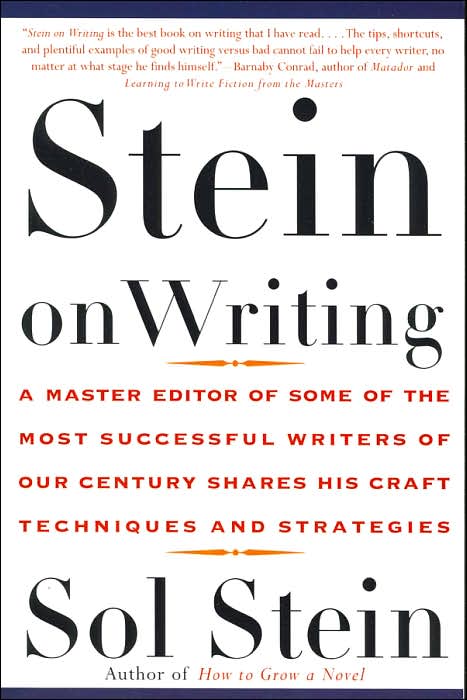
Good books and the authors who write them make for some of the most helpful companions on the creative journey. Below is a categorized list of what I consider the best books out there on creativity, writing, platform, and pursuing your dreams. I commented on books I’ve read and loved. Others made the list either because I’ve heard so much about them they just have to be on the list, or because people I trust (including readers of this blog!) have recommended them. (This post includes affiliate links.)
How I Told My 4-Year-Old Son about My Faith [Video]
Following is a screen cast of my “7-21 Talk,” which I delivered at the Christianity 21 Conference in Denver on January 8, 2014.