How to Turn Your Blog Posts into a Book Publishers Will Love

As editorial director for a major trade book publisher, I regularly receive questions like this: Is it okay to blog content that I want to use in my book? Will publishers mind if my blog content ends up in my book? If my book proposal is for a book based on my blog, will publishers give it a chance? I can’t speak for all publishers, but I can tell you my take on these questions and offer some advice to bloggers who want to work with a traditional publisher. The truth is you can use your blog posts to write a book that both publishers and readers will love. This is the beginning of a guest post I wrote for my good friend Jonathan Milligan at Blogging Your Passion. To keep reading, click here.
Why Blogging Might Be Your Fastest Way to Secure a Book Deal
If you have ever known a clean-shaven man who quickly grew a beard, you have a clue about changes in the publishing industry over the past five to ten years. Publishing today looks very different from how it looked a few years ago, and the transition can catch you off guard. Whether it’s the decline of bricks-and-mortar retail, the advent of ebooks, the audiobook boom, the democratization of media channels, or any of innumerable other changes, the shifts have been rapid and dramatic. Even the nimblest publishing professional can have trouble keeping up. But among authors one group in particular has been able to capitalize on upheaval in the publishing world . . . This is the beginning of a guest post on Michael Hyatt’s site. To keep reading, CLICK HERE.
Why the Market Is Not Too Crowded for Your Message
A lot of other people have written about this. Is there room for one more? Does it make sense for me to write about it too?” As editorial director for a book publisher, I get this question a lot. In fact, I’ve asked it too. I remember emailing successful blogger and author Jeff Goins to ask about starting a blog on writing, publishing, and creativity. “Don’t you, Michael Hyatt, and Todd Henry pretty much have that covered,” I asked, “or is there room for one more?” I’m so glad Jeff responded the way he did: “Look at late-night talks shows. They all do basically the same thing – tell jokes and interview people. What makes them unique is the personality and perspective and style of the host. Your voice makes you unique.” There’s always room for one more because . . . That is the beginning of a guest post over at my friend Michael Nichols’ blog today. If you’ve ever wondered whether there’s room for your message, this one’s for you. To read the full post, CLICK HERE.
Confessions of a Flawed Editor

Editing is a tricky business. What I want more than anything is for your book to hum. I want it to be such an engrossing experience that a reader would sooner take a bus than drive, just for a few more moments in your book. Legendary editor Sol Stein says the writer’s job is to create “conditions that enable pleasure to edify”–to “provide an experience that is superior to the experiences that the reader encounters in everyday life.” All other intentions–expressing oneself, making money, even altruistically relaying information–take a backseat to creating a killer experience. I often see the potential for a powerful piece. It’s there, but it’s buried or it’s not continuous. Sometimes what’s required is digging work, judicious trimming, sometimes hacking, to bring out the good stuff. Sometimes it’s relocation work, seizing the part that’s going to capture attention, setting it up front, then massaging it all so no one’s the wiser. Sometimes it’s charming work, writing a query that if worded right will prompt the author to compose a story that pulls the whole thing together. Sometimes it’s murderous work, killing a darling that, forgive me, has no business living. I’m not always the author’s friend, or at least not the kind of friend you ring up when you only want to escape or party. Don’t call me for that. If I’m a friend at all, I’m the one, or by God I try to be, the one you call when you need some help–when you know you’ve made some poor decisions and you want to get back to center. That’s the guy I want to be. Maybe I’m not your friend so much as your coach, who only becomes a friend for a little while, and not until the championship is in the bag. Until then, I’m going to push you for all you’re worth. I’ll also sneak away during a family vacation to read your chapter and give you a hand. I’ll communicate via your agent. I’ll spend money for a second and third and fourth opinion when we don’t agree–to make absolutely sure we’ve got the full picture. I’ll come early, stay late, eat lunch at my desk. Am I perfect? No. Is my judgment flawed? Do I get it wrong sometimes? Yes. But I’ll tell you one thing. You’ll look long and hard before you find someone who cares as much as I do. Don’t for a second doubt that I care. I do. We’re going to get through this, you and I, and your book will be the better for it. It might even be a piece of art. That’s what I’m after. That is what you have in you.
4 Ways to Make Sure Your Book Proposal Stands Out

Later today I’ll be discussing about fifteen book proposals with my editorial colleagues. We’ll review them with an eye toward deciding which ones should move on to our publishing board (where publishing decisions are made) and which ones should be declined. The reality is only a small number will move on. Imagine your book proposal is in this stack. How do you make sure it stands out? I’ll highlight four possible ways. 1. Great Working Title and Subtitle Not very often, but every now and again we see a title that we all know is a winner. If you have a title like this, you’re fortunate! Examples of this kind of title include: Have a New Kid by Friday 50 People Every Christian Should Know I Became a Christian and All I Got Was This Lousy T-Shirt But honestly titles like these are few and far between. As I look at my bookshelves, I see a lot of solid titles, but most of them are the result of an intense titling process which occurred after the books were contracted. So if you have a truly standout title, terrific. If not, try to come up with one that’s good enough. I recently wrote a post about how to do this. (Click here to read it.) Then capture the other leading contenders and move on. 2. Powerful Marketing Plan I’ll never forget the book proposal I received that had over fifty unique marketing ideas. Our team knew it would be impossible to execute all of them. We also knew doing so wouldn’t be the best thing for the book. But we were blown away with the author’s creativity and obvious commitment to marketing. Nobody comes up with over fifty marketing ideas without caring about promotion. We were impressed, and we pursued the book vigorously, as did other publishers. 3. Amazing Writing Sample Of these fifteen or so proposals I’m about to review, I can almost guarantee there will be at least one that looks pretty good in terms of concept and marketing plan, but the writing sample will torpedo it, sadly. Remember that your writing sample is the thing we as a publishing house are thinking about actually sending into the world! Work hard on it. Try creating something so compelling that anyone with a pulse couldn’t possibly put it down. That’s a tall order, I know, but an amazing writing sample is another way to get your book proposal to stand out. 4. A Definitive Throwdown Statement My friend Gary Neal Hansen referred me to a video in which Steven Pressfield and his agent talk about how a throwdown statement helped Steven win a book contract. Watch the clip here. I like the idea. I’m not sure how long they would say a throwdown statement should be, but one or two sentences seems about right to me. Pressfield says a good throwdown statement should answer these three questions: Why this topic? Why you? Why now? [Tweet “”A throwdown statement” and 3 other ways to make ur book proposal stand out (via @ChadRAllen)”] Let me throw out some examples. I’m just making these up. These books don’t really exist as far as I know. Former CEO who grew his company’s revenues from 0 to $150 million in ten years shares why workplace culture is more vital to success than anything else. Pastor in Atlantic City empowers Christians to go into scary places to bring healing to the hurting, hope to the desperate, and salvatoin to the lost. Christian-turned-atheist-turned-Jesus-follower shares his journey of losing his faith because of science and regaining it because God did the inexplicable. Hopefully these throw-down statements give you a sense of how compelling they can be. A brief, strong throwdown statement captures attention by casting vision powerfully. [reminder]So if you had to pick just one of these ways to get your book to stand out, which one seems the most realistic to you?[/reminder] [callout]Thinking about writing a book proposal? My Book Proposal Template makes it as simple as filling in the blanks, and it’s free. Click here to access the Book Proposal Template.
The Key to Getting a Book Contract (A Manifesto)

The key to getting a book contract is looking way beyond the book contract to when your book hits shelves. The key to getting a book contract is pairing a great idea with a significant platform and compelling writing. The key to getting a book contract is, in a word, hustle. Every publisher loves to work with authors who hustle, who work hard to write a great book and then work equally hard to promote it. The key is determination, relentless determination. The key to getting a book contract is never giving up. It’s refusing to take no for an answer. And when you do get a no, the key is to dust yourself off and keep after it. The key to getting a book contract is to see your book as more than just a book—to see it as an experience that has the potential to become a movement. Isn’t that what the best books do? They become movements as readers can’t help passing them on and talking about them and telling people “You just have to read this.” It’s about the book! The key to getting a book contract is to forget about yourself and focus on the serving. It’s thinking about how your book will really and truly be helpful to others. It’s also realizing—and this is so important—that the only way a book ever helped anybody is by entertaining even as it educated, by compelling even as it motivated. [Tweet “The only way a book ever helped anybody is by entertaining even as it educated, by compelling even as it motivated.”] The key to getting a book contract is to seize your role as somebody the world needs. (Note: the world desperately needs you!) It is believing that God put you on this earth to do something, to make a difference, to be heard. And by determining you will be obedient to that God even while you reject the gods of fame and fortune and fear. The key to getting a book contract is to know without a shadow of a doubt you are in the 1 percent. You’re in the 1 percent of people who may not be the smartest or most beautiful, but you dare everybody to just try and outwork you. Do you see what I mean? The key to getting a book contract isn’t about the book contract at all. It’s about seizing who you are, the person you’re becoming, and letting the rest go. How can you practice relentless determination this week?
3 Fatal Flaws of Rejected Book Proposals

In the world of nonfiction publishing, the book proposal is king. Writers, agents, and editors may have conversations before the book proposal. But all the real action takes place when the proposal hits publishers’ inboxes. If you’re a nonfiction writer who wants traditional publishing houses to take you seriously, a strong proposal is the place to invest your time and energy. And even if you plan to self-publish, writing a great book proposal is still, I think, the best way to start a nonfiction book project. This article points to three fatal flaws of declined book proposals. 1. Lack of Clarity Clarity wins, confusion kills. It’s important to get really clear on what your concept is. What is your book’s purpose? If your book’s description is at all muddled, proposal reviewers lose interest quickly. We need to know what we’re agreeing to publish so we can help you develop and market your book. If we don’t have confidence that you the writer are clear about what you intend to write, we worry that we’re starting off on the wrong foot. Here’s the back story on this one. Every publisher has had the experience of signing one book and getting another. Now, books develop and evolve in the writing process, we all get that, but when the final manuscript is significantly different from what was proposed, we get jumpy. We start to panic a bit and drink more coffee than we should, it’s just a bad scene. So if your proposal at all threatens this kind of experience, we’ll walk away. 2. Funky Bio Your bio is important. A book contract is essentially a business agreement (and a book proposal is in some ways a business plan), so we want to know who our potential business partner is. Where do we find out? Your bio. But too often bios are funky. They sidestep telling us what a writer’s main vocational role is. They go on and on about the writer’s passions. They are overly clever or cute. A good bio is between 100 and 250 words. It tells us your main vocation role, why you’re credible to write on your topic, what your previous accomplishments are, and something about your platform. A dash of humor is okay if it fits with the kind of book you’re proposing, and one sentence about your passion is fine. (I wrote more about this here and here.) 3. No Attention to Need Frederick Buechner said, “The place God calls you to is the place where your deep gladness and the world’s deep hunger meet.” The problem is when writers propose books that reflect an author’s deep gladness but show little concern for the world’s hunger. There’s a name for books that are merely about self-expression: diaries! And obviously there’s a place for those, and yes some get published (The Diary of Anne Frank comes to mind), but those are the rare exception. Your book proposal should speak to a real need that real people have. It should emphasize how your book will address this need. Good questions to ask include: What’s the need my book will address? What’s the problem my book wills solve? What’s the itch my book will scratch? What’s the transformation my book will help readers experience? Your Book Proposal Is Worth the Effort! I hope knowing these three fatal flaws will help you avoid them. More importantly, I hope you’ll do the hard work of crafting a great book proposal. In writing a book proposal your ideas begin to take concrete form, and that’s the first step toward getting your book into the world. What need will your book address? [Tweet “Find out 3 Fatal Flaws of Rejected Book Proposals (via @ChadRAllen)”] [callout] My book proposal guidelines have helped countless authors write contract-winning book proposals. I’d be happy to send you a copy. Just click the thumbnail image below:
6 Things for Writers to Remember When an Editor or Agent Says No

I’ve just returned home from the ReWrite writers conference in Austin. It was a great time of listening to and connecting with numerous talented and passionate writers. I thoroughly enjoyed it. But I can’t help thinking about the fact that a lot of the people who attended are going to experience some level of rejection in the days ahead. It goes with the territory. If you take the risk of putting yourself out there, you’re going to hear no a time or two . . . or hundreds. You could quit, of course, but who wants to do that? Better to remember these six things: 1. This is your calling, and what others say does not change that. Remember that if you’re called to write, your mission is to write, not get published or have thousands of fans or hit the bestseller lists. Hearing no hurts, without question. Take a minute to hurt, then get back to writing. 2. You’re not writing for everybody. Oftentimes we encounter closed doors because the people closing them are not our audience. It is a great moment of freedom when you realize you’re not doing this for everybody. So when you experience rejection, try saying this in your head to the person closing the door: “That’s okay. This isn’t for you. It’s for someone else.” 3. Learn what you can. Don’t settle for a simple no. Squeeze out of it everything you can learn. Sometimes when I say no as a publishing insider, I’m super busy, and I don’t have time to go into detail about all the reasons behind my no. But if the writer comes back to me and says something like “Thanks so much for taking the time to review my project. I’m trying to learn as much as I can about writing/publishing, and I would really value your advice,” I’ll respond! But if you don’t ask, I assume you don’t really care that much. 4. Congratulate yourself. That might sound odd, but when your project is declined, it’s proof you “shipped” something, as Seth Godin would say. That’s more than a lot of people do. You tried. You surely learned something in the process. Bravo! Celebrate! 5. Take care of yourself. You’ve been through a lot. This is tough. It can feel like your chest is being crushed, and all you want to do is kick the dog or drown the cat…or drown yourself. In Vodka. I get it. But if you were to fake loving yourself for a day or two, how would that look? Would you go to a spa? Would you watch a funny movie or read Calvin & Hobbes? Eat a sundae? Give that to yourself. You deserve it. 6. Take the long view. You’ve heard how J. K. Rowling was rejected a million times before a publisher reluctantly decided to publish the insanely successful Harry Potter series. You know that story and countless others like it, but the point is still true. This takes time. Chances are you won’t get signed right out the gate, and authors who do are often worse off because they’re not ready for the opportunity. They publish one book that tanks and then can’t get anyone to pay attention to them. Some rewards come, and come only, from persistence, patience, and time. Remember, if you’re not hearing no, you’re probably not trying very hard. It’s part of the process. Painful, but in most cases essential. [Tweet “”6 Things for Writers to Remember When an Editor or Agent Says No” (via @ChadRAllen)”] Which of these resonates the most with you? What has helped you when you have experienced closed doors? Bonus Content: The best way to start a nonfiction book project is by writing a book proposal. I’d love to give you a free copy of my Book Proposal Guidelines, used by countless authors to write their book proposals.
4 Proven Steps That Turn Writers into Tribal Marketers
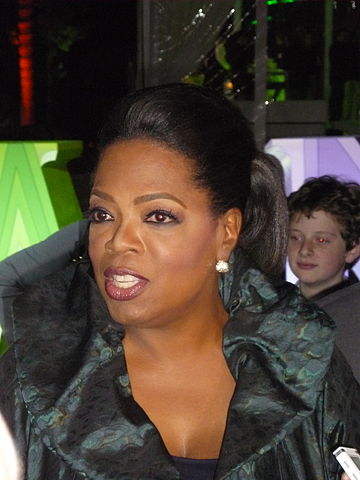
We were all excited. An author we had just published was going to be on Oprah, and the subject of our author’s book would be front and center during the interview. We shipped thousands of books to make sure our accounts had plenty of inventory. The day came, and Oprah set her up beautifully. The author did a great job, and I felt a surge of energy when the book flashed on screen multiple times. And we waited for the orders to come in. Sadly, we’re still waiting. For whatever reason, though exposure for the book was massive via Oprah and her influence, the book did not sell as well as we had hoped. Why Oprah Can’t Make Your Dreams Come True Don’t get me wrong. High-profile publicity has its place, and for some books it works magic. Many bestsellers become bestsellers at least in part because of strong media exposure. But just as if not more often publicity comes and goes, and a book’s sales remain relatively unaffected. It can be heartbreaking, believe me. Fact is, Oprah can’t make a writer’s dreams come true—but tribal marketing can! <Tweet that!> Why? Read on. The Power of Tribal Marketing Oprah, the Today Show, Glenn Beck, and Jon Stewart broadcast, which is to stay they distribute their program broadly—to lots of people who may or may not have an interest in you and your message. Tribal marketing is when you market to a group of people who have already expressed interest in what you have to say. A writer can build that tribe in many different ways, and it takes time, but in the long run it is well worth the effort. 4 Proven Steps That Turn Writers into Tribal Marketers [callout] Read Tribes by Seth Godin (it’ll take 2 to 4 hours). Then read Lynchpin for good measure (a longer read, but enjoyable). Decide how you’ll deliver content. Will you blog, speak, self-publish ebooks, create courses, do webinars, shoot videos? More important than the method you choose is the fact that you choose a method or two and stick to a consistent rhythm. Focus on building your email list. Offer to send an awesome piece of content via email. Offer a thank you gift when you speak somewhere. Start giving things away for which interested people will give you their email addresses. One of the first people to turn me on to the power of email was Jeff Goins. He has some great content on this, and a lot of people have found his Tribe Writers course to be very helpful! Incentivize purchases of your book. Once you have a list of email addresses from people who have already expressed interest in your content, you can market your book to those people. Try offering a package of valuable resources (a series of conference calls with you, for example, an audio course, or other incentive) if people buy your book by a certain date or during a certain window of time. Bonus step: add a value to the incentives that make buying your book a no-brianer. Let’s say you’re offering a series of three conference calls with you. How much is that worth? $150? $200? $300? Now imagine offering that much value in exchange for a $20 book purchase? That’s a deal, friends! If I was already thinking about buying your book, you’ve just made it a no-brainer for me. [/callout] Salesy Sleazy Yucky? When I’ve spoken on this topic in the past, sometimes someone will raise their hand and say “Yeah, but isn’t all this kind of salesy and . . . you know, yucky?” And I want to scream. Do you care about your message? Do you want to help people with your message? Do you believe in yourself?! If you do, you’re not being sleazy. You’re offering help to people who need it, and you care so much about them you’re trying to use the most effective means necessary. Drop the excuses, and get to it! What could you give away that would help you build your email list?
4 Things to Keep in Mind When Sending a Book Idea to an Editor or Agent

I recently received this question from an aspiring writer: “I have a contact in book acquisitions who is willing to look over a proposal. I have ideas and draft work for like 4 books. How do I decide what to send him?” Friend and author Michelle DeRusha and I are in the middle of a training program on how to get published. This question came from a friend of Michelle’s who registered. To respond, I recorded the screencast below: 4 Things to Keep in Mind If you have a contact, send brief-paragraph descriptions of multiple book ideas, not just one. Assure your contact that responding with a preference does not in any way signal a commitment to sign you. Make sure your email isn’t too lengthy. The idea is to make it easy to read and respond to. If you’re worried self-publishing will do more harm than good, maybe you’re not ready to publish anything yet? It’s worth pondering. What If You’re Declined? If the editor or agent ends up declining, that just means this one opportunity is closed for now. It’s not even closed forever necessarily. We at Baker regularly decline proposals we later accept when the author does more work. Author Mark Batterson taught me this: Sometimes God closes one door so that we’ll look for another one. <Tweet that!> Remember: your call to write is bigger than this one opportunity. <Tweet that!> Want More Publishing Advice? I mentioned that Michelle and I are in the middle of a training program on getting published. We did our first call last week, and two more are coming. Click here to sign up for any or all the calls, including recordings. Are you trying to decide which book idea to pursue? Are you disappointed by a recently closed door? Let’s talk about it!