My Problem with “Platform”

Publishing professionals have been using the term “platform” for a long time. And once my friend and Baker author Michael Hyatt wrote his New York Times bestseller Platform: Get Noticed in a Noisy World, the term became ensconced forever in publishing parlance. These days we can’t review a book proposal without using the term multiple times. My Problem with “Platform” But I have a problem with the term “platform”—three of them, actually. Don’t get me wrong. I don’t have a problem with the idea behind “platform.” In fact, I appreciate that the term elevates an important element of successful publishing, regardless of whether you go the traditional or self-publishing route. A simple, helpful definition of platform is “any means you have for getting exposure for your content.” How do you get the word out—and to what extent can you get the word out—about your content? That’s what platform is all about. And the really good news is that with some hard work and determination, just about anybody with an internet connection can build a platform. If you’re looking for a resource for doing so, a great one to start with is Hyatt’s book. But all metaphors have their limitations, and this one is no exception. So here are my three beefs with the word “platform” and some key pieces of advice related to each. [callout]Want to know more about how publishers review book proposals? My friend and copywriting expert Ray Edwards and I are hosting a webinar on November 17, 2016, called “How an Acquisitions Editor Reviews a Book Proposal,” and we’d love you to join us. If you have a nonfiction book idea, this webinar is for you. We’ll teach you how to get a publisher’s attention, key elements of a great book proposal, and how you can make a significant amount of money from writing a book. To learn more and save your spot, click here.[/callout] 1. Too Static The word “platform” conjures the image of a physical stage that a person steps out onto to deliver a message or performance. That’s fine, but the image is woefully incomplete. It fails to depict the reality that platforms change. They’re dynamic based on who the author is becoming and what the audience needs. One specific place you can see this in how blog titles and taglines change. My first blog was called “Latent Possibilities,” and it was basically an excuse to write about whatever was going on in my life. Fast-forward several years, and I started this blog with the tagline “Exploring Writing, Publishing, Life, and Creativity.” Then I focused in on where I felt like my passion overlapped with my audience’s need and went with “Helping You Find Your Voice and Do Your Art.” Good productive platforms are not static. They change and adapt. They require us to be sensitive to who we are as creatives and what our audiences need from us. And that brings me to my second beef with “platform.” 2. Too Isolationist We see a single person up on that stage in our imagination. But ask anyone who has a significant platform if they got there by themselves, and I’m pretty sure 100 percent of them will say no. This is a key point, and it’s one I’m still learning. We Westerners are all to some extent believers in rugged individualism. But more and more I find myself wanting to emphasize the “rugged” part in my own platform building and de-emphasize the “individualism” part. I’m all for hard work—not least because it tends to be an effective tactic in the long run. But I need to be asking questions like: To whom should I be reaching out to pitch a partnership? Who are three people I’d really like to get to know? Who should I be following regularly? What relationships do I need to nurture, and what relationships do I need to let go? Whose opinion should I be seeking about this? To develop robust platforms, we need to be connecting with and sometimes directly asking for help from other people. 3. Too Utilitarian Sometimes we focus so much on the apparatus delivering the message (the email list, the Twitter count, the Facebook likes, the website’s unique visitors), we forget about the message itself. Let’s remember we are not stage builders, we are content creators. One element of “platform” that receives too little attention is word of mouth. Word of mouth is what happens when a book or blog post is so good, so well written and so relevant or fresh or engaging, that people who read it can’t help emphatically recommending it to other people. My friend and colleague Rebekah cannot shut up about the book 13 Things Mentally Strong People Don’t Do. Every time I talk to her she mentions it. Well, I promise you at some point I will pick that book up and give it a go. That’s platform, but it has nothing to do with the author’s email list (as important as that can be!) and everything to do with the author’s content. [Tweet ““We are not stage builders, we are content creators.” @ChadRAllen’s problem with “platform””] The Need for Nuance I’ll continue using the term “platform,” but hopefully this article provides some nuance to the term. Our platforms will never reach their potential if they are static, isolationist, and strictly utilitarian. If we can stay sensitive to our audience’s needs, develop mutually beneficial relationships, and refine our ability to create compelling content, our platforms will become powerful tools of influence and service. How about your platform? Is it too static, too isolationist, too utilitarian? Do you need to focus on adapting to who you and your audience are? Do you need to connect with someone this week? Or do you need to start investing more time and energy into developing your content?
How to Get a Bigger Audience for Your Writing [Free Video]
Recently I asked readers of my blog this question: “What’s the biggest creative challenge or obstacle you are facing?” As I read through the responses, I noticed one particular theme came up again and again: the desire for a bigger audience. Listen to some of these responses; these are direct quotes: “I feel stuck in a rut regarding reaching a larger audience.” “Building up my readership.” “Building a new platform of readers; a new market” “I have been told again and again that my writing is good, but that my platform is insufficient.” “I need a step by step guide to building a platform.” “I feel stuck as I can only allocate so much time to building my platform due to other obligations” That’s just a sample, I could have listed several more. Do you hear the yearning in these words? I feel for these folks! How about You? Do you wish you could reach more people? Does the whole process of building a loyal following of readers seem out of your reach? I’m here to tell you it’s not. You can do this. I’m not saying it’s easy, but with determination and persistence you can do this. Sometimes we just need to see someone else do something before we believe it’s possible for ourselves. That’s why I’m announcing a free video series that Jeff Goins just started. The first video is called “It’s Not Too Late” and is meant to accompany the eBook he just released with the same title. Yes, if you’re wondering, Jeff is going to tell you about his course, Tribe Writers, at the end of the series. But even if all you do is watch the free videos, I promise you’ll get a lot of out this. In the first video, just launched (October 14, 2016), you meet Sandy Kreps, a busy stay-at-home mom who built her audience and wrote her first book. If you want to publish and get paid for your work, I know Sandy’s story will be both informative and inspiring to you. One of the reasons I love this series is because Sandy, while bright and hard-working, is not outlandishly exceptional. She didn’t inherit a million dollars, and she’s not some sort of prodigy. She’s a mom who did the work and is now reaping the rewards. Imagine This What if a year from now your story sounded a bit like Sandy’s? What if people were interviewing you about your experience of building a tribe and writing and publishing and getting paid for your work? Wouldn’t that be awesome! This is not an empty promise. You can do this, and as I’m fond of saying, we need you to do it. No one has your voice, your message, but you. If you don’t follow through on this, we are deprived of what you have to offer. So I hope you do follow through. It’s important. To take the first step and watch Jeff’s interview with Sandy, click here. [Tweet “New video series from @JeffGoins explores what it takes to be a writer/blogger today. Check it out: https://fz238.isrefer.com/go/2016video1/callen”] If you knew that a significant number of people would read it, what would you write?
How One Writer Went from Blogging to Book Contracts in 5 Years
If you’re a writer with a book inside you, a platform builder, or someone who simply wants to have an impact in the world, this interview is for you. Join me today for a conversation with author and blogger Natasha Crain. Over the past five years Natasha has steadily grown her blog traffic and subscriber list. Her first book released earlier this year, and more are on the way. This is not the story of someone who experienced crazy over-night success and rode off into the sunset. This is the story of someone who felt called to serve, went after it steadily, and now is experiencing success and impact. Translation: you can do this! In this interview Natasha and I talk about the key to growing your email list, how your blog can help you hone your voice and develop books, the hidden gifts of rejection, and more. Enjoy! [youtube id=”zmclw0KqIXc”] To learn more about Natasha Crain, visit www.ChristianMomThoughts.com. Can you think of someone who would find this interview helpful? Consider sharing it with them! [Tweet “No Platform to Book Contract in 5 Years…You can do this! @Natasha_Crain @ChadRAllen”] What’s one thing you learned from this interview and plan to implement?
How Do I Write My Book and Build a Platform at the Same Time?

Recently I was on the phone with a writer who was trying to figure out the answer to this question: How do I write my book and build a platform at the same time? Many of us want to get our books into the world, but we also understand the power and importance of a significant platform. We understand that if we write a book without a platform, we will have difficulty reaching an audience. We not only want to write a book, we want some people to read it! This blog post shows you how to do both. You’re Already a Master at This My first piece of advice is to give yourself some credit. Fact is, you already have a lot of experience getting multiple things done. For example: How do you work a full-time job and find time to be a wife/husband? How do you make sure your kids are getting enough time from you and also do all the things it takes to run a household? For younger people, how do you work a part-time job, have a social life, and go to classes and get your homework done? These are not rhetorical questions. Think for a second. How do you accomplish the multiple long-arc projects on your plate? However you do it, you can use those same tactics to write your book and build a platform. My guess is you carve out time for each long-arc activity. You pay the bills on a particular night. You reserve Saturdays for family. You mow the lawn or do the grocery shopping at particular times. And so on. It works! Somehow it all gets done. It might get hectic at times, but it all gets done. What it takes is commitment and a plan. What’s Your Plan? There’s no one right plan. You might: Book these early mornings of the week for platform building and these others for writing your book Build your platform a few years before writing your book Write a book proposal and if you get a contract write a book and build platform Write a book, turn it in, then build your platform in the time between submission and launch Self-publish a book and then build you platform to make sure people know about it Use vacation time to get bigger slices of time. I’ve seen versions of all of these approaches, and they all can work. It’s probably a good idea, though, to be willing to change your plan if the one you pick doesn’t work out. Give your plan a probation period. If it’s working, great. If not, fire that plan and hire a new one. Question the Gap between Book and Platform Obviously books and platforms are not the same thing. A book is about 40,000 to 60,000 words of content (remember, I’m a trade nonfiction guy). A platform is your means of getting people to notice your work, including your book. But sometimes we make the gap between the two bigger than it needs to be. Get suspicious about that gap. We think it’s bigger than it really is. Key strategy: Look for ways the two can overlap. Are there ways your work can do double duty? What if your blog posts (aka platform builders) were sketches of parts of your book? New York Times bestselling author Mark Batterson once told me his blog posts were his “test balloons.” Can you ask your audience questions and learn from their responses what direction to take your book? Here you’re building your platform by engaging your audience, and you’re working on your book too. What if you gave away a chapter from your book in exchange for email addresses? When you’re developing a concept, what if you asked your tribe which title/subtitle they’re most likely to buy? You will have to make time for writing and platform building, but look for and pursue a symbiotic relationship between the two. How could you build your platform by writing your book? How could you write your book by building your platform? The Really Good News Writers tend to wish they could ignore platform building and just write their books, but let me share the really good news in all this. Building your platform connects you with your audience. It helps you understand their needs and gives you an idea of the kind of book they would find most useful. If the point is to get your message into the world, you’re at least beginning to do that with your blog or podcast or speaking or whatever you do to build your platform. When it’s time for your book to launch, you have a built-in audience. You know that people are going to buy your book because they have asked you for it. And that is a great position to be in. [Tweet “”How Do I Write My Book and Build a Platform at the Same Time?” blog post via @ChadRAllen”] What tactics do you use for writing your book and building your platform?
How to Write Your Book in Six Months

Have you ever started writing a book but stalled? Do you have an unfinished manuscript or two on your hard drive? How about an unfinished book proposal? Here’s a question I heard recently: “How do I start my book project in a way that I’ll actually complete it?” That is such a good question. Writers often have a difficult time finishing. They get started, but then they stop. It’s this inability to see the way forward that results in countless stillborn books. It’s sad when you think about it. Millions of would-be books never make it off the ground. Many writers go to their graves without having made their contribution. And many readers would have benefited from these hoped-for-but-yet-to-be-written books. It doesn’t have to be this way. In this post I want to break down the writing process in a way that makes it doable. I want to offer some questions to help you get started in a way that will enable you to complete your manuscript. I’ve even provided a worksheet to help you! The Most Important Step Everyone Forgets The hardest part is not deciding on a concept or a framework or any of that. The hardest part is establishing and committing to a routine—a process. If you’re going to write a book, it’s important to establish a pattern of writing. Think about it this way. A decent length for a trade book is 50,000 words. That means if you hang in there for a hundred writing sessions and write five hundred words each time, you’ve written a book. What’s Your Process? Let’s assume you’re going to write four days a week. That means you need twenty-five weeks to get to 50,000 words—about six months. Can you imagine writing 500 words per day, four days a week, for six months? What would you need to pull this off? [Tweet “100 #writing sessions x 500 words = Book! You can do this!! Find out more here via @ChadRAllen:”] Start scratching out your process using the following questions. What time of day will you write and for how long? And what impact should this have on when you go to bed? Adequate rest is so important for writers! What relational support would you need? Would you need to check in with a friend each week or month to be accountable? Would you need an ongoing support group? A private Facebook community maybe? When and how would this happen? [callout]Writing your responses to these questions is the first step toward completing your book project. I’ve made it easy by creating a “My Writing Process” worksheet, and it includes four additional questions. To download it, click here.[/callout] What tools do you need to make it as doable as possible? How about a stand-up desk or a new monitor or computer? Maybe you need a new journal to use for jotting down your book-related ideas. How about an ergonomically correct keyboard? Your writing is worth the investment! Where will you write and what will the environment be like? Do you think you’ll need to be in the same place for each writing session, or will you want to mix things up? Do you want music in the background? What kind of lighting is important to you? Want a candle or incense burning? What rewards would you need to give yourself? Would you need to plan a vacation halfway through, or at the end, or both? Would you need a monthly massage to reward yourself for doing the work? What will your response be if you miss a writing goal? Why not think ahead of time about what to do if you miss your writing goal for a given week? Here’s an idea. What if you committed to giving $50 to charity every time you missed your four-day minimum per week? What if you decided right now what your self-talk will be if you miss a goal? And what if you wrote that down and kept it somewhere just in case. How could you supercharge your process? Could you get away over a long weekend for some focused writing time? What about a writing retreat with friends? This kind of focused time can reduce the time it takes to write your book significantly. What stimuli should you be engaging that could inform your project? Are there books related to your area of interest that you should be reading or listening to? What movies or shows or blogs or magazines could inform your thinking? There’s no right answer to these questions, but it’s important to think ahead of time about these things and create a doable plan—a plan that acknowledges you’re human and gives you the best shot at success. Have you taken the step of writing out your process? Download the “My Writing Process” worksheet and take action! What part of the writing process do you think is most important to your success?
16 Proven, Powerful Methods to Grow Your Email List

I’ve got a platform,” writers sometimes tell me. “I’m on Twitter and Facebook. I’ve got a blog.” But here’s the litmus test for whether you have a platform: If a publisher sent a pallet of books to your garage, how many of them could you move on the strength of your own connections? This question puts things in perspective. Creating a Digital Asset The reality is that building a platform takes more than being on Twitter and Facebook. Creating a blog is one thing, but getting folks to read and follow it is another. So how do you do it? How do you build a platform that will help you broaden your influence and reach readers with your message? The single best way to build your platform by far is growing your email list. Tweets are the definition of ephemeral. Your Facebook posts don’t make it to all your friends. But your emails land right in the inbox of every person who’s given you permission to send them there. That’s why they’re so effective. An email list is a digital asset that you own and can leverage in whatever way you think is best. [Tweet “An email list is a digital asset that you own and can leverage in whatever way you think is best.”] Meet a Guy Who Grew His Email List from Zero to 40,000 in Two Years! “OK,” you say, “great! How do I grow my email list?” I’m glad you asked because I’m pleased to share with you an extremely useful pdf from my friend Bryan Harris, who has grown his email list from zero to 40,000 subscribers in two years. Bryan has figured this out better than anyone I know. That’s why I’m pointing you to him! [Tweet “Meet a Guy Who Grew His Email List from Zero to 40,000 in Two Years!”] He interviewed sixteen successful online entrepreneurs—people like Michael Hyatt, Jeff Goins, and Noah Kagan—and he shares their top advice for growing your email list in this extremely helpful resource. Which List-Building Method Is Right for You? I’ve read it and plan to implement some of the tips myself. You’ll learn methods like the “Eager Sneezer,” “Facebook Arbitrage,” “Lead Magnet Swapping,” to name just three. With sixteen different ideas, you’ll be able to pick several that are right for you. These are proven methods that really work, and Bryan breaks them down for you very quickly. For each method he offers a step-by-step implementation plan. You’ll be able to start building your email list seconds after you read his PDF. Grab the PDF by clicking here. You’ll be glad you did. It’s one the best tools I’ve seen on the subject. What has been your number 1 way to build your email list?
Why Even New Bloggers Should Make Building a Team a Priority

[guestpost]This is a guest post by blogging expert and entrepreneur Rebecca Livermore. Rebecca is the owner of Professional Content Creation and the author of Blogger’s Quick Guide to Working with a Team.[/guestpost] If you’re fairly new to blogging, the thought of building a team may never have even crossed your mind. After all, blogging is a solitary endeavor, right? Well, yes, it is. Except when it isn’t. I contend that the best blogs – including brand new ones – are never built alone. They grow exponentially with the help of a team. I Can’t Afford It! When most people hear the word “team,” they immediately think of employees or at the very least independent contractors. And those people cost money. While paid help can certainly be part of a blogger’s team, my definition of a team is much broader than that. Members of your blog team can be anyone who contributes to the success of your blog in any way. There Is Such a Thing as a Free Lunch (or Milkshake) For example, Chad R. Allen is a crucial part of my team, and the closest we’ve come to a financial transaction is sharing a milkshake. (That’s a story for another day!) You see, Chad and I are in the same mastermind group. We contribute to each other’s blog and business on a regular basis through feedback, encouragement, and accountability. In addition to that, he’s written a guest post for me, and now I’m writing one for him. I couldn’t ask for a better teammate. I need teammates like Chad, and so do you, even if your blog is brand new. Here are some frequently asked questions regarding building a blog with the help of a team. Q: What are some examples of unpaid team members? A: Unpaid members of your team can include other bloggers who are willing to share your content or comment on your blog, mastermind members, and writers’ groups. In some cases, family members or friends may be willing to do things for free or to exchange services. Q: Do you have any suggestions for bloggers who want to hire team members but have a very limited budget? A: To see the possibilities when it comes to hiring team members on the cheap, it pays to break away from a traditional employment mindset. You can hire paid workers on a very limited basis, for minuscule one-off tasks. Costs are even lower if you choose to outsource at least some of your blogging tasks to college students or to virtual assistants in countries such as the Philippines. For example, I hired a worker in the Philippines to create a few PowerPoint presentations based on some of my blog posts. Each slideshow cost less than $20. Q: What are some examples of small tasks that you use to test potential team members? A: I definitely recommend assigning small projects before making any long-term commitments. When people do a good job on small projects, you can then consider hiring them on a more permanent basis. Here are few small task ideas you can use to test someone out: Optimize your 10 most recent blog posts for SEO Proofread or edit a series of blog posts. Intentionally leave some mistakes in to see if they catch them. Research guest post opportunities based on criteria you lay out. Repurpose a few pieces of your content. For example, create a PowerPoint presentation from one of your blog posts, or write a blog post based on a transcript of your podcast. Create images for your next five blog posts. Part of what you want to test is how the person responds to criticism. Don’t be overly harsh, but ask for minor changes to the work they produce for you. Pay attention to any attitudes that may be revealed in their response. Assigning small tasks gives people a chance to show off their skills and gives you an opportunity to get a feel for what it would be like to work with them. Q: What are some ways to determine the types of blogging-related tasks to outsource? A: First, make a list of all of the blogging-related tasks that you don’t enjoy but have to be done. Second, make a list of tasks you enjoy but take up a lot of your time that could be perhaps better used on other more profitable things. Finally, make a list of blog-related tasks that you really aren’t good at. For instance, if you want to include images in your blog posts (and you really should!) but aren’t handy with graphics, that could go on the list. Put a checkmark next to anything that could potentially be done by someone else. Then place those items in order of priority, and one by one, hire them out as your budget allows. [Tweet “Working with a team makes blogging a LOT easier.”] What’s the number one thing you need help with on your blog?
How to Get a Book Deal When You Don’t Have a Platform

When my wife read my blog post about the importance of platform and Google search ranking for writers, she replied, “It makes me sad. I wish platform/Google weren’t so paramount.” She spoke for legions of writers, I expect. “Why can’t I just write a good book?” “I’m a writer, not a marketer. Why do I have to be both?” “Isn’t the publisher supposed to do the marketing?” These are legitimate expressions of frustration with how things usually work in publishing. The vast majority of proposals we (and, I expect, most reputable publishers) approve are indeed from writers who have built a platform. Somehow these authors manage both to write and to build a means of bringing exposure to their writing, and of course the two are not mutually exclusive (especially for bloggers). Exceptions But there are always exceptions. Years ago literary agent Chip MacGregor nailed it during a panel discussion at an Oregon Christian Writers Conference. He said, simply, most good books get published. He may well have been reflecting on the fact that he as an agent hasn’t had much difficulty finding publishing homes for good books. In other words, take heart. If you write a really good book, you’ll likely find a publisher that is willing to publish it. [Tweet “If you write a really good book, you’ll likely find a publisher that is willing to publish it.”] The three things publishers look for are influential platform, great concept, and amazing writing. Without a platform, you’re relying solely on concept and writing. And they have to be good not by your definition but by the definition of those who write the checks. But it is possible to get published without a platform. If you work hard on your craft and emerge from the shadows with an amazing piece of artful prose, believe me, I want to see it. And I may well offer you a contract for it. If this is what you’d like to do, please do. Really. Sometimes we publishing types emphasize platform at the expense of art, and that’s a mistake. So write. We look forward to seeing what you can do. Platform As Shortcut Having said that, before you write platform off completely, let me offer a perspective that might be different from others you’ve encountered. Many writers assume the whole platform thing is in their way. The temptation is to assume that if a publisher were to make a decision based on quality of writing alone, it would be a no-brainer. Of course they’d want to publish my book! I can’t discount this attitude entirely. Again, sometimes a writer without a platform wins a publisher over. It happens, but it’s rare. Why? Because cultivating amazing writing talent is hard. That doesn’t mean you shouldn’t pursue it. You must. It goes without saying that writing quality is essential to any good book, to say nothing of a sustainable writing career. But because writing well is hard, building a platform is not an obstacle. It is actually a shortcut. Not a shortcut to writing a great book, that will still take just as much time as ever. Building a platform is rather a shortcut to getting a book deal, and once you have a book deal, hopefully you’ll have more time and freedom and motivation to keep honing your writing craft. As much work as it is to build a platform, in our day and age it likely takes less time to build a decent platform than it does to write an awesome book. This may not be true in all cases, but I suspect it’s true in most. Two Paths So if building a platform is just not for you, that’s okay. Write. Hone your craft. Hone it so well you write something we all would be fools to pass up. But if working smarter not harder is of interest, consider starting or growing a blog. That way you can develop your writing talent as you build an audience. [Tweet “How to Get a Book Deal When You Don’t Have a Platform via editor @ChadRAllen”] [reminder]How do you manage the tension between honing your craft and platform building?[/reminder] [callout] My book proposal guidelines have helped countless authors write contract-winning book proposals. I’d be happy to send you a copy. Just click the thumbnail image below:
How to Turn Your Blog Posts into a Book Publishers Will Love

As editorial director for a major trade book publisher, I regularly receive questions like this: Is it okay to blog content that I want to use in my book? Will publishers mind if my blog content ends up in my book? If my book proposal is for a book based on my blog, will publishers give it a chance? I can’t speak for all publishers, but I can tell you my take on these questions and offer some advice to bloggers who want to work with a traditional publisher. The truth is you can use your blog posts to write a book that both publishers and readers will love. This is the beginning of a guest post I wrote for my good friend Jonathan Milligan at Blogging Your Passion. To keep reading, click here.
The Best Business Book I’ve Read in a Long Time
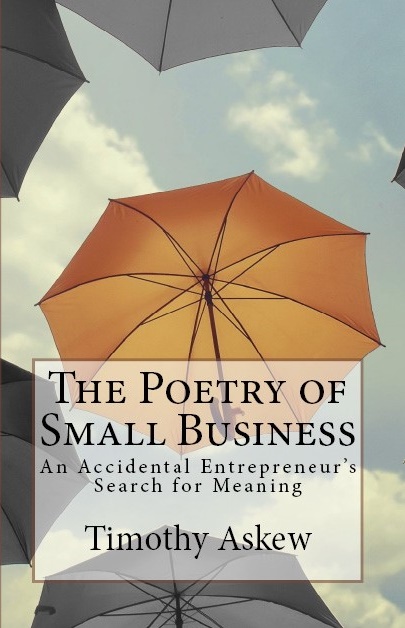
Becoming an entrepreneur has done a lot more than pay the bills over the years, it’s saved my life.” That’s the first line of a wonderful little book by Inc. columnist Timothy Askew, The Poetry of Small Business: An Accidental Entrepreneur’s Search for Meaning. As I make my way into entrepreneurism, I find myself hungry for content that addresses matters of the soul. I can quickly get lost in a sea of material covering tools and finances and formulas. These are important and necessary, but their rightful place is secondary. What must be primary for the sake of sanity let alone wholeness is a grounded sense of self and calling. [Tweet “What must be primary for the sake of sanity let alone wholeness is a grounded sense of self and calling.”] The Poetry of Small Business is a refreshing break from all the picayune minutia, the niggling details of business. It’s an immersion into meaning, and it offers a more philosophical approach to business.